Global Economy
Blank Sailings: Why Softer Trade Demand May Not Deliver Cheaper Freight
08 Oct 2026 · 10:03 CET
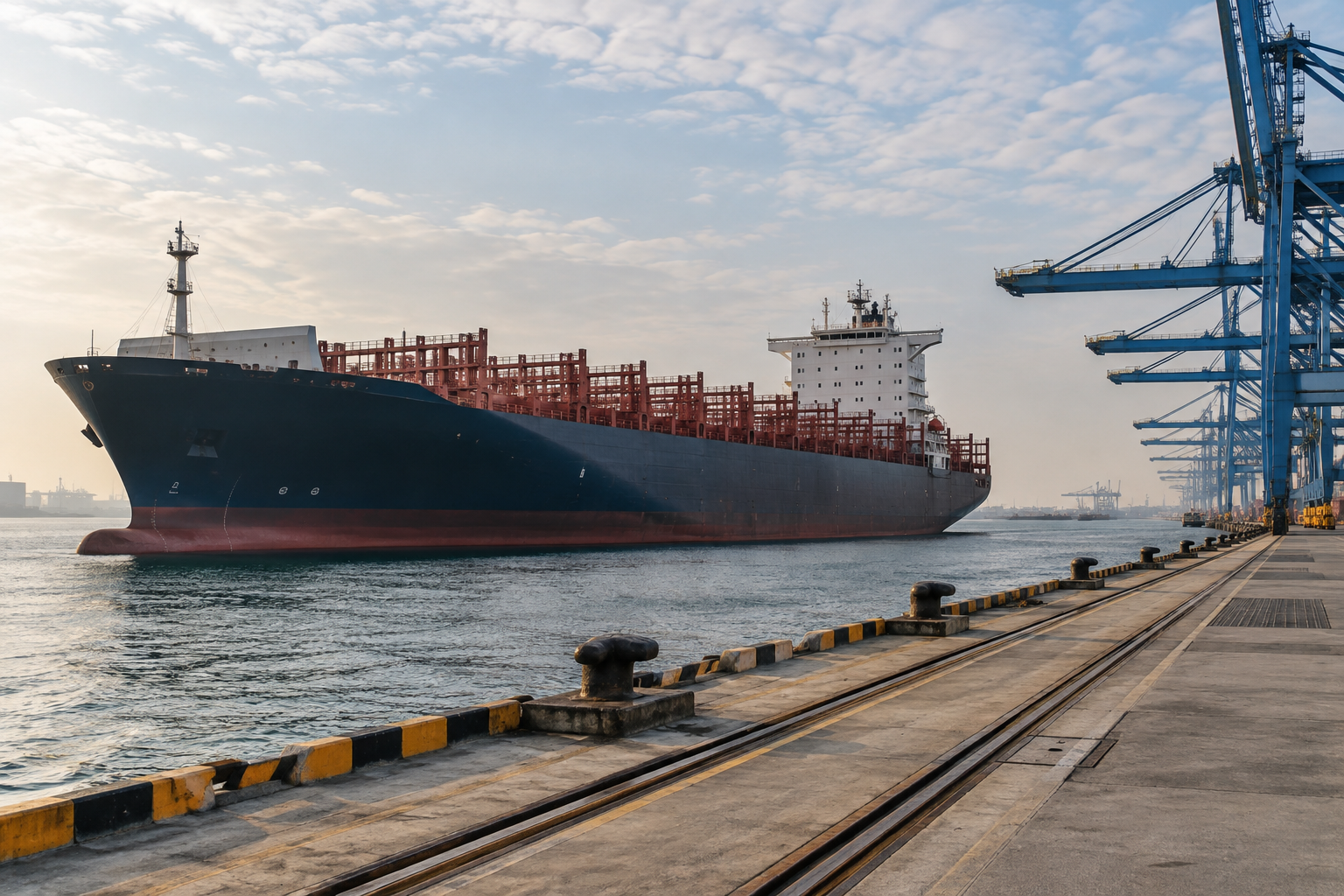
For importers and exporters, blank sailings help explain why softer trade demand does not automatically deliver cheaper freight. When carriers remove scheduled departures, the space available in a particular booking window can fall even as cargo volumes weaken. Buyers may face fewer shipping opportunities without receiving a meaningful rate reduction.
The commercial question is therefore not simply whether demand is falling. It is whether enough usable capacity remains at the required origin, destination and shipment date—and what missing that departure would cost your business.
This article explains the mechanism and provides a purchasing framework. It does not report a current disruption, a specific cancellation programme or a direction for today's freight rates.
What are blank sailings?
A blank sailing can refer to a cancelled scheduled voyage or an omitted port call. Terminology varies across service notices, so always check whether the cancellation affects an entire departure or only particular ports. In this article, capacity withdrawals refer primarily to cancelled departures.
Several events can disrupt a shipment, but they require different responses:
- Cancelled sailing: A scheduled voyage or service departure does not operate. Cargo needs another available departure.
- Port omission: A vessel operates but skips a particular port. The sailing may remain available elsewhere, while affected cargo requires alternative arrangements.
- Delayed departure: The sailing remains scheduled but leaves later. Cargo cutoffs may not move with the departure, so verify them and any onward connections.
- Rolled cargo: A shipment does not load on its intended vessel and is deferred to a later sailing. The original vessel may still depart; replacement space needs confirmation.
These distinctions matter when assigning responsibility and estimating delay. A cancellation notice does not establish how every booking will be handled, and a rolled container does not prove that its sailing was cancelled.
First action: Before procurement or sales changes any commitment, the logistics lead should identify the affected service, voyage, ports, departure dates and shipment-specific arrangements.
How blank sailings affect freight rates and departure frequency
Carriers adjust deployed capacity in response to expected cargo demand, operating constraints and network requirements. When demand softens, withdrawing departures can reduce the number of slots offered during a particular period.
If bookable capacity falls alongside demand, the remaining sailings may retain relatively strong utilisation. That can limit downward pressure on rates. If capacity withdrawals are insufficient to offset weaker bookings, rates may still decline. If operational disruption further restricts usable space, some departures may become harder to secure.
The impact of blank sailings on freight rates is therefore conditional—not a rule that cancellations always raise prices or prevent declines.
Frequency has commercial value
Even where freight becomes cheaper, fewer departures can increase exposure to delay. Missing a cargo cutoff may mean waiting longer for the next usable sailing, especially when production readiness or connecting services constrain the options.
For buyers, the resulting cost can appear outside the freight invoice: stockouts, emergency replenishment, storage or a missed customer commitment.
Compare the total cost and delivery implications of available bookings, not just the quoted ocean rate. Also check whether quotes cover equivalent charges, equipment, service conditions and validity periods.
Global fleet size is not bookable weekly capacity
Fleet capacity describes the carrying capability of ships. It does not tell an importer whether a suitable container slot is available from a particular port next week.
New vessel deliveries can expand the fleet, but their effect on an individual shipment depends on deployment. Ships may enter other services, replace existing vessels or be absorbed by longer voyage cycles. Vessel size can also limit which ports a ship can serve.
A useful distinction is:
- Fleet capacity: The broader stock of vessel carrying capacity.
- Deployed capacity: Capacity assigned to a service or trade lane.
- Scheduled capacity: Capacity represented by departures in a defined period.
- Bookable capacity: Space actually available for your cargo, equipment and timing requirements.
Container shipping capacity can look abundant at the first level and constrained at the last. Equipment shortages, weight limits, cargo restrictions or allocation limits can narrow the usable choices further.
Practical check: Before committing to a booking, the logistics lead should ask the carrier or forwarder to verify both vessel space and equipment availability. A departure appearing on a schedule is not confirmation that your cargo can move on it.
Read demand signals without overinterpreting cancellations
Blank sailings alone do not prove an economic slowdown. They can reflect seasonal demand patterns, holiday schedules, maintenance, congestion, weather or wider network adjustments.
To assess shipping demand and freight rates, compare several sources rather than treating one advisory as a market forecast.
A verification checklist
Before changing purchasing or shipping plans, the logistics lead should review:
- Dated carrier service advisories: Confirm the affected voyage, ports, stated reason, if provided, and any replacement arrangements.
- Official port notices: Check access restrictions, closures, congestion updates and terminal operating changes.
- Official port throughput data: Distinguish loaded imports, loaded exports, empty containers and transshipment where the data allows.
- National trade statistics: Compare relevant markets and product categories, noting publication lags and revisions.
- Comparable freight quotes: Match cargo, equipment, shipment window, included charges and booking conditions.
Account for seasonality and differences between value and volume. A decline in trade value may reflect prices rather than fewer physical shipments. A port's total throughput can also move differently from the cargo segment relevant to your business.
Record the source date and the period covered. A newly published report may describe an earlier month, while a service advisory may apply to a future departure. Mixing those periods can produce a misleading ocean freight rate outlook.
Should you wait for cheaper freight or secure a booking?
Treat waiting as a commercial decision with an explicit downside—not as the automatic response to weaker demand.
Establish the latest acceptable shipment date
Before committing to the order, procurement, sales and logistics should start with the customer's required delivery date and work backwards through destination handling, customs clearance, inland transport, ocean transit and a realistic contingency allowance. Include production completion, inspection, origin transport and terminal cutoffs.
Do not confuse an acceptable departure date with an acceptable arrival date. A later sailing with a longer transit may fail the delivery commitment even if it meets an internal shipment deadline.
Compare potential savings with delay exposure
Use this decision checklist:
- How much inventory remains, and how uncertain is expected consumption?
- What margin or customer relationship is exposed if stock runs out?
- What would storage, production interruption or expedited replenishment cost?
- Does the next alternative sailing arrive within the acceptable delivery window?
- Can the supplier hold finished goods, and on what terms?
- Would changing a booking create cancellation, amendment or other charges?
A useful comparison is potential freight savings versus the additional cost and risk of waiting. Use documented company costs and scenario assumptions; do not present uncertain losses as precise forecasts.
Securing space is generally more defensible when the next usable departure is essential to a firm commitment. Waiting may be reasonable when inventory cover is comfortable, deadlines are flexible and verified alternatives remain available. Neither choice requires pretending to know where rates will move.
Assign ownership before confirming each purchase order
Purchasing and shipping decisions should share one set of dates. Otherwise, procurement may secure an attractive product price while logistics inherits an unworkable dispatch window.
Logistics lead: verify the transport option
Timing: before purchase-order confirmation and again before booking commitment. Verify departures, cargo cutoffs, equipment, transit assumptions and booking terms with the carrier or forwarder. Ask what happens if the intended sailing is withdrawn, including rebooking arrangements and any applicable charges.
A booking confirmation reduces uncertainty but is not an unconditional guarantee of loading or arrival. Record the actual protections and limitations offered.
Procurement and sales: agree the commercial limits
Timing: before the purchase order is released. Agree the latest acceptable shipment and arrival dates, supplier readiness requirements and customer communication triggers.
Procurement should also confirm who controls freight booking under the agreed sales terms. If the supplier arranges transport, the buyer still needs visibility into the intended departure and escalation process.
Operations owner: maintain a usable fallback
Timing: establish at approval; activate when the agreed trigger occurs. Identify the next acceptable departure, confirm its current feasibility, name who may approve additional cost and decide whether a partial shipment or adjusted delivery commitment is commercially workable.
The fallback should include a decision deadline, not simply an instruction to find another vessel. Alternative space is not secured unless booked under the relevant terms. Recheck availability when cargo readiness or the carrier schedule changes.
Frequently asked questions
Do blank sailings always increase freight rates?
No. Withdrawals can support rates by reducing available space, but the outcome depends on demand, remaining capacity, competition and booking conditions. Rates can still fall if demand weakens more than capacity. Compare equivalent quotes for the actual shipment window.
How is a blank sailing different from rolled cargo?
A blank sailing affects a scheduled voyage or port call. Rolled cargo does not load on its intended vessel and is deferred to a later sailing, even though the original vessel may still operate. Ask for the shipment-specific reason and confirmation of replacement space rather than assuming both events have the same cause.
Should importers delay bookings when trade demand weakens?
Only when the potential saving justifies the delivery and inventory exposure. Before waiting, verify the next usable departure, available stock, booking deadlines and customer commitments. Set a latest booking decision date and an owner authorised to act.
Where should businesses verify current conditions?
Check dated carrier advisories and official port notices for service conditions, and port throughput data and national trade statistics for demand context. Confirm shipment-specific space and terms with the carrier or forwarder. Broad market commentary cannot establish whether your cargo has a viable booking.
Turn freight uncertainty into better purchasing decisions
Softer demand is a signal to investigate, not a promise of cheaper or more dependable shipping. Align supplier readiness, verified departures and customer delivery requirements before committing to a purchase.
Ready to develop your next trading relationship? Explore IMEX Center. Bring clear shipment requirements to supplier discussions, and have your logistics lead verify transport feasibility before confirming the order.
Source or sell globally with IMEX Center
Browse verified suppliers →