Import & Export
Coffee Exporters in Brazil: Sourcing Green Coffee Beans for U.S. Roasters
06 Oct 2026 · 00:03 CET
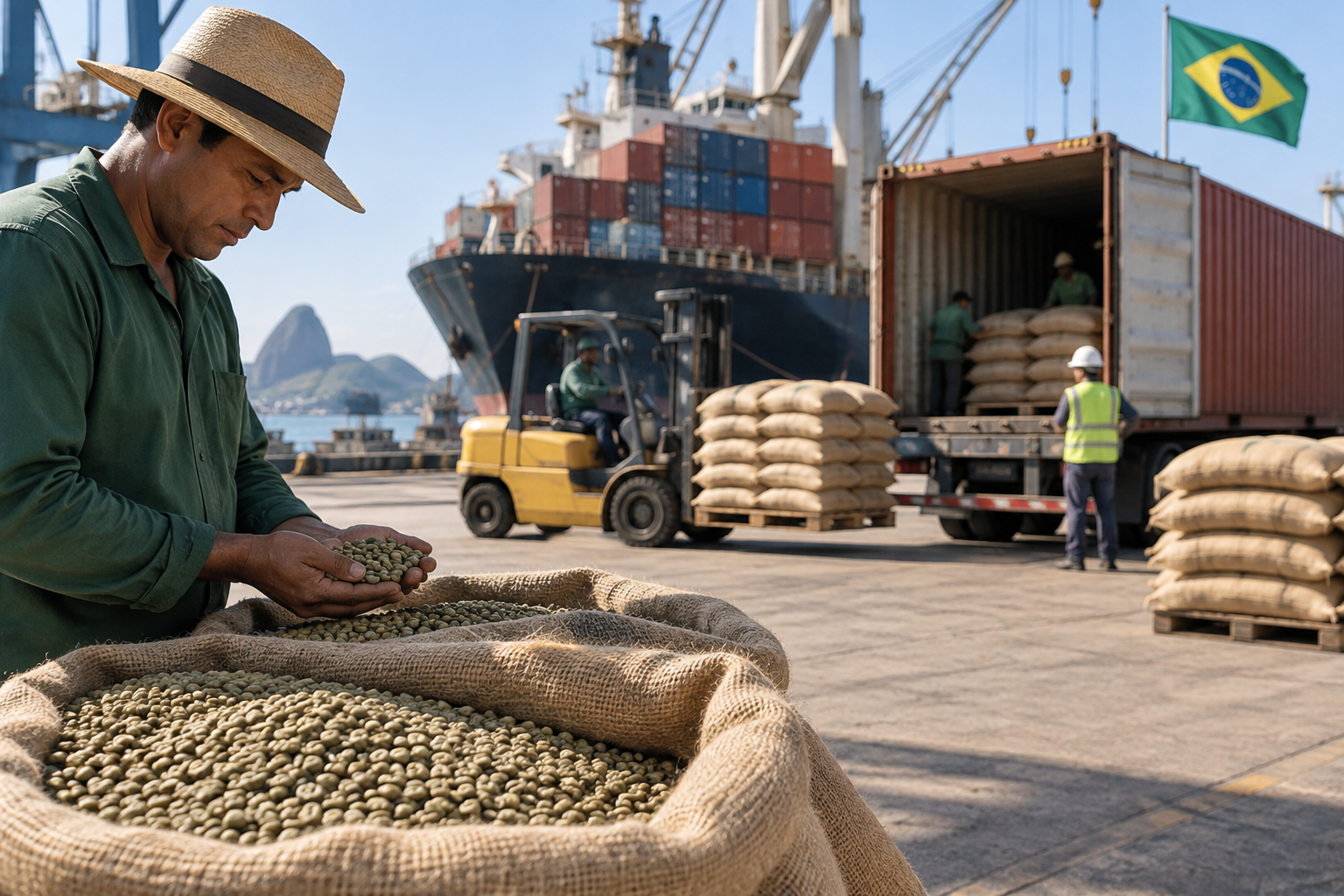
Choosing coffee exporters in Brazil starts with a purchasing decision, not a supplier directory: should your roastery buy directly at origin or purchase Brazilian inventory already held by a U.S. importer? The right route depends on volume, cash flow, quality-control capacity and how reliably you need coffee delivered.
The strongest offer is not necessarily the lowest price per kilogram. It is the coffee that meets your approved specification, remains available when needed and arrives at an acceptable total cost. Use this framework to compare suppliers on those terms.
Define the sourcing brief before contacting suppliers
Your purchasing lead and roasting lead should agree on one written brief before requesting samples. Without it, suppliers may quote different qualities, quantities and delivery conditions, making price comparisons misleading.
Include:
- Bean type: Arabica or canephora, including conilon where relevant, and its intended blend or single-origin role.
- Processing: Natural, pulped natural or another specified process.
- Cup profile: Desired sweetness, body, acidity and flavor characteristics, plus unacceptable defects.
- Physical requirements: Screen distribution, defect limits, moisture and water activity where relevant, with agreed test methods.
- Quantity: Trial purchase, initial commercial order and expected replenishment needs.
- Destination: Receiving warehouse or roastery, including unloading restrictions.
- Timing: Required arrival date and acceptable delivery flexibility.
Separate nonnegotiable requirements from preferences. A dependable espresso component may need repeatable performance more than a distinctive but difficult-to-replace flavor profile.
Compare coffee exporters in Brazil with U.S. importers
Supplier type affects purchasing flexibility, working capital and operational responsibility. Compare the actual offer rather than assuming one business model is always cheaper or more traceable.
Producer-exporters
A producer-exporter can offer a direct connection to farm practices and identifiable production. However, confirm whether the business itself exports, uses a separate exporting entity or works through an intermediary.
Direct sourcing can suit roasters with predictable demand, sufficient purchasing volume and the resources to manage international logistics.
Cooperatives
Cooperatives can provide access to multiple producers and a range of lots. Ask whether an offer represents a single farm, a segregated producer group or a pooled lot. Traceability and repeat availability depend on the specific program, not simply the cooperative structure.
Trading companies
Trading companies may assemble Brazilian coffees across regions and suppliers. This can help with broader specifications or consolidated purchasing. Establish who controls milling, storage, lot segregation and export documentation.
U.S. importers holding Brazilian inventory
Domestic inventory can simplify smaller purchases, shorten delivery lead times and reduce the buyer's direct exposure to international shipment management. Availability, financing terms and quality guarantees still require verification.
Decision rule: Have purchasing compare direct-origin and domestic offers before committing. Favor domestic stock when flexibility and limited cash exposure outweigh potential origin-price advantages. Consider direct sourcing when expected savings and supply control justify the added responsibilities.
Build a shortlist of export-ready suppliers
Screen Brazilian green coffee suppliers before investing in extensive sampling. A polished website does not establish export capability, ownership of offered stock or authority to sell it.
Ask each supplier for:
- Legal business name, address and the contracting and exporting entities.
- Evidence of relevant export experience and trade references you can independently contact.
- Current lot list, available quantities and minimum order requirements.
- Crop information, processing details and traceability records.
- Storage location, milling status and expected preparation time.
- Sample availability, pricing validity and proposed payment terms.
- Shipment options and responsibility for freight arrangements.
The purchasing lead should verify references and independently confirm bank details through a trusted contact channel before any advance payment. Treat unexplained changes in payment instructions as a reason to stop and recheck.
Flag availability risk early: a sample is not a reservation. Obtain written confirmation of how long a lot and its price can be held and on what conditions.
Qualify the coffee before issuing a purchase order
The roasting or quality lead should approve representative samples and record measurable acceptance criteria before purchasing commits funds.
Establish what the sample represents
An offer sample may come from coffee that has not yet completed final preparation. Ask whether it represents the exact sale lot, a component lot or an indicative profile.
Record the sample identifier, corresponding commercial lot, sampling date and preparation status. If the supplier cannot connect the sample to the offered inventory, resolve that gap before approval.
Use a repeatable evaluation process
Apply a consistent sample-roasting and cupping protocol. Record sensory results alongside physical checks appropriate to the purchase specification.
Your approval record should include:
- Required cup attributes and unacceptable taints or defects.
- Agreed physical limits and measurement methods.
- Sample roast and evaluation conditions.
- Any intended production-roast or blend trial results.
- The approved sample identifier and retained reference sample.
Avoid relying on a cup score alone. Two coffees with similar scores can behave differently in a blend or fail different physical requirements.
Compare equivalent offers using landed cost
The purchasing lead should normalize every quotation to the same quantity, quality specification, currency and delivery point before selecting a supplier.
A useful comparison is:
Landed cost per usable kilogram = total expected acquisition and delivery costs ÷ expected usable green-coffee kilograms.
Include costs borne by the buyer:
- Coffee price, export preparation and packaging.
- Origin transport, handling and documentation.
- International freight and cargo insurance.
- Destination terminal charges, customs brokerage and applicable government charges.
- Inland delivery, unloading and warehouse handling.
- Storage, financing, currency conversion and payment fees.
- Inspection, sampling and any expected sorting or disposal costs.
Adjust expected usable kilograms for foreseeable weight loss or unusable material, without counting the same loss again as a separate expense. This denominator refers to green coffee, not roasted output.
Avoid double-counting items already included in the quoted price. Keep demurrage, detention, delays and other uncertain charges visible as scenarios rather than presenting them as known costs.
Require the Incoterms rule, named place or port, and version in each offer. An FOB quotation and a delivered-warehouse quotation are not directly comparable. Confirm payment terms and ownership transfer separately; Incoterms do not determine those matters.
Before approval, purchasing and finance should test whether a freight increase or delayed arrival would erase the apparent savings.
Protect sample-to-shipment consistency in the contract
A weak link between the approved sample and the coffee actually shipped creates quality risk. Address it with identification, controlled preparation and an explicit approval process—not a general promise of “same quality.”
The contract should specify:
- Lot identifiers, quantity, packaging and relevant bag or pallet markings.
- Whether substitution or blending changes are prohibited without written approval.
- The agreed quality specification and sampling method.
- A representative pre-shipment sample from the prepared lot.
- Who approves that sample, the approval deadline and when shipment may proceed.
- Arrival inspection procedures and a workable claims deadline.
- How disagreements are assessed, including independent inspection if agreed.
- Available remedies, such as replacement, rejection or a price adjustment, and the conditions for each.
- Governing law and the agreed dispute-resolution process.
Quality should retain the approved reference under suitable conditions and compare arrival samples promptly, within the contractual claims window. Procurement should obtain agreement on remedies before signing rather than leaving them to negotiation after a problem occurs.
Cargo insurance and quality remedies address different risks. Do not assume an insurance policy covers coffee that misses an agreed cup profile.
Plan U.S. entry and delivery before booking freight
To import coffee from Brazil into the United States, define the responsible parties before shipment—not after the cargo is moving.
The buyer should coordinate with its customs broker and qualified food-import compliance adviser to confirm current requirements for the product, shipment and business arrangement. The customs importer of record and the importer responsible under FDA's Foreign Supplier Verification Program (FSVP) may be different entities; identify each explicitly.
Before booking, confirm:
- Which FDA food-import obligations apply, including prior notice, relevant facility registration and FSVP responsibilities, exemptions or modified requirements.
- Customs classification, valuation, origin information and applicable duties or fees.
- Any relevant USDA or APHIS conditions for the product and destination, including requirements for wood packaging where used.
- Required commercial invoice, packing list, transport document and any shipment-specific certificates.
- Filing deadlines and who prepares, reviews, submits and retains each document.
- Insurance scope, destination handling, delivery appointments and unloading arrangements.
The logistics owner should also confirm dry, clean, odor-free loading conditions and an appropriate moisture-management approach. Protecting green coffee in transit is part of quality control.
Do not book until responsibility gaps are closed and the exporter, broker and receiving warehouse have aligned shipment instructions. Hiring a broker does not transfer all importer obligations to that broker.
Send a decision-ready RFQ
A clear request for quotation helps Brazilian coffee exporters respond with comparable offers. Send the same requirements to each shortlisted supplier and specify a response deadline.
RFQ checklist
Request:
- Product: Bean type, origin, processing, crop information and intended use.
- Quality: Target cup profile, physical specification and required test results.
- Lot: Identifier, traceability, current availability and replenishment options.
- Samples: Sample type, dispatch timing and pre-shipment approval process.
- Volume: Minimum order, available quantity, packaging and consolidation options.
- Schedule: Preparation time, shipment window and estimated transit time.
- Price: Currency, itemized charges, Incoterms rule, version and named location.
- Commercial terms: Payment schedule, offer validity, reservation terms and quality remedies.
- Compliance: Exporting entity, proposed documents and responsibility allocation.
After responses arrive, purchasing should build a comparison sheet; quality should approve suitable lots; finance should validate cash exposure; and logistics should confirm feasibility. Award the order only after all four owners have completed their checks and resolved discrepancies.
Frequently asked questions
Is buying directly from Brazil cheaper than using a U.S. importer?
Not automatically. Direct-origin pricing may exclude freight, destination handling, financing and storage. Compare both routes at the same delivery point and include the cost of holding inventory. Smaller or irregular purchases may favor domestic stock despite a higher quoted unit price.
What is the minimum order for Brazilian green coffee?
Minimums vary by supplier, lot and shipping arrangement. Ask separately about trial quantities, commercial minimums and mixed-lot or consolidated shipments. Do not assume every exporter requires a full container or that every lot is available in small quantities.
How can a roaster reduce differences between samples and deliveries?
Link approval to an identified lot, require a representative pre-shipment sample and prohibit unauthorized substitutions. Agree measurable acceptance criteria, arrival inspection procedures and remedies in writing. Retain reference samples and evaluate delivered coffee within the contractual claims window.
Who handles compliance when importing Brazilian coffee into the United States?
Identify the customs importer of record and the FSVP importer, which may be different entities. Assign other applicable filing and compliance duties explicitly, and have the responsible parties confirm requirements with the broker and qualified advisers before booking. Hiring a broker does not eliminate the importer's responsibilities.
Source or list Brazilian coffee on IMEX Center
Use your sourcing brief to guide supplier conversations on IMEX Center. Buyers: start with your specification, volume, destination and required arrival window. Exporters: describe your business with clear lot capabilities, minimum quantities and shipment terms. A platform listing is not a substitute for supplier verification; complete the same qualification checks before approving any transaction.
Source or sell globally with IMEX Center
Browse verified suppliers →