Customs News
Customs Clearance Process for Returned Goods: Can You Claim Duty Relief?
04 Oct 2026 · 14:02 CET
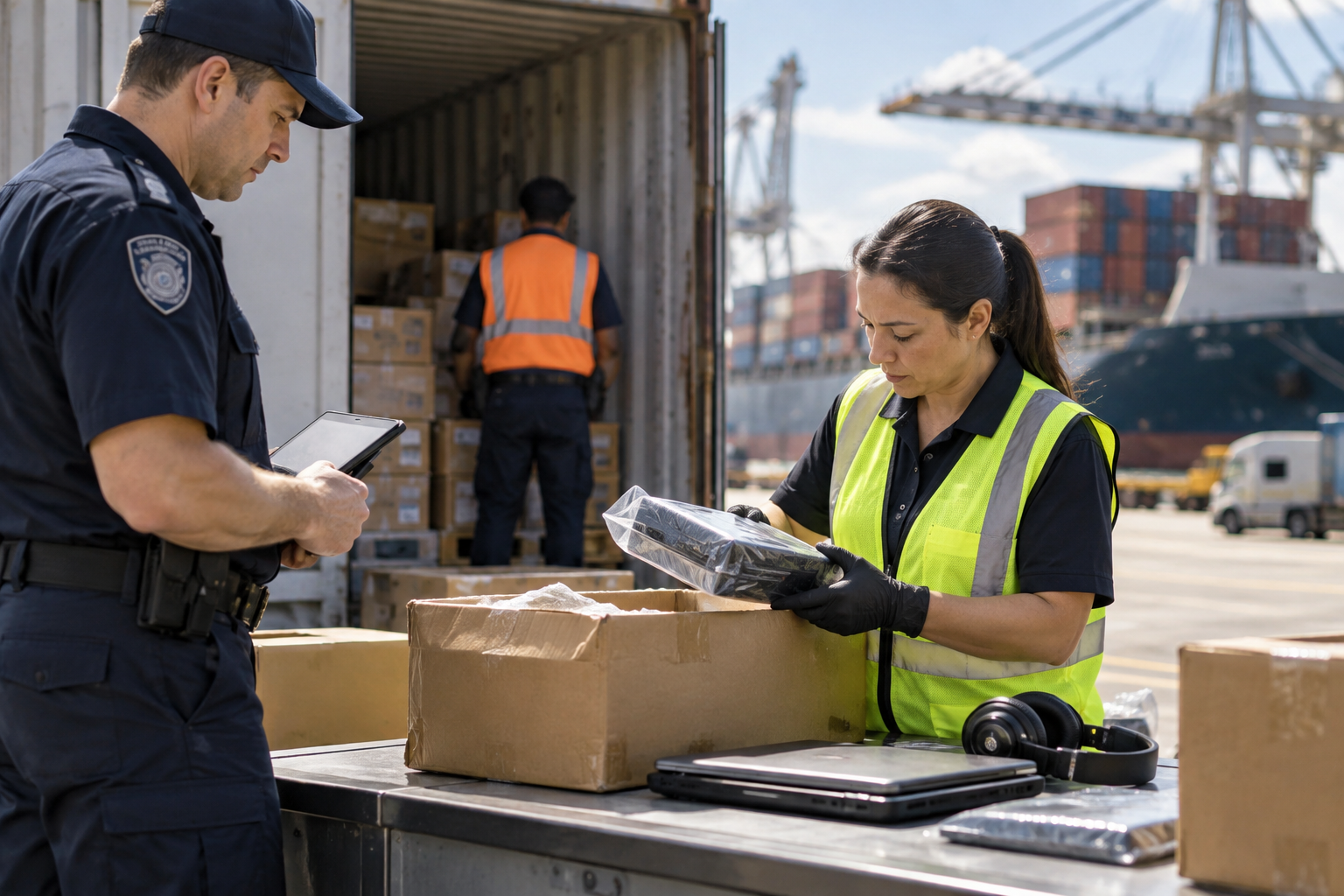
The customs clearance process for returned goods starts before the return shipment leaves your customer’s warehouse. For U.S. importers and exporters, the central questions are whether the returning articles are the same goods previously exported, whether anything happened to them abroad, and which duty-relief provision—if any—fits the facts.
A return merchandise authorization (RMA) explains why your business accepts a return. It does not establish customs eligibility. Likewise, a no-charge invoice does not prove that the goods have no customs value or qualify for duty-free treatment.
Consider an illustrative shipment of industrial components exported from the United States and rejected by an overseas distributor. Following those components home shows how to build a defensible return file and avoid preventable clearance problems. This guide provides general information; the treatment of a specific shipment depends on the applicable rules and facts and is subject to U.S. Customs and Border Protection (CBP) review.
1. Map the customs clearance process for returned goods before booking freight
First, establish what happened. A customer may describe goods as “rejected” because of a specification mismatch, packaging damage or a commercial dispute. Those explanations do not tell your broker whether the articles were used, repaired, altered or replaced.
For the industrial components, ask the distributor to identify the rejected units and document their condition before packing.
Pre-shipment fact checklist
- Identify the proposed importer of record and receiving location.
- Record the product descriptions, quantities, part numbers and country of origin.
- Establish when the goods left the United States and under which shipment reference.
- Explain the rejection and link it to the RMA or customer correspondence.
- List any testing, installation, use, repair, processing or repackaging abroad.
- Confirm whether the shipment contains the original articles, replacements or a mixture.
- Locate the original import entry if the goods were previously imported before export.
- Identify any drawback claim or other export-related customs benefit.
Exported from the United States does not mean U.S.-origin. Foreign-origin components distributed from a U.S. warehouse need their own eligibility analysis.
2. Check the applicable U.S. duty-relief provision
The starting point for many unchanged returns is HTSUS heading 9801, particularly subheading 9801.00.10. Broadly, this provision covers U.S. products returned after export and other products returned within three years of export, provided they have not been advanced in value or improved in condition by manufacturing or other means abroad.
The three-year condition applies to the “other products” category in that provision, not generally to U.S.-origin products. Nevertheless, origin, identity, condition and applicable documentation still need support.
Duty relief for U.S. returns is therefore not a blanket exemption for anything described as a customer return. Chapter 98 notes, exclusions, prior drawback and the circumstances of export can affect the analysis.
Use official sources for the actual entry
Have your broker verify the current requirements against:
- The U.S. International Trade Commission’s Harmonized Tariff Schedule, including the relevant Chapter 98 provision and notes.
- 19 CFR § 10.1, covering documentation and conditions for certain returned-product claims, read alongside the current tariff provision and CBP guidance.
- CBP’s importing and exporting resources and any applicable guidance or rulings.
Do not assume duty relief eliminates every fee, special tariff measure or admissibility obligation. Product-specific requirements, including those administered by other agencies, may still apply. Ask the broker to identify what remains payable or required for the proposed entry.
3. Build an evidence file that proves shipment identity
Effective proof of export for returned goods comes from a connected record set, not simply a document bearing the word “return.” Your file should let a reviewer trace the returning articles back to the earlier outbound shipment.
For the rejected components, link the original sales invoice to the export packing list, transport record and serial-number register. Then match those identifiers to the return packing list.
Evidence checklist
- Original commercial invoice and purchase order.
- Export packing list and warehouse dispatch record.
- Outbound bill of lading, air waybill or carrier shipment record.
- Electronic Export Information filing reference, where a filing was required and made.
- Serial numbers, lot numbers, model identifiers or other traceable markings.
- RMA, rejection correspondence and customer condition statement.
- Photos or inspection reports where helpful.
- Records of any work performed overseas.
- Prior import and drawback records where relevant.
- Declarations or certifications required for the specific relief claim.
An export filing reference can support the history, but it may not identify every returned unit. Similarly, an RMA can establish the business reason without proving export or unchanged condition.
For partial returns, prepare a reconciliation showing exported quantity, returned quantity and identifiers. Explain differences in packaging or quantities rather than leaving the broker to infer them.
Where serial numbers do not exist, combine lot records, product specifications, inventory movements and transport documents. Ask the broker to assess whether the evidence supports the proposed claim before dispatch; CBP may request additional documentation.
4. Prepare the return invoice and transport documents
A commercial invoice for returned goods should describe the transaction accurately even when no new sale occurs. Depending on the circumstances, a pro forma invoice may support a non-sale shipment; confirm the appropriate document with the broker.
The invoice should not merely say “returns” or “no commercial value.” Those descriptions leave essential classification, valuation and eligibility questions unanswered.
Include clear, line-level information
Provide the shipper, consignee and importer details; detailed descriptions; quantities; country of origin; currency; and supportable values. Add the RMA, original invoice reference and export date. Ensure the packing list and transport documents agree with the invoice.
Where accurate, an illustrative invoice note could state: “Customer return of previously exported industrial components; rejected for specification mismatch; no repair or processing performed abroad.” This explains the circumstances without presenting duty relief as already approved.
No sale does not mean zero customs value. Applicable U.S. valuation and reporting rules still need to be addressed, and the original selling price is not automatically the correct value for every return. If transaction value is unavailable because there is no qualifying sale for export to the United States, the applicable alternative valuation methods require review.
Give the broker the original pricing, acquisition or manufacturing cost information, and any evidence of damage or deterioration. Keep credit-note accounting separate from the customs valuation determination.
5. Separate unchanged, repaired and replacement goods
A return shipment can contain goods requiring different customs treatments. Do not put everything under a single relief claim simply because the goods share an RMA.
Unchanged returns
If the distributor rejected the components without repair or processing, heading 9801 may be the appropriate starting point. Document what actually happened: “unchanged” is a customs eligibility question, not just a warehouse status.
Use, testing, cleaning or repackaging should be disclosed so the broker can evaluate their significance rather than assume eligibility or disqualification.
Repairs or alterations abroad
If a foreign workshop repaired the components, the unchanged-return provision may not fit. Certain repairs or alterations may instead qualify under HTSUS 9802.00.40 or 9802.00.50, depending on the circumstances, including warranty status.
These provisions have distinct conditions and duty consequences. Review the tariff text and 19 CFR § 10.8. Obtain work orders, warranty terms and repair-cost records; a charge-free warranty repair does not remove documentation obligations.
Processing and replacements
Manufacturing abroad may require a different analysis from a repair or alteration. Replacement articles are not the same goods as those originally exported, even if supplied free under warranty, and need a separate eligibility assessment.
When reimporting rejected goods mixed with repaired units or replacements, separate the categories on invoices, packing lists and broker instructions.
6. Agree on the filing approach with your customs broker
Send the complete file before pickup, not after arrival. A broker cannot reliably claim relief from an RMA number and a vague invoice description alone.
Request confirmation of:
- The ordinary product classification and proposed Chapter 98 claim, if applicable.
- The factual and documentary basis for eligibility.
- Customs value and supporting valuation method.
- Required declarations, agency filings and other entry information.
- Treatment of prior drawback or unresolved export history.
- Estimated duties, fees and broker charges.
- Any information still needed before filing.
If identity, origin or overseas activity remains uncertain, resolve it before shipment where possible. For recurring or material classification and eligibility questions, consider whether a CBP ruling request is appropriate.
Keep the entry records and supporting evidence under the applicable retention requirements. The broker’s participation does not remove the importer’s responsibility for accurate information and reasonable care.
7. Compare the total cost of the return options
Import duty on returned goods is only one part of the decision. Compare reimportation with repair abroad, lawful redirection to another buyer or another commercially viable disposition.
Build a scenario estimate covering:
- Collection, export handling, freight and insurance.
- Brokerage, bond-related costs, duties and applicable fees.
- Examination, storage and delay exposure.
- Domestic inspection, repair, disposal or restocking costs.
- Recoverable resale value and customer credit obligations.
Use both a scenario supported by a documented relief claim and a scenario in which relief is unavailable. Check the rules in the countries involved and contractual obligations before choosing repair or redirection. The cheapest freight quote may not produce the lowest overall recovery cost.
FAQ
Can rejected goods return to the United States duty-free?
Potentially. Eligibility depends on the applicable tariff provision, origin, export timing, identity, overseas activity and supporting records. Customer rejection alone does not establish duty relief.
Is an RMA sufficient proof of export?
No. An RMA documents return authorization. Support it with export invoices, transport records and serial-number, lot-level or other traceable evidence connecting the returning goods to the earlier export.
Can a no-charge return invoice show zero customs value?
Do not assume so. The absence of a sale or payment does not eliminate customs valuation requirements. Establish a supportable value with your broker using the applicable U.S. valuation and reporting rules.
What if the goods were repaired abroad?
Disclose the work and provide repair records. Certain repairs or alterations may qualify under heading 9802 rather than the unchanged-return provision, but eligibility and duty treatment require separate review.
Build stronger trade relationships with IMEX Center
A well-managed return starts with traceable products, clear supplier agreements and accessible shipment records. Prepare the compliance file before arranging freight, and agree on the entry approach with your broker.
Looking for new trading partners? Source products or list your business on IMEX Center to support your next B2B trade opportunity.
Source or sell globally with IMEX Center
Browse verified suppliers →