Customs News
Customs Clearance Process: Managing a U.S. Customs Exam Without Losing Control of Costs
01 Oct 2026 · 20:02 CET
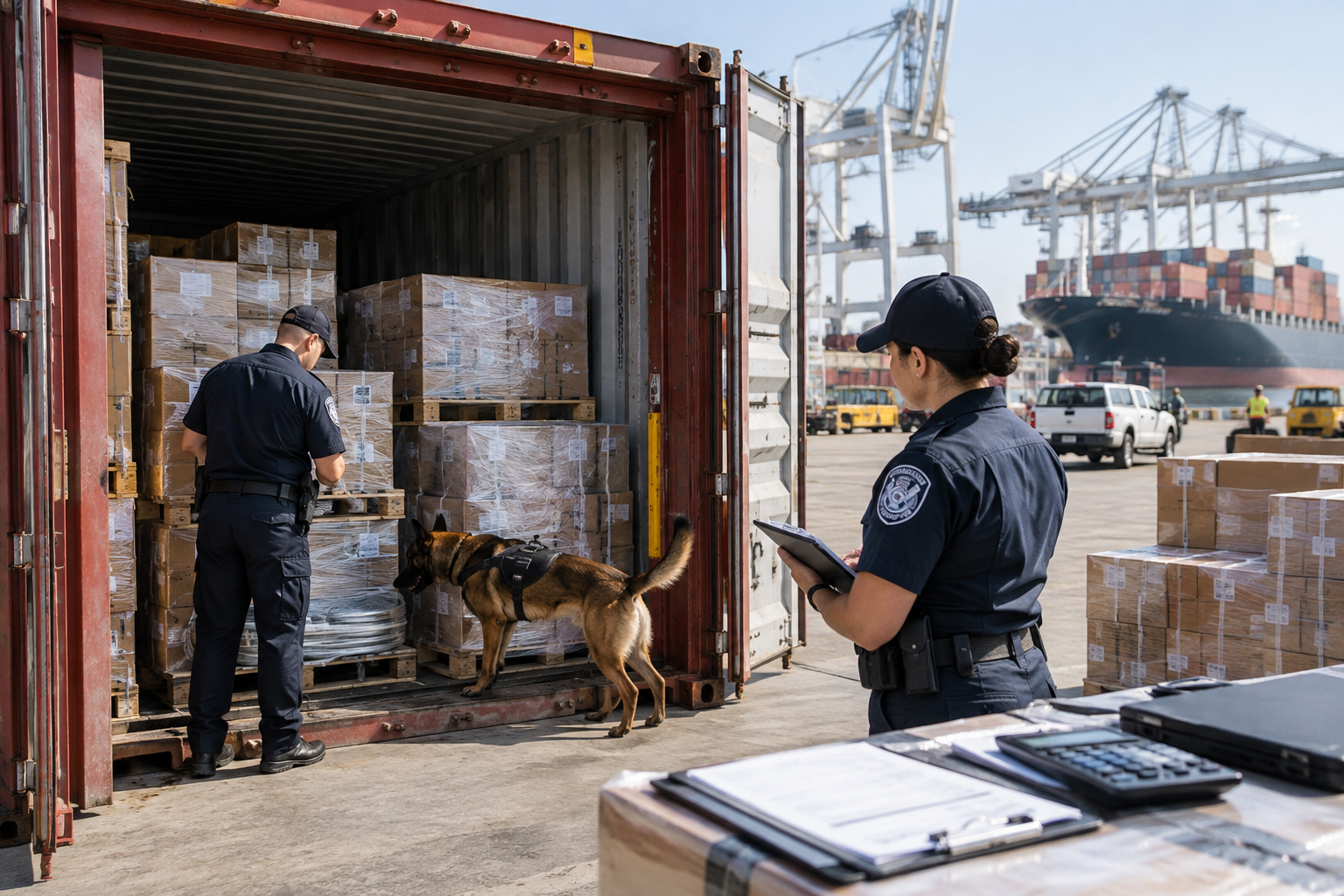
A shipment selected for examination can make the customs clearance process feel unpredictable. The importer needs answers, the broker needs confirmed instructions, and logistics providers may be waiting for permission to move cargo. Meanwhile, storage or equipment-related charges may be accumulating under the applicable terms.
The goal is not to predict an examination completion date. It is to control the operational handoffs: identify the hold, assign responsibility, document the next action, and distinguish regulatory release from physical pickup readiness.
This guide focuses on U.S. imports after examination selection. Containerized ocean freight provides many of the examples; air, truck, and other shipments have different facilities, release workflows, and charging arrangements.
Locate the shipment in the customs clearance process
“Held at customs” is not a sufficiently precise operational status. A shipment held at customs might be awaiting an examination, a response to an information request, action from another government agency, or several unresolved requirements simultaneously.
A cargo availability problem may also involve a carrier or terminal restriction rather than an unresolved customs examination.
Before arranging transport or authorizing additional services, establish which situation applies:
- Examination selection: U.S. Customs and Border Protection (CBP) has selected cargo for inspection. Ask what examination is indicated and whether movement is authorized or required.
- Information request: Documents or clarification are needed. Confirm the request, recipient, submission channel, and any response deadline. An information request does not necessarily prevent cargo release; ask whether it does in this case.
- Another agency’s hold: An agency with jurisdiction over the product may require its own review or action.
- Commercial or operational restriction: Freight payment, release documentation, terminal requirements, or cargo availability may prevent collection independently of customs status.
These conditions can overlap. Completing one requirement does not automatically clear the others.
Confirm the hold before taking action
Start with your customs broker. Ask for the latest confirmed status and supporting notice or system message, where available. A forwarded message saying “customs issue” should trigger clarification, not assumptions.
Send a focused status request
Ask your broker to confirm:
- Shipment, entry, bill of lading, and container references, as applicable.
- The exact hold or examination status and when it was checked.
- The responsible authority and any separate agency involvement.
- The requested action, who must perform it, and any applicable deadline.
- The cargo’s current location and whether transfer is required.
- Any prerequisite for scheduling or performing the examination.
- The next follow-up checkpoint, including who will report back.
Request a distinction between confirmed facts, working estimates, and unresolved questions. For example, “transfer requested” is not the same as “cargo received at the examination facility.”
The U.S. customs exam process does not have one dependable completion time for every shipment. Examination scope, facility capacity, cargo handling, and further requests can affect progress. Use agreed follow-up checkpoints rather than treating an estimate as a guaranteed release date.
Map responsibilities across the handoffs
Appoint one importer-side coordinator to maintain the incident record. That person should connect the parties without trying to replace their respective responsibilities.
| Party | What to ask them to clarify or coordinate | |---|---| | Importer | Product answers, available records, service authorizations, internal cost approvals, and receiving plans. | | Customs broker | Regulatory status, authority requests, appropriate response channels, and confirmation of customs or agency release. | | Carrier or forwarder | Transport references, carrier release requirements, freight-related balances, equipment terms, and relevant movement coordination. | | Terminal | Cargo location, terminal holds, free-time information, availability, payment requirements, and pickup procedures. | | Examination facility | Receipt of cargo, handling requirements, operational examination status, facility charges, and collection conditions within its remit. | | Drayage or transport provider | Authorized transfers, appointments, collection feasibility, delivery, and equipment return planning. |
The broker can coordinate and clarify, but cannot guarantee an authority’s decision or eliminate every third-party restriction. Using a broker also does not remove the importer’s own compliance responsibilities.
Likewise, an examination facility’s operational update is not a substitute for confirmed regulatory release. For each handoff, identify both the party performing the action and the party confirming completion.
Prepare for information requests without creating confusion
Keep a shared, access-controlled document pack ready. Focus on the records needed to answer the specific request, and check that they are consistent with information already submitted.
Include, as applicable:
- Commercial invoice and packing list.
- Bill of lading or other transport document.
- Product specifications and clear item descriptions.
- Relevant photographs, model references, or manufacturer information.
- Applicable origin evidence and previously submitted supporting records.
- A log of questions received, response deadlines, and responses provided.
Route responses through the broker or the channel identified in the official request. Avoid sending different versions directly to multiple parties without coordination.
If a requested fact is unknown, identify who can verify it. Guessing about product composition or intended use can create further questions and prolong a customs clearance delay.
Track customs examination charges by service and trigger
The phrase customs examination charges often groups together different services. Some costs arise from moving and handling cargo for inspection; others relate to storage, terminal use, or equipment time. Do not assume every invoice is a CBP fee.
Request itemized estimates from the relevant service providers. Record the service, charging basis, payer, trigger, and whether the amount is estimated or already incurred.
Build a practical cost checklist
Check for potentially applicable costs such as:
- Transport to and from an examination location.
- Container lifts, positioning, unloading, and reloading.
- Examination-related facility handling.
- Storage at the terminal or examination facility.
- Demurrage and equipment detention.
- Additional appointments, waiting time, or failed trips.
Ask whether services are bundled or billed separately. Also establish who must approve additional work and which payments are prerequisites for collection. Internal approval controls do not necessarily stop charges that accrue under applicable terms.
Verify free time rather than assuming a pause
Demurrage during customs examination requires shipment-specific verification. Do not assume an examination automatically stops a charging clock, extends free time, or establishes that every billed charge is valid.
In common ocean-freight usage, demurrage concerns containers remaining at a terminal beyond applicable free time, while detention concerns equipment kept outside the terminal beyond the allowed period. Terminology and charging structures vary, so verify the actual contract, tariff, and invoice basis.
Contract terms are not the only consideration. Applicable law and Federal Maritime Commission (FMC) rules may affect ocean-freight demurrage and detention billing and disputes. A customs hold alone does not settle whether a particular charge is valid.
Ask the responsible provider:
- What free-time terms apply to this shipment?
- What event starts or stops each charge?
- What is the confirmed last free day, and are calendar or business days used?
- How does the examination affect the calculation under the applicable terms and rules?
- What review or dispute process and deadlines apply if charges appear incorrect?
Track charges against timestamps and supporting records. Preserve evidence of cargo unavailability, appointment constraints, and equipment return restrictions where relevant. A current estimate of daily exposure is more useful than an unsupported total based on an assumed examination duration.
Separate customs release from freight release
Understanding the distinction between customs release and freight release prevents a costly mistake: sending a truck because someone said the shipment was “released.”
Use three distinct checkpoints.
1. Regulatory release
Have the broker confirm customs release and resolution of any applicable agency holds that prevent the intended movement. Ask whether any remaining regulatory restriction applies. Cargo release does not necessarily end all customs obligations or later review.
2. Carrier and commercial release
Confirm carrier release requirements, including applicable freight payments and transport-document conditions. Do not interpret customs release as proof that these requirements are complete.
3. Facility readiness and pickup
Verify the actual collection location. After an examination transfer, it may not be the original terminal.
Confirm that cargo is physically available, handling is complete, facility requirements are satisfied, and any required appointment can be secured. Give the transport provider the correct collection references and verify receiving arrangements.
For containerized cargo, also check equipment return instructions and applicable return timing. The incident is not operationally closed just because the truck has left the pickup facility.
Run a hold-to-pickup tracker
A shared tracker converts scattered emails into a controlled workflow. Use one row per unresolved action rather than one vague row for the entire shipment.
| Action | Owner | Last confirmed status | Evidence | Next follow-up | Potential cost exposure | |---|---|---|---|---|---| | Identify hold | Broker | Exact status and timestamp | Notice or system message | Agreed checkpoint | Charging clocks to verify | | Arrange authorized transfer | Designated logistics provider | Requested, booked, or completed | Movement confirmation | Receipt confirmation | Transport and handling | | Answer product question | Importer, routed appropriately | Requested or submitted | Request and response version | Receipt or further-action check | Possible additional storage | | Confirm releases | Broker, carrier, and facility within their roles | Each release recorded separately | Release confirmations | Remaining restriction check | Applicable storage or equipment charges | | Collect and return equipment | Transport provider | Appointment or trip status | Pickup and return records | Delivery or return confirmation | Waiting time and detention, if applicable |
Maintain a separate list of unknowns. “Free-time effect unconfirmed” is actionable; leaving the field blank hides the risk. Record formal response and dispute deadlines separately from routine follow-up checkpoints.
Close the incident and preserve the evidence
After collection, reconcile estimates against itemized invoices. Check service dates, charging periods, duplicate items, and the terms cited. Raise discrepancies promptly through the applicable review process without assuming that a waiver or refund is guaranteed. Do not wait until collection to challenge an invoice if a deadline falls earlier.
Retain relevant notices, correspondence, release evidence, movement records, and invoices under applicable recordkeeping requirements and your company’s policy.
Review process failures you can control: unclear ownership, slow supplier responses, missed status updates, or trucks dispatched before availability was confirmed. Repeated examinations do not by themselves establish a single cause.
For procedural questions, consult current CBP importing and exporting guidance and discuss shipment-specific requirements with your broker rather than relying on assumed deadlines. For ocean-freight billing questions, review current FMC guidance and seek qualified advice when necessary.
FAQ
How long does a U.S. customs examination take?
There is no single dependable timeline for every shipment. Ask for the confirmed examination stage, outstanding prerequisites, and next update checkpoint rather than a guaranteed completion date.
Does a customs exam automatically stop demurrage?
Do not assume it does. Verify the applicable terms, rules, charging events, and free-time calculation. Confirm the review process and dispute deadlines, and keep evidence of cargo availability and the period billed. A customs hold alone does not determine whether a charge is valid.
Can I collect cargo as soon as customs releases it?
Not necessarily. Any applicable agency holds that prevent movement, carrier requirements, facility restrictions, and physical availability must also be addressed before pickup is arranged.
Who should coordinate when several parties are involved?
Assign one importer-side coordinator to maintain the tracker. The broker handles regulatory coordination, while carriers, terminals, examination facilities, and transport providers confirm actions within their respective roles. The importer retains its own compliance responsibilities.
Build stronger sourcing and trade relationships
An examination is easier to manage when partners provide accurate information and respond through clear channels. Make responsiveness, document accessibility, and defined escalation contacts part of supplier and service-provider evaluation.
Ready to develop your B2B trade network? Explore IMEX Center to connect with prospective trade partners, and establish clear expectations for documentation and communication before doing business.
Source or sell globally with IMEX Center
Browse verified suppliers →