Import & Export
Frozen Chicken Suppliers in Brazil: Bulk Sourcing for Saudi Arabia
22 Oct 2026 · 06:02 CET
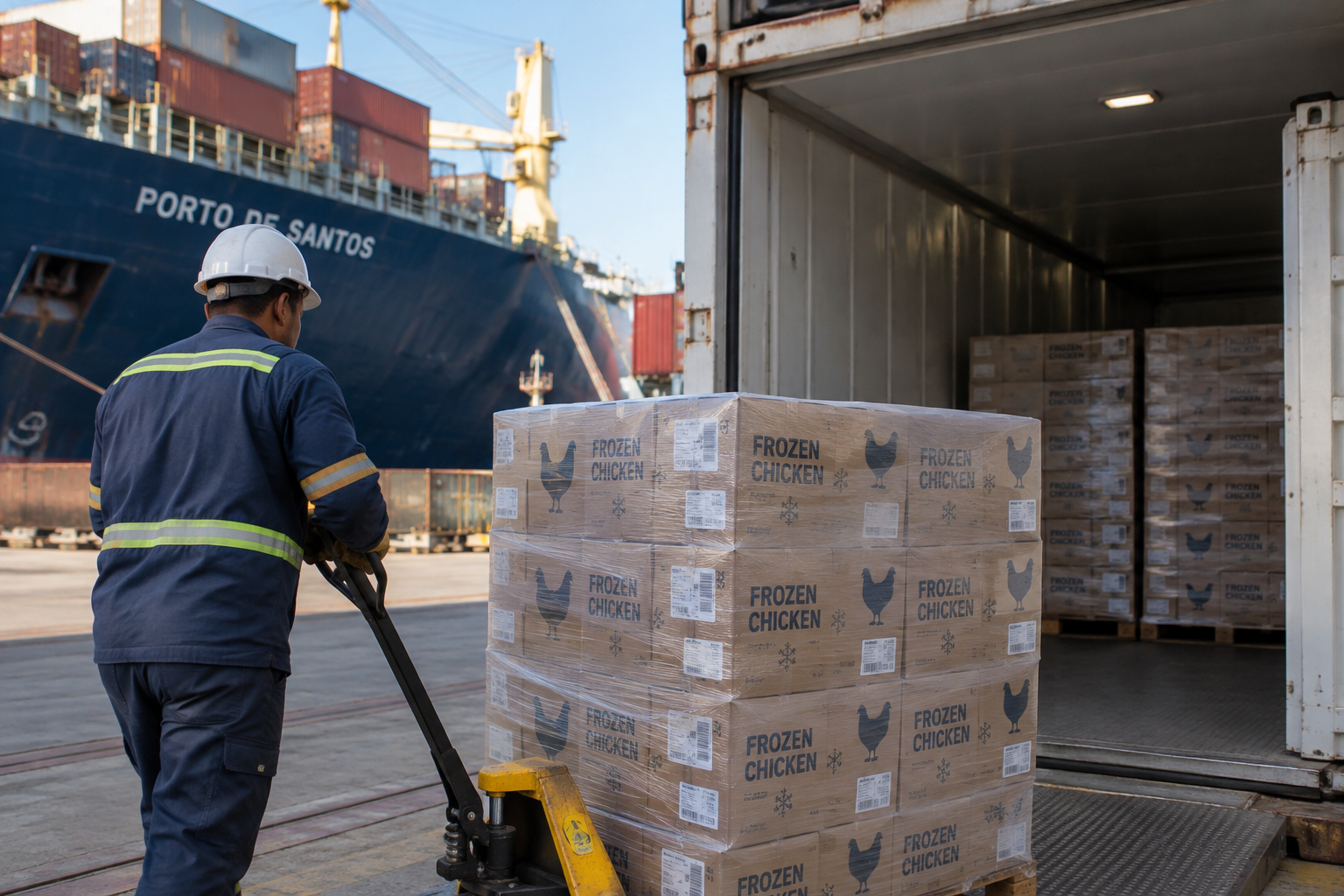
Saudi importers evaluating frozen chicken suppliers in Brazil need more than a competitive price. A workable offer must identify the actual producing establishment, meet current Saudi entry requirements and match the product your customers can sell. Eligibility, halal documentation and shipment specifications should be checked before a low quotation becomes a purchase commitment.
This guide gives sourcing managers, distributors and food-service buyers a practical process for qualifying Brazilian suppliers, comparing bulk offers and preparing a trial order. Treat regulatory checks as transaction-specific: requirements and restrictions can change, and previous shipments do not establish present eligibility.
1. Define the Order Before Requesting Quotes
Start with a written buying specification. “Frozen chicken, one container” leaves too much unresolved for comparable quotations or reliable acceptance checks.
Separate whole birds, cuts and offal
Whole chickens, breast meat, leg quarters, wings and edible offal are not interchangeable purchasing categories. Their customer uses, packing formats, classification and saleable yields can differ. Do not assume an establishment approved for one category can supply every poultry product to Saudi Arabia.
For whole birds, specify the acceptable weight bands and whether giblets are included. For cuts, define the anatomical cut, bone-in or boneless presentation, skin condition and permitted trimming. Describe offal separately rather than including it under a generic chicken specification.
Build a minimum specification sheet
Include:
- Exact product description and intended retail, wholesale or food-service channel.
- Weight range, grading requirements and acceptable tolerances.
- Freezing format, such as individually quick frozen or block frozen, where relevant.
- Inner packaging, units per carton and net carton weight.
- Glazing or added ingredients, if applicable, with the declared weight basis.
- Trial quantity, expected repeat volume and delivery schedule.
- Required remaining shelf life at arrival and storage instructions.
- Saudi discharge port, final delivery point and requested Incoterms rule.
Owner and timing: The sourcing manager should obtain sales and quality-team approval of this sheet before approaching suppliers. Otherwise, procurement risks buying a technically compliant product that customers will not accept.
2. Identify Frozen Chicken Suppliers in Brazil by Establishment
Brazilian chicken exporters may be producers selling directly, export agents representing a producer, or traders buying from several establishments. Each model can work, but the commercial seller and physical producer must be clearly distinguished.
Ask every bidder to identify its legal entity, role in the transaction and proposed slaughtering, processing and storage establishments, as applicable. Request the relevant establishment approval numbers and verify them independently through current official sources.
Look behind the exporter’s brand
A brand name, website or catalogue does not prove that the proposed plant is eligible for your product and destination. Nor does a sample document from another establishment validate the actual shipment.
Use these supplier-screening questions:
- Who will sign the contract, issue the invoice and receive payment?
- Which establishment will produce the goods?
- Does the seller control production allocation or still need to secure supply?
- Can the seller provide traceable supporting documents for that establishment?
- Will any subcontractor or alternative plant be used?
- Can production and loading availability be confirmed in writing?
Require the buyer’s written approval and renewed eligibility checks before any plant substitution. Independently verify beneficiary details and investigate unexplained differences between the seller, invoice issuer and payment recipient.
Owner and timing: Procurement should complete seller and establishment checks before supplier approval; finance should verify payment details before funds are released.
3. Verify Saudi Market Eligibility Before Shortlist Approval
For frozen chicken imports into Saudi Arabia, eligibility is a prerequisite—not a document to chase after loading. Check current official country, product and establishment requirements, including any applicable restrictions affecting the proposed origin or plant.
The importer should consult current Saudi Food and Drug Authority information and relevant official Saudi halal certification resources. Cross-check Brazilian establishment and export information through the competent Brazilian authority, including the Ministry of Agriculture and Livestock (MAPA), as applicable. Use your customs broker and regulatory adviser to resolve unclear requirements before contracting.
Check halal documentation against the actual supply chain
When evaluating Brazilian halal chicken suppliers, do not accept “halal available” as a complete answer. Establish which certification body is involved and whether its recognition and certification scope satisfy current Saudi requirements for the transaction.
Confirm:
- The proposed establishment and product are covered by the applicable approval or certification.
- Certificate validity, identifiers and scope match the proposed supply.
- Any required shipment-specific halal documentation can be issued.
- Required official health documentation can be issued in the accepted form.
- Product descriptions and establishment identifiers remain consistent across documents.
- The importer has completed applicable registrations and clearance arrangements.
A halal certificate is not a substitute for country, product or establishment eligibility. Likewise, an establishment listing alone does not demonstrate that every shipment document is correct.
Owner and timing: The importer’s regulatory lead should record sources, findings and unresolved points before shortlist approval, then recheck relevant eligibility before shipment. Do not authorise shipment while a material requirement remains unresolved.
4. Confirm the HS Code for Frozen Chicken
Classification affects tariff treatment, clearance and landed-cost assumptions. The HS code for frozen chicken depends on what is actually supplied, not simply the seller’s catalogue description.
At the international six-digit HS level, frozen chickens of the species Gallus domesticus, not cut in pieces, fall under 0207.12. Frozen cuts and edible offal of that species fall under 0207.14. These are starting points, not a substitute for confirming the applicable Saudi tariff line.
Give the broker a complete product description
Ask your Saudi customs broker to confirm the national tariff classification using the exact product, presentation and composition. Products that are seasoned, prepared or otherwise processed may require different classification analysis from plain frozen poultry.
Provide the specification sheet, label draft, ingredient statement where applicable and product photographs. Ask the broker to confirm current duty, tax treatment and any classification-linked requirements using official Saudi tariff information, including resources from the Zakat, Tax and Customs Authority (ZATCA).
Owner and timing: The broker should confirm classification before procurement finalises the landed-cost comparison. Avoid putting whole birds, cuts and offal into one generic tariff assumption.
5. Compare Like-for-Like Bulk Quotations
The lowest quoted price per tonne may not produce the lowest cost per saleable kilogram. A useful comparison aligns product specifications, weight basis, shipment quantity, delivery responsibilities and payment conditions.
Ask bulk frozen chicken suppliers to quote against the same specification and identify all deviations. Keep nonconforming alternatives separate instead of blending them into the main comparison.
Build a transparent cost comparison
Record these items for every offer:
- Product price, currency and net-weight basis.
- Incoterms rule, named port or place, and agreed Incoterms edition.
- Freight, insurance and origin charges, showing what is included.
- Inspection, certification and documentation charges, if separately payable.
- Destination handling, customs brokerage and inland refrigerated delivery.
- Applicable duties and taxes, separating recoverable taxes where relevant.
- Financing, payment-security and currency-conversion costs.
- Potential storage, demurrage, detention and delay exposure.
Do not compare an FOB offer with a CIF offer without adjusting for the different cost responsibilities. Confirm the cargo insurance scope rather than assuming it covers temperature excursions or every rejection scenario. Also distinguish the point where risk transfers from the destination to which the seller pays carriage.
Calculate cost against accepted net product weight, not gross carton weight. For products intended for further processing, also consider validated yield and customer acceptance; a cheaper cut may require more trimming or fail the buyer’s portion specification.
Owner and timing: Procurement should prepare the comparison before supplier selection. Finance and logistics should validate payment exposure, freight assumptions and destination costs before purchase approval.
6. Agree Shipment Acceptance Conditions Before Contracting
A compliant departure does not guarantee an acceptable arrival. Cold-chain handling, label accuracy, shelf life and claims evidence must be agreed before production and loading.
Turn quality expectations into acceptance criteria
The importer, supplier and cold-chain provider should agree:
- Product temperature requirements, transport settings and monitoring arrangements.
- Logger placement, record access and responsibility for reviewing excursions.
- Minimum remaining shelf life at the agreed delivery milestone.
- Label content and language requirements under current Saudi rules.
- Lot coding and traceability across cartons and shipment documents.
- Loading checks, container condition and seal-record procedures.
- Inspection method, sampling basis and treatment of nonconforming goods.
- Claims deadlines, evidence requirements and available remedies.
Do not confuse a refrigerated container’s set point with proof of product temperature. Review monitoring evidence and investigate gaps rather than treating the container display as a complete cold-chain record.
Specify who pays for inspection, storage or disposal if goods fail agreed conditions, subject to applicable law. Contractual acceptance criteria do not override regulatory requirements or official clearance decisions. Require documentary and label review before dispatch so correctable errors do not reach the destination.
Owner and timing: Quality and logistics should approve the acceptance protocol before contract signature, review loading evidence before dispatch and preserve arrival evidence immediately when a discrepancy is detected.
7. Issue a Purchase-Ready RFQ and Control the Trial Order
A strong request for quotation (RFQ) makes suppliers answer the same questions and exposes missing information early. Attach your specification and request a structured response rather than a catalogue price.
Final RFQ checklist
Request:
- Seller identity, commercial role and proposed establishment details.
- Exact product specification and a separate list of deviations.
- Supporting eligibility and halal information for importer verification.
- Proposed health and commercial documentation.
- Label and packing samples for review.
- Production availability, loading window and quotation validity.
- Complete pricing, Incoterms rule, payment terms and exclusions.
- Acceptance of inspection, traceability and claims conditions.
Approve a trial order only after regulatory, quality, logistics and finance checks are complete. A smaller shipment limits commercial exposure but does not relax import requirements. Before scaling up, review actual delivered cost, document accuracy, temperature evidence and customer acceptance.
Owner and timing: Procurement should coordinate trial-order approval before placing the order and lead a cross-functional review after delivery, before committing to repeat volume.
Frequently Asked Questions
How can Saudi buyers verify a Brazilian chicken supplier?
Identify both the contractual seller and actual producing establishment. Check current official country, product and plant eligibility, verify applicable halal recognition and reconcile supporting documents with the proposed shipment. Previous Saudi deliveries are not sufficient evidence by themselves.
Do all Brazilian halal chicken suppliers qualify for Saudi Arabia?
No. A halal claim alone does not establish Saudi import eligibility. The importer must verify applicable certification recognition and scope alongside current country, product, establishment and shipment-document requirements.
What is the HS code for whole frozen chicken versus cuts?
At the international six-digit level, whole frozen chickens of the species Gallus domesticus fall under 0207.12; frozen cuts and edible offal fall under 0207.14. A broker should confirm the applicable Saudi tariff line for the exact product.
What should a bulk frozen chicken quotation include?
It should identify the product specification, establishment, quantity, net-weight basis, Incoterms rule, named port or place, payment terms, availability and exclusions. Buyers should add verified destination costs and applicable duties and taxes before comparing offers.
Source or List on IMEX Center
Ready to build a qualified shortlist? Visit IMEX Center to source Brazilian frozen chicken or list your export offering. Buyers should lead with destination, product specifications and eligibility requirements; suppliers should provide establishment details and transparent quotation terms so discussions can move toward a verifiable order.
Source or sell globally with IMEX Center
Browse verified suppliers →