Customs News
HS Code Lookup for Industrial Pumps: Liquid Pumps, Vacuum Pumps or Parts?
05 Oct 2026 · 04:02 CET
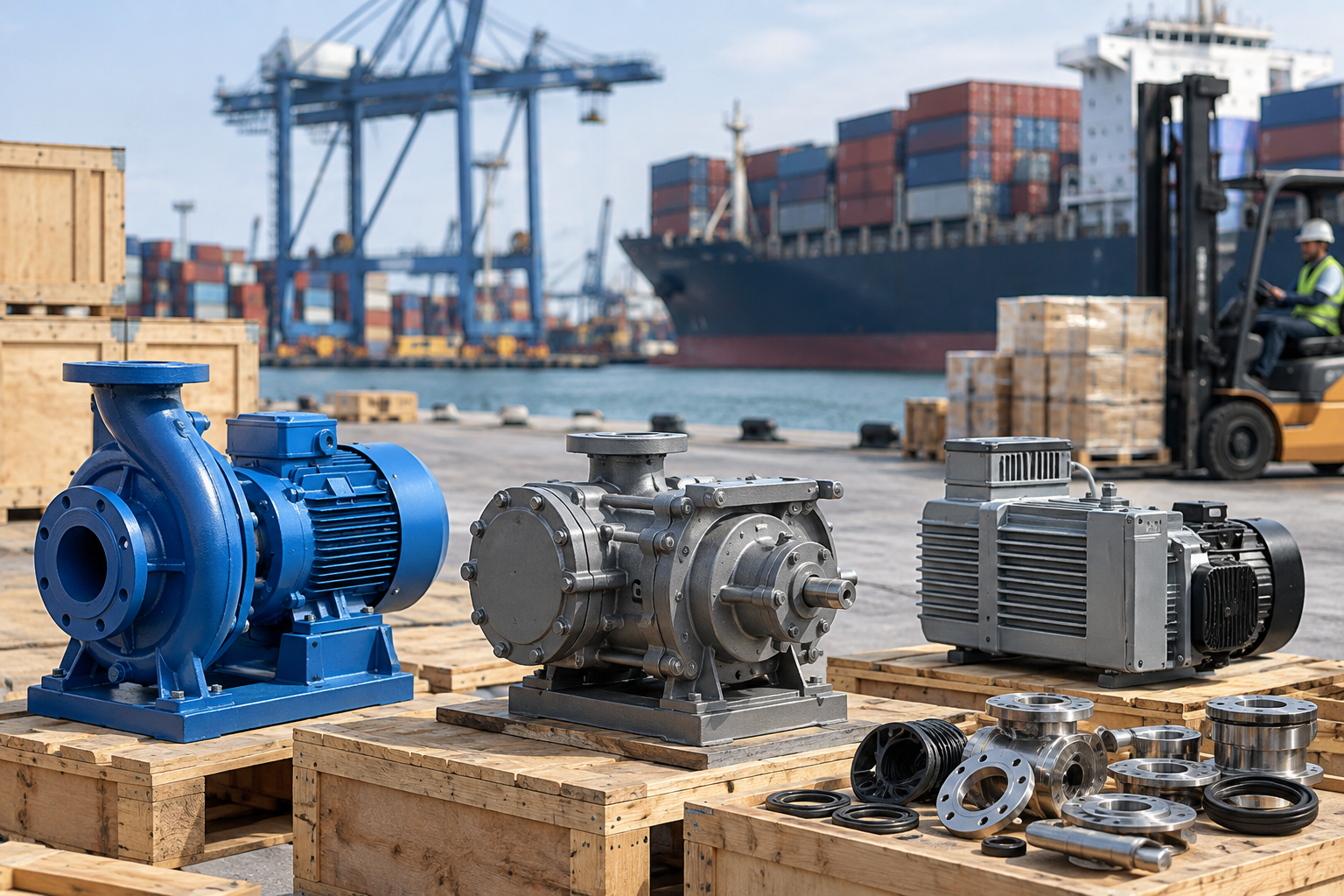
An HS code lookup for industrial pumps should begin with the equipment’s technical identity—not the tariff number printed on a supplier’s quotation. Liquid pumps, vacuum pumps, replacement components and integrated pumping systems can require different classification analyses, even when they appear in the same purchase order.
For importers and distributors, accepting a generic supplier code creates avoidable purchasing risk. It can distort landed-cost estimates, leave a broker without essential evidence and create discrepancies between the goods and the customs declaration.
The practical approach is to establish what is being imported, document how it operates, identify the relevant six-digit HS provision, and verify the destination-market tariff line before filing. The codes below are classification starting points, not binding determinations for a particular shipment.
HS Code Lookup for Industrial Pumps: Start with the Shipment
First establish the goods’ condition as imported. A complete pump, a replacement impeller and a skid containing several machines are not interchangeable classification cases.
Separate the shipment into clear commercial and technical categories:
- Complete pump units, with or without a drive motor.
- Pumps presented unassembled or incomplete.
- Standalone replacement components.
- Pump-and-motor packages on a common base.
- Integrated skids with tanks, filters, controls or other machinery.
Do not assume separate packing creates separate classifications. Under the applicable interpretative rules, a complete article presented unassembled—or an incomplete article with the essential character of the finished article—may be classified as the complete article.
Conversely, shipping several components together does not automatically make them one machine. Record which components are presented together and what function the assembled equipment performs.
Build a Supplier-Specification Checklist
Ask the manufacturer for model-specific documents before agreeing to a classification. A catalogue description such as “industrial pump” or “vacuum system” is too broad for a reliable tariff search.
Classification-critical information
Request the following for each model:
- Medium handled: water, oil, chemicals, slurry, air, gas or mixed media.
- Operating mechanism: centrifugal, reciprocating positive displacement, rotary positive displacement or another design.
- Application: transfer, dosing, engine service, vacuum generation or another defined duty.
- Motor configuration: bare-shaft pump, close-coupled motor, separate drive or packaged assembly.
- Imported condition: complete, incomplete, unassembled or replacement component.
- Construction and performance: materials, stages, flow rate, pressure and relevant dimensions.
- Assembly evidence: datasheets, sectional drawings, photographs and a bill of materials.
- System function: what the complete skid does and how its components contribute.
Not every specification changes the international six-digit code. Some distinguish national tariff lines; others substantiate the classification or reveal that the product has been described incorrectly.
Ask the supplier to connect every datasheet and drawing to the exact model and revision being purchased. A generic brochure may cover designs that fall under different provisions.
Distinguish Liquid Pumps from Vacuum Equipment
The first major distinction is the medium being pumped and the equipment’s actual function.
Heading 8413 covers pumps for liquids, whether or not fitted with a measuring device, and liquid elevators. Heading 8414 includes air or vacuum pumps alongside other specified equipment, including air or other gas compressors and fans. These heading references are starting points, not final classifications for every product marketed as a pump.
A liquid-ring vacuum pump illustrates why the sales name alone is insufficient. Although liquid participates in its operation, the equipment’s purpose is to evacuate gas. Its classification analysis should therefore consider the vacuum-pump provisions rather than treating the sealing liquid as the medium being transferred.
For a vacuum pump HS code search, subheading 8414.10 is the six-digit reference to examine for vacuum pumps. Confirm that the imported article is actually a vacuum pump, rather than a compressor, a part or a larger assembly with a different classification basis.
Narrow the Search by Mechanism and Application
Once liquid-pump heading 8413 is supported, compare the machine against the full subheading structure. Do not jump directly from “centrifugal” or “positive displacement” to a code without checking the relevant descriptions, legal notes and subheading hierarchy.
Centrifugal pumps
A centrifugal pump HS code search commonly leads to 8413.70, covering other centrifugal pumps. However, “other” matters: first determine whether the pump falls within another specifically described category in the heading, such as certain engine pumps or pumps fitted or designed to be fitted with a measuring device.
Document the pumping mechanism and intended application. Then inspect the destination schedule for any further distinctions relevant to the model.
Positive-displacement pumps
For positive-displacement pumps, distinguish between these candidate subheadings:
- 8413.50: other reciprocating positive-displacement pumps.
- 8413.60: other rotary positive-displacement pumps.
Piston or plunger designs commonly point toward reciprocating operation; gear or screw designs commonly point toward rotary operation. Confirm the actual mechanism from the manufacturer’s documentation rather than relying on the product family name.
These are candidate references, not blanket assignments. Provisions for particular uses—such as certain pumps for internal-combustion piston engines—must also be considered before settling on an “other” subheading.
Assess Replacement Parts Separately
A pump parts HS code should not simply duplicate the code for the complete pump. Equally, not everything sold as a pump spare necessarily belongs under a pump-parts provision.
Subheading 8413.91 covers parts of pumps within heading 8413, but its use must be supported by the applicable legal notes and the component’s identity. Parts of vacuum pumps require a separate analysis under the relevant provisions.
Components that need individual review
- Electric motors: consider the provisions for motors rather than automatically using a pump-parts code.
- Valves: check the relevant valve provisions and the actual product design.
- Seals: distinguish mechanical seals from gaskets, packing and other sealing articles.
- Bearings and fasteners: examine their own tariff provisions and applicable exclusions.
- Casings and impellers: document their identity and suitability for use solely or principally with the relevant pumps.
The machinery parts rules, including relevant Section XVI notes, are central to this review. A component’s own tariff description can take precedence over a general parts description.
For mixed spare-parts orders, create a line-by-line register with descriptions, materials, functions and compatible models. Do not classify an entire maintenance package from its commercial kit name alone.
Verify the Six-Digit HS Code and Destination Tariff Line
The HS provides an international six-digit classification framework. Import declarations generally require the destination’s more detailed tariff or statistical code. A supplier’s export code may therefore be insufficient—or inappropriate—for the importing country.
Use this verification sequence:
- Read the candidate heading and subheading descriptions in context.
- Check relevant section notes, chapter notes and interpretative rules.
- Review the destination’s additional tariff subdivisions.
- Search official classification rulings for technically comparable goods.
- Record the source, schedule version and reasoning behind the selected code.
For example, consult the official U.S. Harmonized Tariff Schedule for U.S. imports or the European Commission’s Access2Markets resources for EU trade research, following through to the relevant tariff and measure details.
A ruling for a similar pump is useful evidence, not automatic authority for a different model. Check its jurisdiction, technical facts, current status and scope of applicability.
Check Industrial Pump Import Duty and Other Measures
Industrial pump import duty cannot be established from a six-digit code alone. The calculation depends on the destination tariff line, origin, customs value and measures effective at entry.
Before issuing a landed-cost estimate, verify:
- The ordinary duty rate for the destination tariff line.
- Whether preferential treatment is available and supported by origin evidence.
- Any additional tariffs or trade-remedy measures affecting the goods.
- The applicable valuation basis and required adjustments.
- Import taxes, fees and other applicable charges.
- Any licensing, restrictions or product-compliance requirements.
Country of shipment is not necessarily country of origin. Likewise, a supplier’s statement that goods are “duty free” does not establish preference eligibility.
Recheck the applicable schedule and measures before filing, especially when procurement and shipment are separated by a long lead time.
Prepare a Broker-Ready File Before Dispatch
A well-documented customs clearance process for industrial pumps starts before the goods reach the border. Give the broker enough information to assess the classification, not just copy a supplier’s code.
Pre-shipment documentation checklist
- Commercial invoice with precise product descriptions and model numbers.
- Packing list linking packages to units, components and quantities.
- Model-specific datasheets and operating descriptions.
- Drawings or photographs showing the imported configuration.
- Bill of materials and functional description for assemblies.
- Proposed classification and supporting reasoning.
- Origin support where required, including preference documentation when claimed.
- Relevant valuation information and any applicable ruling reference.
For example, “centrifugal pump for transferring water, model [model], supplied with electric motor on baseplate” is more informative than “industrial equipment.” Include only characteristics verified for the actual shipment.
Keep invoice, packing and technical documents consistent. If the supplier changes the mechanism, motor arrangement or shipment configuration, reassess the classification before dispatch.
Know When an Integrated Skid Needs a Ruling
An integrated pumping system may involve composite-machine or functional-unit rules. A pump, tank, filter and control panel on one skid do not automatically take the pump’s classification simply because the pump is the largest component.
Document the system’s principal or clearly defined function, as applicable, the relationship between components and any independent functions. Consider the relevant Section XVI notes and destination practice. Physical integration alone does not establish that a system qualifies as a functional unit.
Seek a formal classification ruling through the destination’s procedure when competing headings remain plausible, the assembly is technically unusual or recurring imports make uncertainty commercially significant. Apply early enough for the decision to inform shipping and filing plans.
Frequently Asked Questions
Can I use the HS code supplied by the manufacturer?
Use it as a starting point. Verify it against the actual model, imported configuration and destination tariff schedule. The supplier’s export code may not match the required import tariff line.
Do all centrifugal pumps use HS 8413.70?
No. That subheading covers other centrifugal pumps. Review the full heading structure and any more specific provisions before assigning it, then confirm the destination’s additional subdivisions.
Should replacement motors and seals use the pump’s code?
Not automatically. Motors, mechanical seals, gaskets and other components can have their own tariff provisions. Assess each item under the applicable descriptions and parts rules.
When should I request a classification ruling?
Consider one when documentation leaves competing classifications unresolved, particularly for integrated skids, unusual assemblies or recurring purchases. Follow the destination customs authority’s requirements and confirm the ruling’s scope.
Source or List Industrial Pumps on IMEX Center
Reliable sourcing starts with specifications that support both purchasing decisions and customs review. Ask suppliers for model-level technical evidence before accepting a generic pump classification.
Visit IMEX Center to source industrial pumps or list your pump products. Include the medium handled, operating mechanism, imported configuration and available documentation so trade partners can evaluate the equipment and prepare their destination-market checks.
Source or sell globally with IMEX Center
Browse verified suppliers →