
Import & Export
Lentil Importers by Country: Build a Better Export Shortlist
16 Nov 2026 · 06:03 CET
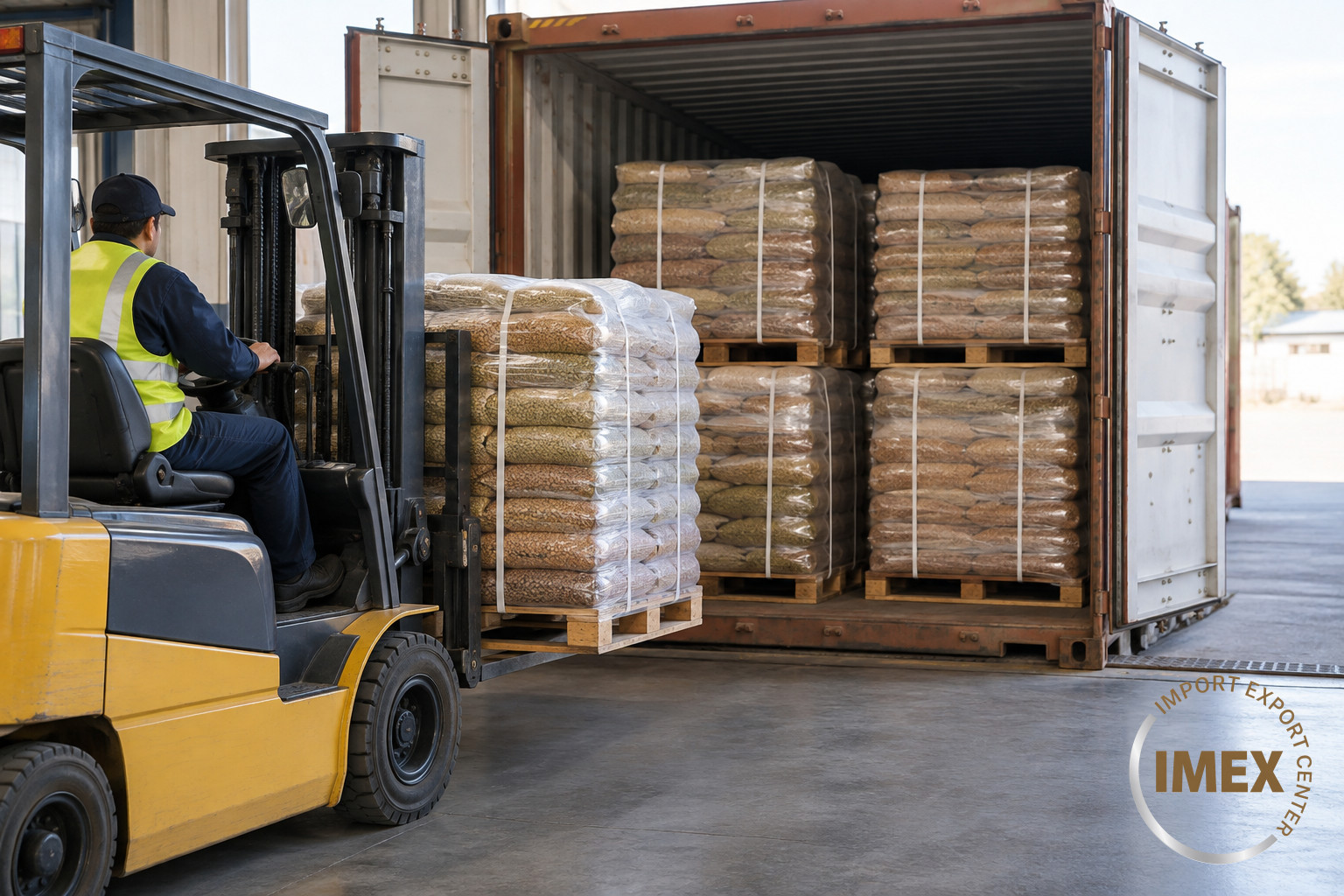
The biggest lentil import market is not automatically your best next customer. A destination can import substantial quantities while offering little opportunity for your particular variety, packaging, shipment window or payment terms. The exporter’s task is to connect market demand with a buyer and an order the business can actually fulfill.
Searching for lentil importers by country is a useful starting point, but the results often mix national trade statistics, company directories and production figures. Those sources answer different questions. A country’s import total does not identify purchasing managers, and a directory listing does not prove that a business is currently buying.
This guide explains how to build an evidence-led export shortlist: define comparable import data, assess market access, qualify buyers and prepare a commercially useful offer.
Scope note: No numerical country ranking is established here. The supplied material contains no official statistical extract sufficient to verify a 2025 ranking. The methodology below uses calendar-year 2025 as a proposed research period, not as a claim that complete data has been obtained.
What Lentil Import Volumes Can—and Cannot—Tell You
For an exporter selling physical cargo, import net mass provides a practical measure of market scale: how much dried lentil product a destination reported importing during a specified period.
Trade value answers a different question: what monetary value was reported for those imports? Prices, product mix and valuation practices can make a value ranking differ from a volume ranking. Both measures can be useful, but they must remain clearly labeled.
Production figures are different again. A producing country may also import lentils to meet particular product preferences, supply processing businesses or address seasonal availability. Production alone does not establish whether a destination is a suitable export market.
Reported imports also should not be treated as domestic consumption. Re-export activity, processing and inventory changes can affect the relationship between goods entering a country and goods consumed there.
Use national import statistics to decide where to investigate. Use buyer-level evidence to decide whom to approach and transaction-level checks to decide whether to commit.
Define the Dataset Before Comparing Countries
A credible comparison of lentil import volume by country starts with consistent filters rather than a list of familiar destinations.
For the proposed analysis, the research specification is:
- Original source: An accessible official UN Comtrade extract, with its query and retrieval date retained.
- Observation period: Calendar-year 2025, subject to a coverage review.
- Commodity: Dried lentils, shelled, whether or not skinned or split.
- HS code: 071340, with the classification version recorded.
- Trade flow: Imports.
- Partner: World.
- Measure: Net mass, displayed in metric tonnes, with reported or estimated status preserved.
- Geographic scope: Individual reporting countries or customs territories, identified accurately and excluding overlapping regional aggregates.
HS 071340 is a customs category, not a complete commercial specification. It does not establish the colour, variety, grade, crop year or packaging that an individual buyer requires.
Check recent releases before choosing the final period
Start by checking current-year and previous-year official releases. Current-year figures may cover only part of the year, while previous-year reporting may still be incomplete. Neither should be described as a complete annual comparison without checking coverage.
If comparable 2025 observations are unavailable, use an older official period only when necessary and explain why. Change the title, table and commentary together; never fill missing 2025 rows with another year’s figures.
A file released in 2026 may contain 2025 observations. Its release date does not make it 2026 trade. Similarly, a partial-year series must retain its exact months and cannot be inserted into an annual ranking as though it covered a full year.
Keep units and record status consistent
When net mass is supplied in kilograms, divide by 1,000 to express metric tonnes. Sort using the underlying precision and round consistently for display.
Do not substitute gross weight, package counts or an unrelated supplementary quantity when net mass is missing. Missing weight is not zero, and it does not authorize an estimate.
Preserve source flags indicating estimated weight or other relevant qualifications. A table should not describe every observation as directly reported if the source distinguishes reported and estimated records.
What a Country Ranking Must Prove
An official source is essential, but it does not automatically make a ranking complete. Reporting gaps, duplicate records and overlapping geographic coverage can still produce misleading results.
Before publishing a country comparison, confirm that:
- Every row uses the same observation period, commodity classification, trade flow and partner filter.
- Net mass is present and distinguished from a reported zero.
- Estimated observations are identified and their treatment explained.
- Duplicate records and overlapping aggregates have been removed.
- The included reporting universe and material coverage gaps are documented.
- The ranking claim is supported by that reporting universe.
- The source extract, calculations and retrieval date are preserved for review.
Fifteen available observations do not necessarily establish the global top fifteen. Missing reporters may change the order. If evidence supports only a covered subset, the headline and notes must say so; if even that narrower comparison cannot be established reliably, do not publish a numerical ranking.
For an IMEX Center statistical infographic, use a comprehensive 15–30-row ranking only after evidence review confirms the period, units, geography and completeness of the stated scope. Do not pad a sparse dataset with guessed destinations or estimated missing rows.
Build an Export Shortlist Around Commercial Fit
A validated import ranking provides a first screening layer. The next step is to test whether your business can serve each destination competitively and lawfully.
Product fit: start with the actual lot
Compare the buyer’s requirement with the product you can supply. Confirm whole or split form, colour or variety, crop year where relevant, and measurable quality limits.
Depending on the transaction, specifications may address moisture, foreign matter, damaged grains, size or other product characteristics. Agree applicable limits, measurement basis, sampling and test methods rather than assuming a universal lentil standard.
Use relevant lot evidence. A generic brochure, an old certificate or a supplier’s broad quality statement does not establish the condition of the shipment being offered.
Market access: check requirements before quoting firmly
Confirm destination requirements through the relevant official authorities and qualified local advisers where needed. Investigate import permissions, plant-health controls, food-safety requirements, labeling and any origin-specific restrictions.
Check tariff treatment using the destination’s applicable tariff classification and origin rules. A six-digit HS heading may not capture the national tariff-line detail needed for an accurate landed-cost calculation.
Do not promise that a certificate will be sufficient until its required issuer, wording, scope and acceptance have been checked. A phytosanitary certificate, for example, does not replace every other food-safety or contractual requirement.
Delivery fit: compare costs on the same basis
Identify the loading point, destination, shipment window and transport arrangement. Request current freight and handling quotations instead of relying on a general assumption that a large market will be economical to serve.
Compare offers using the same delivery basis. An FOB price and a delivered price are not directly comparable without adjusting for their different responsibilities and costs.
Choose an Incoterms 2020 rule appropriate to the shipment and name the port or place precisely. FOB, CFR and CIF apply to sea or inland-waterway transport. Under these rules, risk passes when goods are on board at the loading port; CFR and CIF do not move that risk-transfer point to arrival merely because the seller pays freight.
Transaction fit: assess the buyer, not the national total
Review payment terms, bank acceptance, purchasing authority and inspection arrangements before committing cargo. A large national import market does not reduce the credit risk of an individual counterparty.
Keep commercial priorities separate from statistical rank. A smaller destination with a suitable buyer, workable logistics and acceptable payment terms may deserve your first sales call.
Find Bulk Lentil Buyers Without Mistaking Leads for Orders
Country statistics identify destinations, not purchasing departments. Within each shortlisted market, investigate relevant buyer segments such as import distributors, wholesalers, retail packers and food processors.
These are prospecting categories—not evidence that any particular company is active, qualified or accessible.
For each potential buyer, establish:
- Its legal identity, registration and actual trading role.
- Whether it imports directly or purchases through an intermediary.
- The products, specifications and packaging it buys.
- The identity and authority of the purchasing contact.
- Whether it has a current requirement and a realistic purchasing timetable.
- What evidence supports its business claims and transaction capacity.
Verify important details through independent channels. For example, confirm a purchasing contact using an independently obtained company contact route rather than relying solely on details supplied in an unsolicited message. Treat unexpected changes to payment instructions as requiring fresh verification.
A directory entry is a lead. Verified legal identity helps establish who you are dealing with. Neither is proof of funds, a purchase order or assurance of payment.
Mark unknown details as pending verification, and keep sensitive counterparty documents within appropriate access controls.
Ask Questions That Produce a Usable Buyer Requirement
Generic outreach creates avoidable follow-up. Replace “We supply premium lentils; please advise demand” with a short, specific offer and questions that reveal whether the transaction is workable.
Product and intended use
Ask whether the buyer requires whole or split lentils, which colours or varieties are acceptable, and whether the intended use is retail packing, foodservice or processing. Request measurable specifications and agreed testing methods.
Quantity and packaging
Confirm the order quantity, unit and permitted tolerance. Ask about bulk or bagged supply, bag weight, markings and pallet requirements where relevant.
Separate a trial order from an indicative annual requirement. An annual purchasing estimate is not a commitment to accept that quantity in one shipment—or at all.
Delivery and documents
Confirm the named delivery point, preferred Incoterm, shipment window and partial-shipment conditions. Ask which analyses, certificates and inspection records are required, then check the applicable official requirements separately.
Payment and acceptance
Clarify currency, payment method, bank requirements and documentary conditions. Agree the inspector, sampling process, testing methods and acceptance criteria.
An irrevocable LC at sight pays against complying documents under its terms. It is not automatic payment when a vessel arrives and does not guarantee goods quality. Have the proposed documentary conditions reviewed before shipment so that the seller understands what must be presented.
Prepare an RFQ or Offer That Supports Negotiation
A structured request helps sellers quote consistently and buyers compare offers fairly. There is no single mandatory universal international RFQ or LOI format, but essential information should not be left implicit.
Include:
- Document reference, date, validity and authorized signatory or contact, as appropriate.
- Buyer and seller legal identities, with unknown details marked pending verification.
- Commodity, grade, intended use, origin and crop year where applicable.
- Technical parameters, units, minimum or maximum limits, measurement basis and test methods.
- Quantity, tolerance, packaging and markings.
- Shipment schedule, loading and destination points, and partial-shipment conditions.
- Incoterms 2020 rule with the named port or place.
- Currency, proposed payment terms, bank acceptance and documentary conditions.
- Inspection, sampling, testing and acceptance arrangements.
- Required certificates, shipment records and insurance documents where applicable.
An RFQ should ask for unit and total prices, quote validity, supply capacity, shipment availability, technical compliance or deviations, and supporting documentary evidence.
An LOI expresses purchasing intent and proposed conditions. It should specify validity, conditions precedent, authorized acceptance and which provisions, if any, are binding. Do not present it as a concluded supply contract or proof of funds.
Incoterms allocate delivery obligations, risk and costs; they do not determine payment or ownership. Document-generation tools can help organize terms, but they do not replace authorized review, counterparty verification or a properly agreed contract.
Give Each Opportunity an Owner and a Next Step
A useful shortlist is a working sales document, not just a ranking copied into a presentation. Record the destination, data period, product fit, buyer identity status, outstanding questions and next decision for each opportunity.
Assign responsibilities before outreach begins:
- Market analyst: Confirm the official data period, units and coverage before circulating numerical market comparisons.
- Export sales lead: Confirm the buyer’s current requirement and purchasing contact before treating a lead as qualified.
- Quality and compliance lead: Review specifications, lot evidence and destination requirements before a firm offer.
- Logistics lead: Obtain quotations on the agreed route and delivery basis before price approval.
- Finance and authorized management: Review payment terms, counterparty checks and contractual exposure before commercial commitment.
Set a dated next action for each live opportunity. If evidence is missing, name the document or confirmation required and the person responsible for obtaining it. Avoid treating “awaiting response” as a complete action plan.
Frequently Asked Questions
Which country imported the most lentils in 2025?
This guide does not establish a leader. A defensible answer requires comparable official import net-mass observations and sufficient reporting coverage to support the ranking claim. No such verified numerical extract accompanies this article.
Does HS 071340 distinguish whole and split lentils?
The category covers dried, shelled lentils, whether or not skinned or split. Aggregate six-digit data therefore does not establish the whole-versus-split mix. Confirm product form through more detailed evidence and buyer specifications.
Are the largest importing countries always the best export destinations?
No. Import volume is a screening measure. Product fit, market access, delivery economics, buyer accessibility and payment terms determine whether a destination is commercially suitable for your business.
Can national import statistics identify wholesale lentil importers?
Not by themselves. National totals describe trade flows, not named purchasers or available contracts. Buyer identification, identity verification and confirmation of current purchasing requirements are separate steps.
Turn Your Research Into a Structured Trade Opportunity
For lentil exporters: Register an eligible business account at IMEX Center and prepare a specific goods offer stating product form, origin, specifications, quantity, packaging and shipment availability. Use your shortlist to prioritize relevant buyer conversations, while independently confirming identity, purchasing authority and transaction capacity.
For importers and procurement teams: Register an eligible business account and prepare a formal RFQ with measurable specifications, a named delivery point, shipment timing and proposed payment terms. Require sellers to disclose deviations and supply relevant evidence before moving toward a commitment.
Goods listings, formal RFQs and business pre-contracts require an eligible business account. Individual accounts are restricted to qualifying service offerings and cannot be used to trade lentil cargo through those business functions.
A strong shortlist does not promise a deal. It gives your team a defensible reason to approach a market, a clear requirement to discuss and a defined process for checking the opportunity.
Register at IMEX Center to prepare your lentil export offer or business purchasing requirement and move from broad market research to focused commercial conversations.
Source or sell globally with IMEX Center
Browse verified suppliers →