
Import & Export
Milk Powder Suppliers in New Zealand: Buying for Indonesia
08 Nov 2026 · 06:04 CET
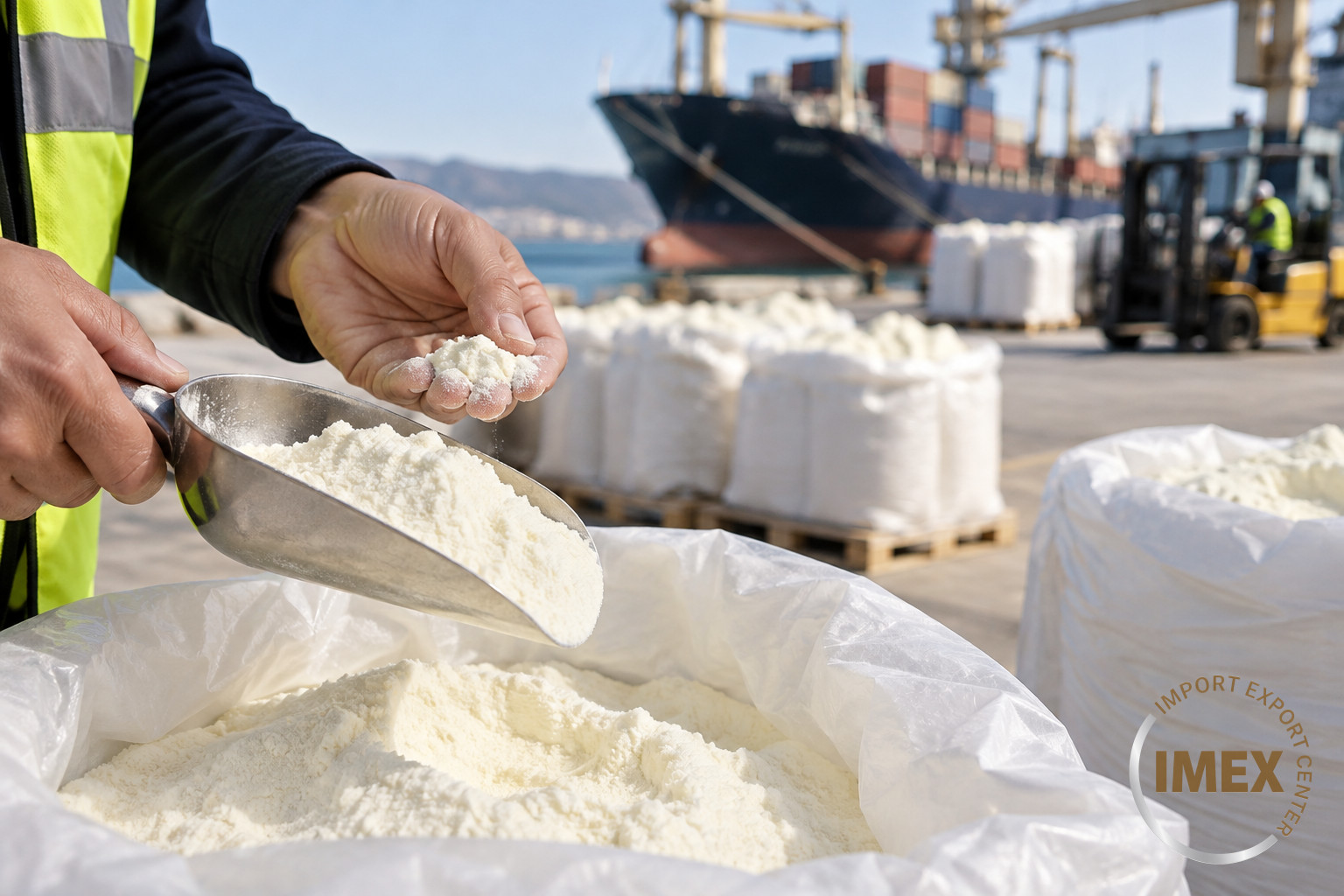
The cheapest tonne of milk powder is not necessarily the cheapest ingredient for your factory. A powder that leaves sediment, changes fermentation performance or requires extra ingredients can erase the saving on its purchase price. For Indonesian manufacturers sourcing from milk powder suppliers in New Zealand, the right starting point is the finished product—not a supplier directory.
A successful purchase delivers the required composition, processing performance and documentation at an acceptable cost per saleable kilogram. Supplier qualification, import clearance and commercial terms must all support that outcome.
This guide explains how to turn your formulation into a purchase-ready enquiry, compare offers fairly and establish clear approval gates before committing to a shipment. It is a procurement framework, not a verified supplier ranking or confirmation of current import eligibility.
Start with the finished product and production process
Recombination generally means bringing preserved milk solids, water and milk fat back together. Reconstitution usually refers to adding water to a dried or concentrated product. The distinction matters because your recipe determines which ingredients you need to purchase separately.
Before contacting New Zealand milk powder exporters, have your technical team define the application:
- Recombined drinking milk: target composition, homogenisation conditions and pasteurisation or UHT process.
- Fermented dairy: protein target, starter culture, fermentation process, texture and shelf-life requirements.
- Other formulations: whether the powder provides nutrition, flavour, emulsification, water binding or several functions.
Record your actual mixing equipment, water quality, hydration temperature, available holding time and heat-treatment sequence. A powder that performs well in a supplier's laboratory may behave differently on your line.
Also identify the intended finished-product name and sales channel. A formulation suitable for one product category may not satisfy the composition or labelling requirements of another.
Owner and timing: the buyer's product-development or process technologist should approve this application brief, with regulatory input, before procurement requests quotations.
Assess New Zealand milk powder suppliers by product type
A useful shortlist starts with product identity. Whole milk powder, skimmed milk powder and fat-filled blends are not interchangeable procurement options. Ask each seller to identify the exact product and manufacturing site rather than quoting against a broad description such as “dairy powder.”
Whole milk powder
Whole milk powder supplies both dairy protein and milk fat. It can simplify ingredient handling where its composition fits the recipe, but its protein-to-fat ratio may not match your finished product.
For wholesale enquiries, specify the required composition, application, packaging and oxidation-related quality expectations. Ask for documented storage conditions and shelf life rather than assuming every grade behaves identically. Where flavour stability is critical, include an agreed sensory assessment in the qualification process.
Skimmed milk powder
Skimmed milk powder supplies milk solids with relatively little fat, allowing the manufacturer to manage fat addition separately. That flexibility can help when several recipes share a common powder base.
When comparing suppliers, ask about heat classification, composition and demonstrated application performance. Low-heat skimmed milk powder is not automatically the best choice for every recombined or fermented product. The appropriate grade depends on how the powder must behave during processing and in the finished product.
Fat-filled powders and blends
A fat-filled powder may contain non-milk fat. Other blends may contain additional carbohydrates, proteins or functional ingredients.
Request a full ingredient declaration and composition breakdown, including any added ingredients used for instantisation. Substitution can affect product naming, labelling, allergen management, halal assessment and customs classification.
Your formulation and regulatory teams should approve the proposed ingredient identity before procurement treats a blend as equivalent to conventional milk powder. A lower quotation for a different ingredient is not a like-for-like saving.
Translate processing needs into measurable specifications
“Good solubility” and “export quality” are not acceptance criteria. Your specification needs measurable limits, agreed methods and a defined basis of measurement.
Build the technical schedule around:
- Composition: protein, fat and moisture limits; whether values are expressed as received, on a dry-matter basis or another agreed basis.
- Heat classification: where relevant, the classification system, test method and supporting result, such as whey protein nitrogen index where applicable.
- Reconstitution behaviour: wettability, dispersibility and solubility or insolubility testing, with agreed preparation conditions.
- Microbiological criteria: organisms, limits, sampling plan and methods appropriate to the ingredient, finished product and process.
- Physical and sensory quality: appearance, odour, flavour, sediment and application-specific requirements.
- Relevant contaminants and residues: applicable legal limits and any additional customer requirements, supported by an agreed evidence plan.
- Packaging and storage: pack construction, net weight, batch identification, storage conditions and minimum remaining shelf life at delivery.
Do not compare protein figures expressed on different measurement bases. Where necessary, agree the analytical method and protein calculation convention. Do not assume an instantised powder and a non-instant powder will behave the same in your mixing system.
The Codex standards collection provides a reference point, including the standard for milk powders and cream powder. It does not replace your application specification or current Indonesian requirements.
Owner and timing: quality assurance should issue the controlled specification before sample approval and RFQ release. Suppliers should identify deviations in writing rather than accepting requirements through a general statement of compliance.
Compare formulation-adjusted cost, not just price per tonne
A powder's purchase price tells you what enters the warehouse. Your formulation tells you what it costs to produce a saleable batch.
Use this calculation:
Finished-batch ingredient cost = powder quantity × powder unit price + cost of separately added fat + cost of other required ingredients.
Use consistent quantity and price units. Then assess freight, insurance, applicable import charges, financing, handling and production losses on the same basis for every offer. Avoid adding freight twice when it is already included in the quoted delivery term. Keep recoverable taxes separate where appropriate to your accounting treatment.
An illustrative protein comparison
Assume a hypothetical 1,000 kg formulation requires 32 kg of protein, supplied entirely by the powder:
| Illustrative input | Powder A | Powder B |
|---|---|---|
| Protein, as received | 34% | 36% |
| Powder required for 32 kg protein | 94.12 kg | 88.89 kg |
These are illustrative formulation assumptions, not supplier specifications, a validated recipe or market data. The powder quantities are calculated by dividing the required protein mass by the respective protein fraction.
Powder B requires approximately 5.23 kg less powder for the same protein contribution. However, that does not establish which offer is cheaper. You must insert actual quoted prices and rebalance fat, lactose, minerals, total solids and water.
If another ingredient supplies protein, include that contribution too. Where process losses differ, compare cost per saleable kilogram rather than theoretical batch weight. A trial may also reveal differences in hydration time, filtration losses or cleaning requirements that deserve separate operational assessment.
Owner and timing: formulation and procurement teams should complete this model together before commercial shortlisting. Finance should confirm exchange-rate, tax, payment and landed-cost assumptions before purchase approval.
Qualify the seller, manufacturing site and shipment lot
A trading company's legal identity and a manufacturing site's capability are separate checks. Establish who manufactures the powder, who sells it and who is contractually responsible for claims.
Request:
- The seller's legal identity, registration and authority to sell.
- The actual manufacturing site and product designation.
- A current technical data sheet and relevant food-safety certificates, including site coverage, scope and validity.
- A sample certificate of analysis format, followed by a lot-specific COA for the offered shipment.
- Traceable samples linked to identifiable production batches.
- Recall, complaint and batch-traceability procedures.
- Clear disclosure of whether the seller is the manufacturer, an authorised distributor or another trading intermediary.
Verify the buyer's identity and purchasing authority as well. Mark unverified counterparties as pending verification; do not present a completed profile or uploaded document as conclusive proof of authority.
A certificate request is not proof that a supplier holds the certificate. A general specification sheet is not a lot analysis, and a COA only supports the parameters and sample or lot identified in it. Confirm certificate authenticity and scope through the issuing body where appropriate.
Make the trial a purchasing gate
Have the technical team run a production-representative trial using the intended hydration, mixing, homogenisation and heating conditions. Assess the finished product, not only the powder's appearance in a beaker.
For fermented products, include fermentation behaviour and texture. For heat-treated drinks, include relevant heat stability, sediment and storage observations. Define how the trial sample relates to the proposed commercial grade and how shipment lots will subsequently be released.
Agree acceptance criteria before testing. For a new source, avoid an unconditional bulk commitment until the technical team approves the trial and procurement resolves deviations. Set the trial schedule around the actual testing and shelf-life assessment required—not an arbitrary purchasing deadline.
Owner and timing: technical and quality teams should sign the trial report before source approval. Procurement should ensure the purchase contract identifies the approved grade and prevents unapproved substitution.
Verify the New Zealand–Indonesia compliance pathway
To import milk powder from New Zealand to Indonesia, treat export eligibility, import permission and intended use as connected checks. Requirements may differ by composition, manufacturing establishment, sales channel and whether the product is a manufacturing ingredient or a finished retail product.
The following are official starting points, not evidence that a particular shipment is eligible:
| Authority | What to confirm |
|---|---|
| New Zealand Ministry for Primary Industries | Applicable dairy export requirements, destination conditions, establishment eligibility where required and official assurances. |
| Indonesia National Single Window | Current product-specific import controls, restrictions and relevant clearance requirements. |
| BPOM | Applicable food-safety, registration, import-clearance and labelling obligations for the product and intended channel. |
| BPJPH | Applicable halal obligations, certification pathway and recognition requirements. |
Your Indonesian importer and regulatory adviser should identify the competent authorities for any additional animal-product, quarantine or other approvals. Confirm which requirements apply to the exact product rather than treating every dairy ingredient as subject to an identical process.
Do not assume a previous shipment's documentation remains sufficient for a new product or shipment date. Likewise, do not assume that a foreign halal certificate is sufficient without checking the applicable recognition and registration pathway.
Owner and timing: the importer of record should approve a written compliance checklist before commercial commitment, with a shipment-specific recheck before dispatch. The exporter should confirm which official documents it can obtain and the lead time for obtaining them.
This guide does not establish current approval status, tariff rates, regulatory deadlines or product-specific eligibility.
Confirm classification from composition and origin
Ordinary milk powders may fall within HS heading 0402, but the precise classification depends on the product's characteristics. Added ingredients or substituted fats can move a preparation outside the classification expected for conventional milk powder.
Give your customs specialist the full composition, manufacturing description, intended use and proposed label. Ask for the applicable Indonesian tariff line and supporting rationale—not merely a code copied from an earlier invoice.
Check any preferential-origin claim separately. Shipment from New Zealand does not, by itself, prove qualifying New Zealand origin under an applicable trade agreement.
Before using a preferential duty assumption in the cost model, confirm the relevant agreement, product-specific origin rule and acceptable origin evidence through current official channels. If classification or origin remains unresolved, flag that uncertainty in the cost comparison rather than presenting the lowest possible duty as established.
Owner and timing: the importer and customs adviser should resolve classification and origin treatment before the final landed-cost approval.
Send an RFQ suppliers can answer without guessing
A comparable quotation starts with a complete request. The sourcing manager should own the RFQ and resolve missing inputs before release. There is no single mandatory international RFQ format; completeness and clarity matter more than appearance.
Include:
- Document reference, issue date, RFQ validity, response deadline and authorised signatory or issuing representative.
- Buyer legal identity, registration and purchasing authority, plus seller-verification requirements; mark unverified counterparties accordingly.
- Product identity and grade, intended use, origin, approved technical schedule and production-date requirements.
- Quantity, unit, tolerance, order frequency and shipment windows.
- Packaging, bag weight where applicable, markings and minimum remaining shelf life.
- Named loading and destination ports or places, permitted partial shipments and delivery terms under Incoterms 2020.
- Inspection arrangements, sampling and testing methods, acceptance criteria and the process for resolving disputed results.
- Required documents, including the COA, applicable official health or sanitary documentation, origin evidence, commercial invoice, packing list and transport records; include insurance documentation where relevant.
- Currency, proposed payment terms, bank acceptance requirements and documentary conditions.
- Requested unit and total price, quote validity, capacity, lead time, technical compliance and explicit deviations.
Document requirements must match the commodity and destination. Do not automatically copy a grain-document checklist into a dairy purchase.
Where independent inspection is required, identify the agreed inspector, such as SGS or another mutually accepted provider, and define the inspection scope and timing. An inspection certificate should not be treated as a guarantee covering untested attributes.
Align delivery, payment and claims terms
Use delivery terms appropriate to the transport arrangement. FOB, CFR and CIF are sea or inland-waterway terms; under them, risk transfers when goods are on board at loading, not on arrival. Under CFR and CIF, the seller pays freight to the named destination port; CIF also requires seller-arranged insurance. Review whether the insurance cover meets your cargo risk requirements.
For containerised shipments handed to a carrier before loading aboard the vessel, consider whether FCA, CPT or CIP better matches the actual handover. State the precise named place or port and the Incoterms 2020 version.
Incoterms do not determine payment or ownership. If proposing an irrevocable LC at sight, remember that payment depends on complying documents—not vessel arrival or automatic confirmation of product quality. Have the buyer's bank and exporter review whether the documentary conditions can realistically be satisfied.
The eventual supply contract should also address lot identification, acceptance, retained samples, claims deadlines and remedies for nonconforming goods. These protections should be agreed before dispatch, not improvised after a quality dispute.
Protect the approved powder through transport and receipt
Technical approval can be undermined by poor handling. Packaging damage, moisture exposure or contamination can affect material that met specification when it left the factory.
Ask the logistics provider and exporter to agree container suitability, loading checks, protection against moisture exposure and handling responsibilities. Follow the manufacturer's documented storage conditions rather than assuming a refrigerated service is necessary or that any dry container is acceptable.
At receipt, check seals where applicable, packaging condition, batch identifiers, quantities and document consistency. Keep the goods under the buyer's defined quality-hold procedure until the required receiving checks are complete.
Owner and timing: logistics should approve the shipment plan before booking. Warehouse and quality teams should complete receiving checks before releasing the powder to production, with any damage or discrepancy recorded promptly under the agreed claims process.
Prepare a role-specific sourcing brief for IMEX Center
Use your IMEX Center enquiry as the starting point for a documented sourcing process—not as a substitute for technical qualification or regulatory approval. Keep platform requests focused on the information each counterparty needs to provide.
For Indonesian dairy manufacturers, register a business account at IMEX Center and prepare an application-led sourcing brief. State the finished-product category, required powder grade, technical schedule, trial requirements and expected purchasing volume. Request comparable offers from prospective sellers, and check which sourcing functions are available to your approved account.
For ingredient importers, register your business and prepare both a commodity brief and a delivery-services brief. Identify the importer of record, destination, clearance responsibilities, inspection needs and insurance requirements. Obtain separate evidence of each service provider's capabilities and any required licences; an advisory listing alone does not authorise regulated financial services.
For New Zealand exporters, register your business and prepare a product-specific evidence package. Identify the manufacturing site, available grades, certification scope, proposed documentation and realistic shipment lead times. State deviations clearly instead of offering a generic assurance that every requirement can be met.
A profile or verification label does not replace factory qualification, independent certificate checks or lot testing. Any draft terms or pre-contract document should remain subject to the necessary technical, regulatory, legal and authorised commercial review.
Formal business RFQs and business pre-contracts are not functions for Individual accounts. Individuals offering eligible professional services should follow the separate service-account verification and publication requirements.
Frequently asked questions
Is low-heat skimmed milk powder always best for recombination?
No. The appropriate heat classification depends on the finished product and processing conditions. Compare technical evidence and run a representative trial rather than selecting a grade by its name alone.
Can whole milk powder replace skimmed milk powder directly?
Not without reformulation. Whole milk powder contributes a different balance of protein and fat. Recalculate all relevant solids, separately added fat and water, then assess processing and finished-product performance.
Does a COA prove milk powder can enter Indonesia?
No. A COA reports specified analytical results for its stated sample or lot. Import eligibility, required official health or sanitary documentation, halal obligations and any registration requirements need separate confirmation.
What makes two bulk quotations genuinely comparable?
They need matching product requirements, measurement bases, quantities, packaging, delivery terms, shipment timing and documentation. Compare formulation-adjusted landed cost and disclose deviations before ranking offers.
Make your next purchase decision around approved performance, documented eligibility and cost per saleable kilogram. Manufacturers and importers: register your business with your sourcing brief ready. New Zealand exporters: register with a clearly defined product offer and supporting evidence.
Source or sell globally with IMEX Center
Browse verified suppliers →