Import & Export
Olive Oil Suppliers in Spain: Bulk Sourcing for U.S. Food Importers
13 Oct 2026 · 06:03 CET
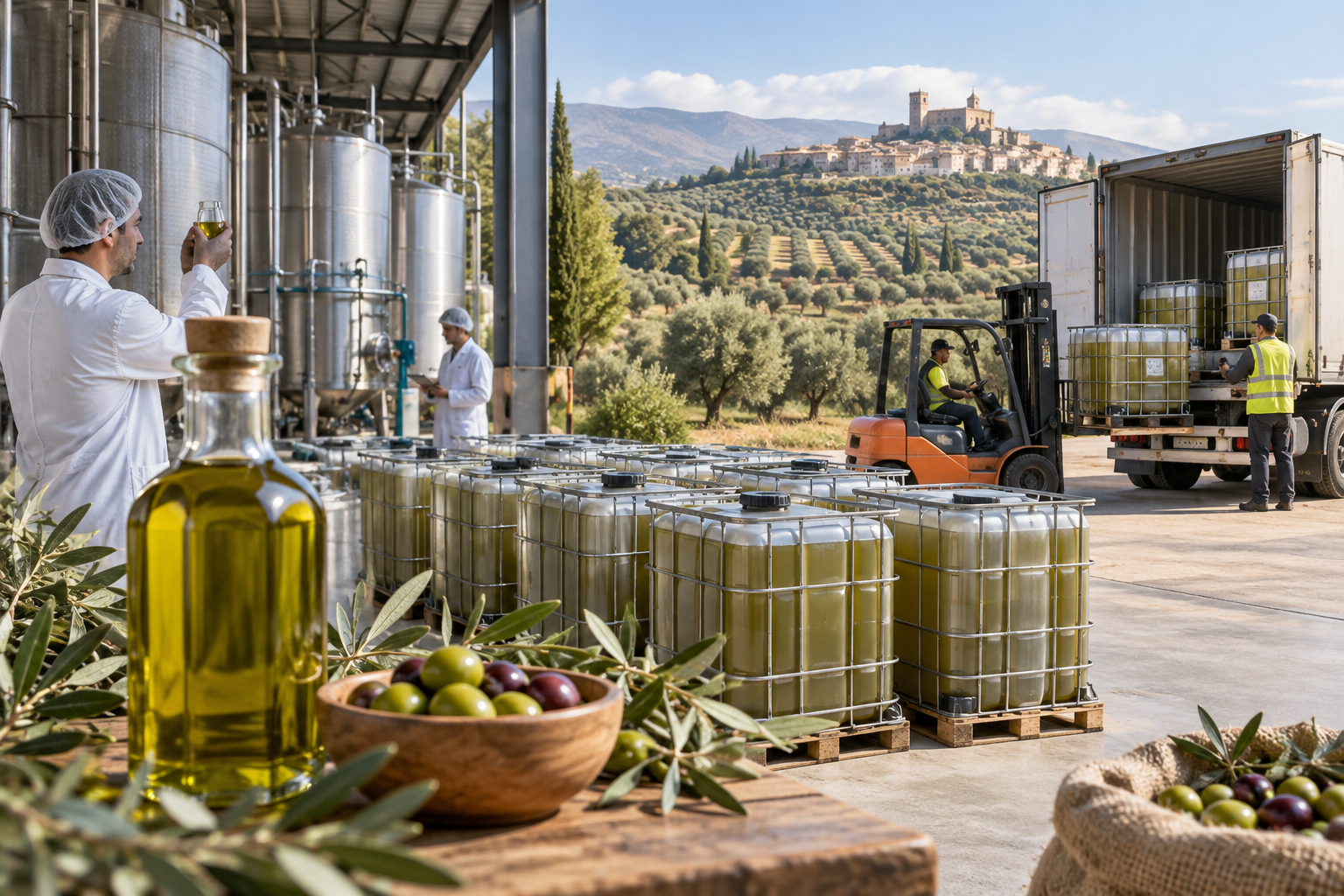
Finding olive oil suppliers in Spain is straightforward; comparing equivalent offers is harder. Two quotations can differ materially in grade, harvest profile, origin, packaging and delivered quality even when both say “bulk olive oil.” For U.S. importers, the objective is to secure a traceable product that meets its intended use and remains compliant and commercially acceptable on arrival.
Start with a written specification, then compare suppliers against it. The sourcing manager should own the commercial comparison, quality should approve product evidence, and compliance and logistics should clear their requirements before purchase.
Define the Product Before Comparing Olive Oil Suppliers in Spain
Your application determines the specification. Retail bottling, restaurant distribution and food manufacturing do not necessarily require the same flavor profile, packaging or documentation.
Extra virgin olive oil
Extra virgin olive oil is obtained through mechanical or other physical processes under conditions that do not alter the oil, without refining. Grade assessment involves chemical and sensory criteria; low acidity alone does not prove extra virgin status.
For wholesale extra virgin olive oil purchases, specify the intended flavor profile, applicable grade standard, analytical limits and sensory requirements. A retail bottler may prioritize distinctive aroma and provenance, while a manufacturer may need consistent flavor across repeat deliveries.
Virgin olive oil
Virgin olive oil is also unrefined, but its permitted chemical and sensory characteristics differ from extra virgin. Do not accept “virgin” as shorthand for extra virgin, or assume a lower-priced virgin lot can support the same finished-product claims.
Have quality assess suitability in the actual application before commercial approval. A specification for dressing production may differ from one for direct retail sale.
Refined olive oil and blends
Refined olive oil has undergone refining and generally has a more neutral sensory profile. Commercial products may combine refined olive oil with virgin olive oils. Request the precise product identity and composition rather than relying on descriptions such as “pure,” “light” or “premium.”
Olive-pomace oil is a separate product category, not an interchangeable name for refined olive oil. Its production route, labeling and customs treatment require separate review. Blends containing other vegetable oils also need their own specification and classification review.
Specification checklist:
- Product category and intended application.
- Applicable grade standard and acceptance limits.
- Required flavor, aroma and color tolerances; color alone does not establish grade.
- Origin requirements, including whether Spanish-grown olives are mandatory.
- Harvest information, storage history and remaining shelf-life expectations.
- Required certifications and finished-product claims.
Verify the Supplier’s Role and Traceability
Spanish olive oil exporters may be mills, cooperatives, refiners, packers or trading companies. Each can be a suitable partner, but their control over production and stock differs.
Ask who owns the oil, where it is stored, who blends or packs it, and which legal entity invoices and exports it. A trader is not automatically a weaker choice; the concern is whether responsibility and traceability remain clear across the chain.
“Shipped from Spain” does not by itself establish that the olives were grown in Spain. If Spanish origin matters to your label or customer contract, obtain documentation supporting that claim for the offered lot. Compliance should separately verify the applicable U.S. country-of-origin marking rules.
Before shortlisting, the sourcing manager should verify:
- Legal identity and consistency between contracting and payment details.
- Production, storage and packing locations.
- Traceability from incoming oil through blending, storage and dispatch.
- Available volume, minimum order quantity and repeat-supply capability.
- Experience with the proposed bulk packaging and export process.
- Relevant certification scope, site coverage and validity.
Request a lot-code example and a traceability demonstration. A general certificate or attractive facility presentation does not replace evidence tied to the product being purchased.
Compare Quality Evidence, Not Marketing Claims
Request lot-specific analysis
A useful certificate of analysis identifies the lot, sample date, test methods and laboratory. Ask quality to define the required test panel for the grade and commercial risk before requesting samples.
Depending on the specification, relevant measures can include free acidity, peroxide value, ultraviolet absorbance and compositional indicators used to assess identity or detect certain forms of adulteration. No single result proves complete authenticity or future shelf life.
For an initial purchase or a higher-risk transaction, arrange independent testing through a laboratory accredited for the relevant methods. Quality should select tests according to the claims and risks, rather than ordering a generic panel without an acceptance plan.
Include appropriate sensory assessment
For extra virgin and virgin grades, request a documented sensory assessment using the panel method required by the applicable standard. A favorable tasting note is not equivalent to a documented grade assessment.
Make sure the sample represents the shipment. If oil will be blended after sampling, require approval of the final blend and its documentation before loading. Define who takes samples, how they are sealed and stored, and which retained samples and test procedures will be used in a dispute.
Clarify harvest and storage information
Ask whether the offer represents one harvest or a blend across harvests. A bottling or packing date is not a harvest date.
Harvest information helps, but does not replace storage records or current quality evidence. Request storage conditions, tank management practices and relevant transfer history. Agree how quality will be checked at dispatch and, where needed, on arrival.
Match Bulk Packaging to Volume and Handling
Packaging should protect the oil and fit both the exporter’s loading system and your receiving facility. Compare total handling costs, not container price alone.
Drums
Drums suit smaller bulk orders, segregated lots and operations that consume oil gradually. Confirm food-contact suitability, internal lining where applicable, closure integrity and pallet protection.
Check unloading equipment and the cost of handling multiple units. Include residual oil, empty-drum management and storage space in the comparison.
Intermediate bulk containers
IBCs can simplify handling at intermediate volumes. Confirm the exact construction, food-contact compliance, barrier properties and suitability for the planned journey and storage period.
Not every IBC offers equivalent protection from light or oxygen. Establish whether it is new or reused and require documented cleanliness and prior-use controls where relevant.
Food-grade flexitanks
Flexitanks can suit larger shipments when loading and receiving systems are compatible. Confirm oil compatibility, equipment specifications, carrier acceptance and installation procedures with the logistics provider.
Assess route, season, transit time and port exposure. A standard container does not control temperature. Logistics should evaluate whether additional protection, monitoring or a different transport arrangement is needed, rather than assuming ambient shipment is adequate.
For every format, agree loading temperature, filling procedures, seals, receiving checks and measures to limit unnecessary exposure to heat, light and oxygen. Any inert-gas arrangements should be documented rather than assumed.
Confirm U.S. Import Requirements Before Purchase
Businesses importing olive oil from Spain into the United States should involve their compliance lead and customs broker before signing the purchase order. Supplier export experience does not transfer the importer’s responsibilities.
The compliance lead should confirm applicable FDA obligations, including food facility registration, prior notice and Foreign Supplier Verification Program requirements, taking account of relevant exemptions or modified requirements. Identify the responsible FSVP importer where applicable; this role is not necessarily held by the customs importer of record. Complete required supplier evaluation and verification activities before importation.
Also review bulk-container information and eventual retail or foodservice labeling. Product identity, ingredient declarations, nutrition labeling, origin marking and claims may require attention depending on the product and sale format. Organic claims need their own certification and import-document review. Compliance should verify current requirements through FDA, U.S. Customs and Border Protection and, for organic products, USDA before approving the purchase.
Check classification and origin separately
A search for a bulk olive oil HS code is only a starting point. Olive oil and its fractions are generally addressed under heading 1509, while olive-pomace and certain other oils obtained from olives generally fall under heading 1510. Blends with non-olive oils may fall elsewhere.
The correct U.S. HTS classification depends on the actual product and current tariff provisions. Bulk packaging alone does not determine the code. Before purchase, the broker should confirm the full classification, applicable duties, fees and any additional measures using current official sources.
Build a Comparable Landed-Cost Sheet
Normalize each offer to the same grade, quantity, packaging, destination and Incoterms rule with a named place or port. State the Incoterms edition in the contract. An ex-works quotation is not directly comparable with a delivered offer.
Use one reporting currency and a consistent unit, such as dollars per usable kilogram. If quotations use liters, agree the density and temperature basis for conversion instead of assuming a universal value.
Include:
- Oil price and packaging charges.
- Origin handling, inland transport and export documentation.
- Ocean freight, surcharges and cargo insurance.
- Customs duties, fees and brokerage.
- Testing, inspection and sampling.
- Destination terminal charges, transport and unloading.
- Warehousing, packaging disposal and expected handling losses.
- Payment costs, financing and exchange-rate assumptions.
Show potential examination, demurrage and detention costs separately from committed charges. Mark estimated costs clearly and avoid double-counting services already included in the quotation. Record quotation validity and assumptions so a low headline price does not hide excluded services or uncertain quality.
Move from Shortlist to a Controlled Purchase
Assign clear decision gates rather than allowing commercial urgency to substitute for approval.
- Before requesting quotations — sourcing manager: issue a grade-specific RFQ with volume, delivery window, packaging, destination and required evidence.
- Before supplier award — quality lead: review representative samples, analysis, sensory evidence where relevant and traceability; document acceptance criteria.
- Before contracting — compliance lead and broker: confirm import responsibilities, labeling implications, origin evidence and classification. The FSVP importer should ensure applicable supplier approval and verification requirements are met before importation.
- Before loading — logistics and quality leads: approve packaging, route, loading procedures, seals, receiving capability, transport protections and final-lot documentation.
- At receipt — warehouse and quality teams: check seals, packaging condition and lot identity; complete the agreed acceptance checks before release.
The contract should identify the approved specification, substitution controls, sampling protocol, claim deadlines and remedies for nonconforming oil. Define who bears testing and return or disposal costs. Resolve discrepancies before shipment, when corrective options are usually broader.
Frequently Asked Questions
Is low acidity enough to verify extra virgin olive oil?
No. Extra virgin classification requires compliance with relevant chemical and sensory criteria. Acidity is one measure, not a complete authenticity or quality assessment.
Are mills always better suppliers than exporters?
No. A mill may also be an exporter. Mills can offer direct production visibility, while traders and other exporters may coordinate multiple sources and logistics. Choose based on documented control, traceability, specification compliance and supply capability.
Which bulk packaging is best for olive oil?
The best choice depends on volume, receiving equipment, storage and transport exposure. Compare drums, IBCs and flexitanks on protection and total handling cost, not packaging price alone.
Can I classify olive-pomace oil under the same code as olive oil?
Do not assume so. These products generally fall under different tariff headings. Have your customs broker confirm the current full HTS classification for the exact product before purchase.
Source or List on IMEX Center
Ready to compare Spanish suppliers? Start with your grade, volume, packaging and destination requirements, then use IMEX Center to support your sourcing search. Suppliers should describe their product categories and bulk capabilities clearly in their listings so prospective buyers can assess fit before requesting a quotation. Buyers should independently verify supplier claims and lot-specific evidence before placing an order.
Source or sell globally with IMEX Center
Browse verified suppliers →