Sourcing & Supply
Product Traceability: Require Batch Records Before a Bulk Import Order
24 Oct 2026 · 18:02 CET
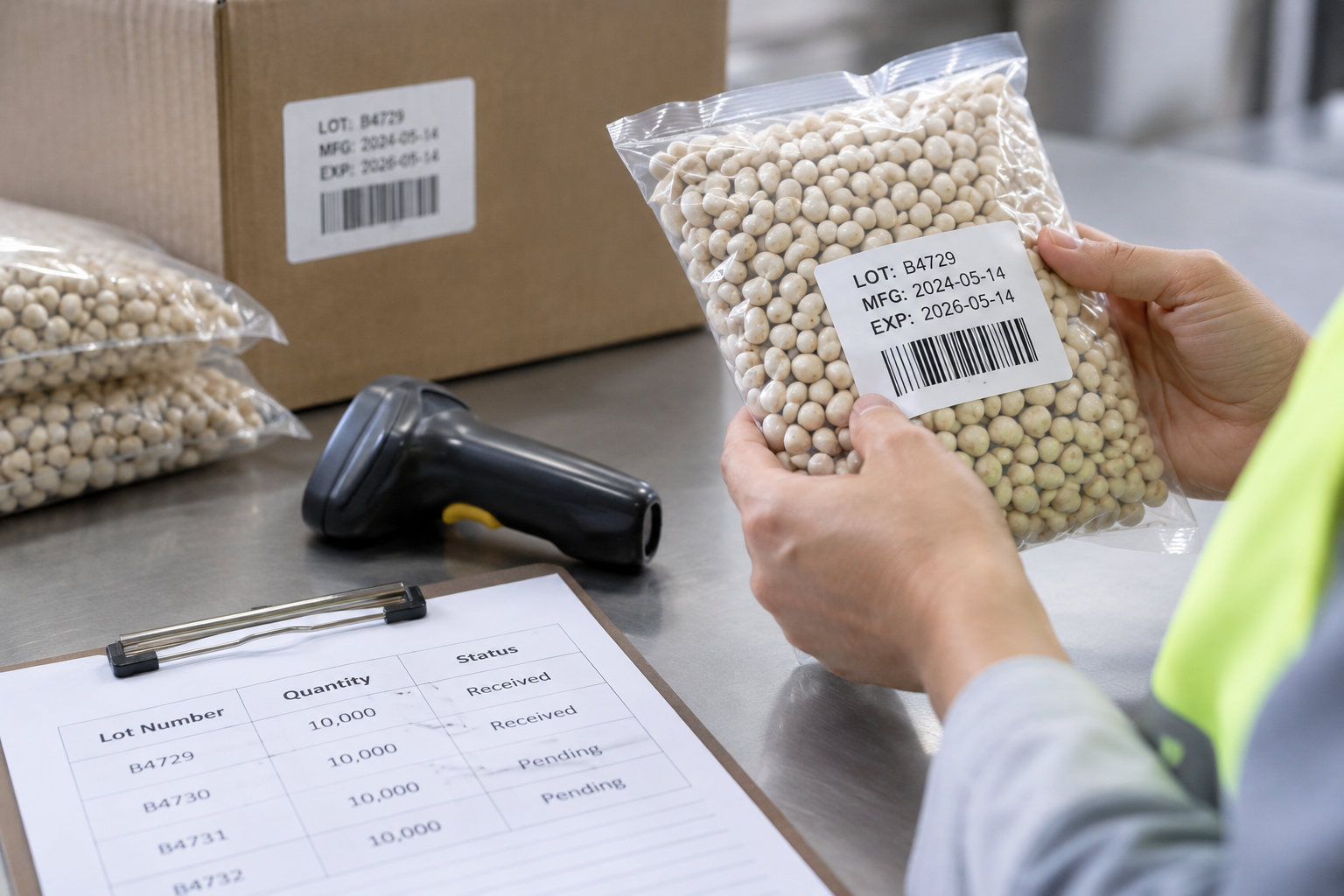
A supplier can provide convincing company details and certificates while still being unable to connect your goods to a specific production run. For importers, product traceability means establishing that connection—and preserving it through shipment, receipt, and onward distribution. Before placing a bulk order, require evidence that the supplier can identify the goods, retrieve their supporting records, and help isolate an affected lot if something goes wrong.
The practical question is not simply, “Who is selling this product?” It is, “Can this supplier show which facility and batch produced the goods we will receive, and which records support that answer?”
Why supplier identity is not product traceability
Company identity, certification, and batch evidence answer different questions. A company profile helps you assess a potential trading partner. A certificate may address a defined system, product, facility, or test within its stated scope. Neither automatically establishes the production source of every shipment.
A trading company may buy from several factories. A manufacturer may subcontract a production step. A single container may include multiple lots, each with different production dates or inputs.
Supplier verification must not be treated as a guarantee of product provenance, batch integrity, or regulatory compliance. Those conclusions require relevant evidence and appropriate checks.
Effective batch traceability connects the delivered goods to their production history. Useful evidence includes lot identifiers, production records, relevant material or component references, inspection results, and shipment allocations. The required depth depends on the product, its risks, and applicable obligations.
Define the records your purchase needs
Owner: buyer’s quality or compliance lead. Timing: before supplier outreach.
Start with a written traceability specification. Purchasing should not have to invent technical requirements during price negotiations.
The quality or compliance lead should identify product- and destination-specific obligations, consulting a qualified specialist where necessary. Record requirements vary; a generic checklist is not a substitute for that assessment.
Build a purchase-specific checklist
Specify what the supplier must identify and provide:
- Production source: manufacturing facility and relevant subcontracted operations.
- Batch identity: lot-number structure, production date or period, and rules defining a batch.
- Input links: relevant raw-material or component lots where required by risk or applicable obligations.
- Quality evidence: inspection, testing, and release records tied to the relevant batch.
- Shipment links: quantities by lot, packing references, and connections to order and transport documents.
- Record access: document delivery method, retention period, and retrieval expectations.
- Incident contacts: named people responsible for defects, containment, and information requests.
Distinguish documents required for every shipment from records that must remain available on request. This makes supplier traceability requirements clearer and avoids collecting paperwork that nobody reviews.
Use IMEX Center for discovery, then screen suppliers
Owner: buyer’s sourcing lead. Timing: during discovery and initial screening.
Use IMEX Center as a starting point for supplier discovery, then assess potential suppliers directly. Review the information each seller provides and establish whether it manufactures the goods, trades them, or coordinates production across other facilities.
Include traceability expectations in your sourcing request alongside product specifications and commercial needs. Send the same requirements to each candidate so that responses can be assessed consistently.
For example:
We require batch identification on agreed packaging levels, a packing list showing quantities by lot, and supporting production and quality records linked to those lots. Before shortlisting, please demonstrate traceability using a redacted example shipment and explain how manufacturing-site changes are communicated.
This gives suppliers an opportunity to confirm their capabilities before detailed negotiations. It also makes proposals easier to compare: a lower price may exclude documentation or controls that another supplier includes.
Treat supplier profiles and listings as discovery inputs—not proof that a particular batch meets your requirements. Independently assess the evidence relevant to the purchase.
Test traceability before shortlisting
Owner: buyer’s quality lead, supported by sourcing. Timing: before supplier approval.
Ask the supplier to demonstrate one completed example lot. A written promise that “all products are traceable” is weaker than a coherent record chain.
Follow the lot through the records
Request a walkthrough showing:
- The lot identifier on the product or agreed packaging level.
- The production record identifying the manufacturing facility and production period.
- Relevant input-lot references and how they connect to production.
- Inspection or test records identifying the lot they cover.
- Packing and shipment records showing where the finished quantities went.
Check both directions: can the supplier start with a shipped carton and identify its production lot? Can it start with that lot and identify the shipments containing it?
Ask how rework, split batches, combined inputs, and relabelling are recorded. These are potential points where a straightforward-looking record chain becomes ambiguous.
Clarify terminology and gaps in writing. When communicating across languages, confirm critical identifiers, units, and document names explicitly; translation should not change a lot code or obscure a technical requirement. Retain the agreed wording with the purchasing records.
Redacted examples can protect confidential commercial details, but redaction must not remove the links needed to evaluate the system. Samples demonstrate capability, not proof about a future shipment. If links are missing or inconsistent, require correction and a repeat demonstration before approval; consider an independent assessment where the risk warrants it.
Agree on responsibilities before ordering
Owner: buyer’s purchasing lead, with quality and legal review as appropriate. Timing: before the final order commitment.
Capture traceability expectations in a written requirements schedule during negotiations. Then incorporate the agreed requirements into the final contract and relevant purchase documents. Do not assume a preliminary record or message exchange replaces the final contractual arrangements; obtain legal review where enforceability is material.
Turn expectations into measurable terms
Address these points explicitly:
- Lot-label format: required fields, readable placement, and packaging levels that carry identifiers.
- Batch allocation: how multiple lots appear on packing lists and whether mixing within a carton or pallet is permitted.
- Document deadlines: what must arrive before dispatch and what accompanies the shipment.
- Release authority: who reviews discrepancies and authorises shipment release.
- Record retention: the duration required by applicable obligations and the contract, access arrangements, and responsible record holder.
- Change control: notification and approval requirements for facility, subcontractor, input, or labelling changes.
- Defect escalation: named contacts, backups, notification triggers, and response deadlines.
- Corrective action: arrangements for quarantine, investigation, replacement, or other agreed remedies.
Set deadlines against operational milestones rather than vague wording such as “documents available later.” The buyer needs enough time to review evidence and resolve discrepancies before dispatch. Agreed terms must not reduce any applicable legal duties.
Check the actual shipment before dispatch
Owner: supplier’s quality contact prepares the evidence; buyer or appointed inspector verifies it. Timing: before shipment release.
A successful sample demonstration does not validate the goods now ready to ship. Require shipment-specific lot details and supporting documents.
Reconcile three layers: physical identifiers, packing allocations, and supporting batch records. Carton and pallet references should connect to the shipment documents, while quantities by lot should reconcile with the packed order. Document any repacking, shortages, or replacements.
Pre-dispatch reconciliation checklist
- Do identifiers on inspected goods match the submitted lot list?
- Does each listed lot connect to the agreed production and quality records?
- Are manufacturing-site details consistent with the approved arrangement?
- Can mixed-lot pallets or cartons be broken down by lot and quantity?
- Are discrepancies corrected in both the records and physical labels where needed?
- Has the authorised buyer representative documented the release decision?
Define the inspection scope in advance. Photographs or a limited sample check do not establish that every label in the shipment is correct. Any corrections should preserve a record of what changed, why, and who authorised the change.
If a mismatch remains unresolved, hold the affected goods under the agreed release process. Do not rely on a promise to reconstruct missing links after arrival.
Preserve lot identities and prepare for a defective batch
Owner: buyer’s warehouse lead at receipt; buyer’s quality lead coordinates incidents with the supplier’s named quality contact. Timing: before inventory release and promptly when a potential defect is identified.
Supply chain traceability can fail after import if the warehouse removes labels, combines stock without recording lot identities, or records only product codes.
At receipt, capture the supplier lot, internal stock reference, received quantity, and storage location. Record and assess discrepancies before releasing the affected goods into available inventory. Maintain lot tracking through repacking, picking, and onward dispatch wherever the defined traceability scope or applicable obligations require it.
If a defect appears, quarantine potentially affected stock and preserve its identifiers. The buyer’s quality lead should request the supplier’s production and distribution mapping, while warehouse and sales teams identify remaining stock and onward deliveries.
Use the evidence to assess affected quantities and related lots, not merely the first reported carton. A shared input or process issue may extend the investigation beyond one finished-goods lot. Follow applicable notification and recall obligations with appropriate professional advice; do not delay required protective action while waiting for complete records.
Frequently asked questions
Is a verified supplier profile enough to establish traceability?
No. A verification label must be assessed against its stated scope. Business identity checks do not establish traceability, which requires evidence connecting specific goods to production lots, relevant records, and shipments. Assess those links separately.
Must every individual product have a serial number?
Not necessarily. Batch-level identification may suit some purchases, while others require unit-level identification. The buyer’s quality or compliance lead should define the appropriate level based on product risk, destination requirements, and operational needs.
What if the supplier refuses to share production records?
Clarify whether confidentiality is the issue. Consider redacted records, controlled review, or an independent assessment, provided these meet applicable access and documentation obligations. If the supplier still cannot demonstrate the required links, do not treat its traceability capability as established.
Does traceability prove that a batch is compliant?
No. Traceability helps identify goods and retrieve their history. Compliance and quality conclusions require separate evaluation of applicable requirements, product specifications, and relevant evidence.
Make traceability part of your next sourcing decision
Before your next bulk order, have your quality lead define the record requirements and your sourcing lead include them in supplier outreach. Require a demonstrated record chain before approval and shipment-specific reconciliation before release.
Planning your next sourcing project? Visit IMEX Center as a starting point, then put your traceability requirements directly to prospective suppliers. Keep the evidence review, agreed responsibilities, and release decisions documented before you commit.
Source or sell globally with IMEX Center
Browse verified suppliers →