
About IMEX
Project Cargo Business Opportunities: Present Your Heavy-Lift Expertise on IMEX Center
21 Nov 2026 · 14:03 CET
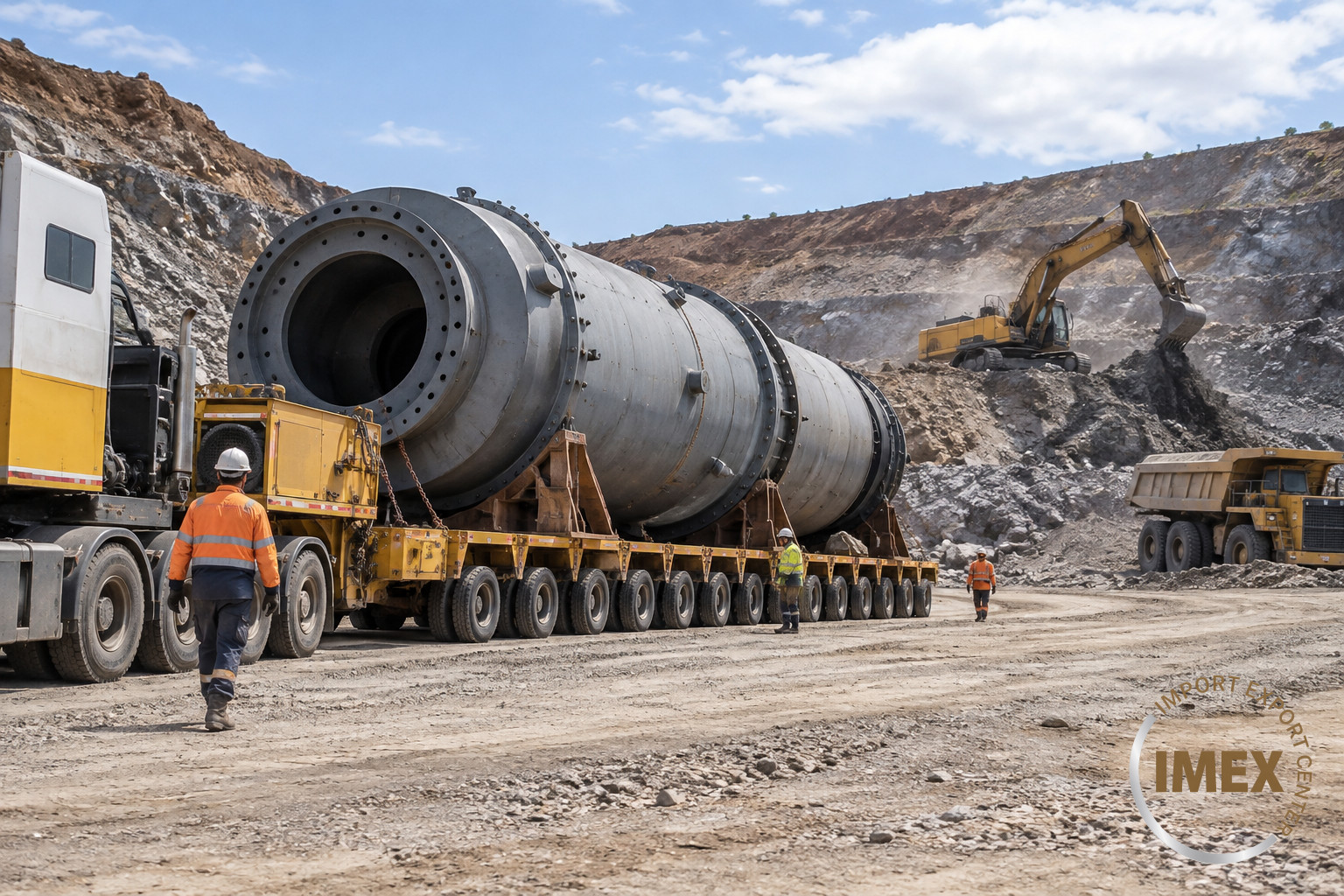
An exporter asks for a freight price on an oversized production unit. Nobody has confirmed whether it can leave the factory gate—or be unloaded at destination. Quoting transport alone leaves the most important questions unanswered.
That gap creates project cargo business opportunities for logistics companies that can turn an incomplete enquiry into a defined, commercially workable scope.
Consider an illustrative manufacturer negotiating an overseas machinery sale. Its buyer wants a delivery commitment. The manufacturer has a preliminary drawing, but the shipping configuration, lifting arrangements and receiving-site access remain unresolved. A low freight price cannot settle those issues.
Your opportunity is to enter the discussion before assumptions become contractual promises. Present your project logistics services on IMEX Center around the decisions you help customers make: what information is missing, which specialists must assess the movement and what must be agreed before a firm commitment. Engineering validation and operational approvals remain with the qualified parties responsible for the work.
Where Project Cargo Business Opportunities Begin
Project cargo is not simply a synonym for heavy freight. It can involve oversized or heavy units, complex handling interfaces, specialized equipment or coordinated deliveries for a larger project. The commercial challenge is often the connection between movement stages rather than any single transport leg.
A seller may understand its machinery but not its transport envelope. A buyer may control the receiving site without knowing what unloading equipment or preparatory work will be required.
The provider who identifies these gaps early can demonstrate value beyond freight procurement. Your contribution is to show which decisions affect feasibility, scope and price—and which must be resolved before anyone commits.
Look for enquiries where your experience changes the conversation:
- An indivisible unit requires coordinated transport and lifting.
- Packing or dismantling choices affect the shipping configuration.
- Factory access or receiving-site restrictions may determine equipment selection.
- Several contractors must agree where their responsibilities begin and end.
- A delivery window depends on site readiness, permits or specialist availability.
The objective is not to provide free engineering indefinitely. Offer a defined qualification stage, distinguish preliminary guidance from chargeable technical work and explain the deliverable for each stage. A scoped feasibility assessment may be the appropriate first service—not an unsupported all-inclusive freight quotation.
Make Specialist Capability Commercially Visible
A service description should help a manufacturer or trader understand why your business belongs in the negotiation. “Worldwide logistics solutions” says little about whether you can coordinate a difficult factory collection or a complex site handover.
When evaluating a B2B platform for heavy-lift transport companies, look beyond directory exposure. Ask whether your presentation gives potential customers enough information to recognize relevant experience and begin a useful discussion.
Describe:
- Operating regions: where you work directly and where local partners are required.
- Relevant experience: cargo types and movement stages your team has actually handled.
- Delivery model: owned operations, subcontracted capacity or coordination services.
- Service boundaries: what you provide, arrange or exclude.
- Evidence: references, qualifications and credentials you are authorized to share.
Replace broad claims with specific, supportable descriptions. Explain whether you arrange specialist transport, conduct surveys, provide engineering or coordinate subcontractors. Do not imply equipment ownership or in-house technical capability where the service depends on another business.
Company identity checks do not certify lifting competence, equipment availability, insurance adequacy or regulatory authorization. Those require separate, task-specific evidence. Never describe a profile as verified unless its actual verification status supports that statement.
Choose the appropriate account and service category
Project logistics offerings are services, not physical goods. Use the live IMEX Center service catalog and its existing hierarchy; service classification uses ISIC activity classes rather than HS tariff codes. A classification code is not evidence of competence or permission to conduct a regulated activity.
Companies should use the appropriate company account and complete the applicable checks before commercial commitments. Individual accounts are service-only: they require verified identity, address, phone and professional credentials or portfolio, with an IMEX Score of at least 20. Individuals cannot list goods, bid on tenders, create formal RFQs or execute business pre-contracts. Keep personal verification documents within the designated verification process, not in public marketing materials.
Identify the Parties Behind the Movement
One company can occupy several trading roles. The manufacturer may also be the exporter, while the importer controls the destination facility. Neither label automatically tells you who contracts the crane or approves a lifting arrangement.
Before pricing, your commercial lead should establish the actual responsibility chain. Identify the legal entity purchasing your service, its authorized representative and the technical contacts who can provide reliable information.
| Decision or information | Party to identify |
|---|---|
| Final cargo drawings and shipping weight | Authorized manufacturer or technical representative |
| Approval of handling restrictions | Cargo owner and competent technical authority |
| Transport purchase order | Legal entity authorized to contract your service |
| Collection readiness and factory access | Dispatch-site representative |
| Receiving access and unloading arrangements | Importer or designated site operator |
| Technical acceptance of the movement plan | Qualified parties responsible for the relevant operations |
Record a named contact for each critical decision. If the trader cannot confirm unloading responsibility, keep that point visibly unresolved rather than assuming the consignee will handle it.
The person requesting a price may not have authority to accept your proposal. Verify buyer and seller identities and relevant authority before commercial commitment; mark unknown counterparties as pending verification rather than treating an introduction as completed due diligence.
Focus Prospecting on Commercial Fit
Trade intelligence can help identify markets and corridors worth investigating. It cannot, by itself, establish that a shipment is oversized, that a buyer needs your services or that a route is feasible.
For better project cargo logistics leads, combine geographic relevance with a specific operational reason to engage. Does the underlying enquiry involve equipment you understand? Can you serve the collection and receiving locations? Is the project early enough for your input to improve the scope?
Prioritize opportunities where you can make a concrete contribution, not every enquiry containing the word “machinery.” A manufacturer preparing an export packing specification may need different support from an importer whose cargo is already awaiting collection.
Use the account tools and trade information actually available to you on IMEX Center, confirming current functionality and eligibility before relying on them. Do not assume that a listing is a qualified lead, that a published request remains open or that registration guarantees access to suitable projects.
A focused first message should identify the relevant capability, ask for the missing decision-critical information and propose a next step. For example: request the approved transport configuration and collection location before offering a scoped feasibility review.
Turn an Enquiry into a Workable Project Brief
An attractive enquiry becomes actionable when every important information gap has an owner and a deadline. Before issuing a firm proposal, your commercial lead should obtain a structured cargo and site brief.
Cargo information checklist
Request:
- Overall transport dimensions, including packaging and protrusions.
- Gross shipping weight and the status of the supporting information.
- Center-of-gravity information where relevant to handling and stability.
- Approved lifting points, handling restrictions and available drawings.
- Packing condition, support arrangements and permitted orientation.
- Whether components can be removed, and who authorizes that work.
- Handling or environmental sensitivities requiring special attention.
- Details of batteries, fluids or other contents that may trigger additional transport requirements.
Separate preliminary information from approved information. A sales drawing may support an initial conversation without being suitable for equipment selection or lift planning. Record document revisions so that later changes to weight, dimensions or packing do not silently invalidate the proposal.
Collection and delivery checklist
Ask for collection access, loading arrangements, delivery-site restrictions and the proposed unloading method. Screen for constraints involving entrances, overhead obstructions, maneuvering space, operating hours and ground conditions.
These questions do not replace technical assessment. Qualified personnel must determine whether route surveys, site assessments, permits, specialist engineering or additional approvals are required. Do not infer safe access or ground suitability from photographs alone.
For incomplete oversized-cargo transport enquiries, offer a clearly labeled budget indication where appropriate. State its purpose, assumptions, exclusions, validity and the information needed before a firm quotation. That keeps the discussion moving without disguising uncertainty.
Align Supporting Quotes with the Physical Movement
A project may require transport, lifting, inspection, temporary storage and insurance from different providers. Bringing these services into one commercial discussion can expose gaps that remain hidden when each offer is reviewed separately.
Speed of quotation must not be confused with technical completeness. A readily generated service price is not automatically a firm quotation for an unusual movement requiring detailed assessment.
Review every offer against the same handling sequence:
- Preparation and release at the manufacturer’s premises.
- Lifting and loading onto the first transport unit.
- Transport, transfers and any temporary storage.
- Arrival, unloading and final handover.
Ask where each provider’s scope starts and stops. Does an inspection address cargo condition, packing, an agreed handling stage or another specified task? Who is responsible for securing the cargo during each transport leg? Which contractor manages an interface where two suppliers are involved?
Insurance also needs separate review. Carrier or contractor liability cover is not the same as cargo insurance. Have the appropriate insurer or authorized broker explain the actual cover, exclusions, deductibles, handling and storage provisions, and any conditions relevant to the proposed movement.
If payment or foreign-exchange support is needed, use appropriately authorized providers and check their actual role and permissions. A service listing or advisory classification does not authorize remittance, escrow or other regulated financial operations.
Your commercial lead should reconcile scope gaps before acceptance, with technical, legal and insurance specialists reviewing matters within their competence.
Negotiate Responsibility, Not Just the Freight Total
A useful negotiation produces a shared understanding of the work—not merely agreement on a headline price. Strong project freight service proposals distinguish the service from the assumptions on which it depends.
What your proposal should state
- Document control: reference, issue date, revision and quotation validity.
- Contracting parties: verified legal identities and authorized acceptance arrangements.
- Scope: cargo configuration, locations, handling stages and included services.
- Responsibilities: who arranges lifting, loading, permissions, storage and unloading.
- Price basis: currency, included charges, applicable taxes and treatment of scope changes.
- Payment: agreed milestones, documentary requirements and any advance-payment conditions.
- Timing: proposed windows, availability conditions and customer readiness obligations.
- Exclusions: services and costs not included in the offer.
- Conditions precedent: information, approvals and confirmations required before commitment or execution.
- Handover evidence: agreed condition records and acknowledgments at relevant transfer points.
Explain how delays, waiting time, storage, cancellation or changed cargo information will be assessed and authorized. Avoid leaving these matters to an undefined “additional charges apply” clause.
Where the goods transaction uses Incoterms 2020, record the named rule and location. Incoterms allocate delivery obligations, risk and costs between the goods seller and buyer; they do not settle payment, ownership or every detail of a separate logistics contract.
FOB, CFR and CIF apply to sea or inland-waterway transport, with risk passing when goods are on board at the loading port. Under CFR and CIF, the seller pays freight to the named destination; CIF also requires insurance. Do not confuse the freight destination with the point of risk transfer, and obtain advice where a different rule better fits the shipment.
A draft agreement, pre-contract or service quotation does not itself prove that permits are issued, insurance is bound, equipment is reserved or payment is secured. Its binding effect depends on its terms and applicable law. State what, if anything, is intended to bind the parties and require the relevant confirmations before execution.
A Practical Handover Before Commitments
Return to the illustrative production-unit shipment. The manufacturer wants a delivery promise, the importer needs a workable receiving plan and your company needs enough information to price responsibly.
The following is a recommended workflow, not a claimed IMEX automation or customer success story:
| Owner | Required action | Timing |
|---|---|---|
| Provider’s commercial lead | Collect missing cargo information and verify the contracting party | Before issuing a firm quote |
| Provider’s technical lead | Review feasibility assumptions and identify surveys or engineering needs | Before committing equipment or an execution method |
| Manufacturer’s representative | Confirm shipping configuration and loading responsibilities | Before proposal acceptance |
| Importer’s site representative | Confirm receiving access and unloading responsibilities | Before accepting an inclusive delivery scope |
| Relevant service providers | Confirm scope, conditions and handover interfaces | Before execution commitment |
| Provider’s operations lead | Check required approvals, bookings and readiness evidence | Before dispatch or mobilization, as applicable |
If the delivery site remains uncertain, separate the confirmed transport scope from unresolved unloading work. Explain which assessment is needed, who will arrange it and when its result must be available.
If the cargo configuration changes after acceptance, the commercial lead should document the change and obtain technical review before confirming its price or schedule impact. The operations lead should not proceed on superseded drawings.
This is stronger than offering an apparently complete price and discovering later that nobody contracted the final lift.
Frequently Asked Questions
Can I respond before all cargo details are available?
Yes. Offer a qualification discussion or a clearly labeled budget indication. Identify missing information, assumptions and exclusions, and explain what is required before a firm proposal. Do not present an unvalidated movement plan as execution-ready.
Does company verification establish heavy-lift competence?
No. Identity verification and task-specific competence are different checks. Assess relevant experience, personnel, equipment arrangements, insurance and applicable authorizations separately for the proposed work. Only describe verification status as it actually stands.
Can trade intelligence identify a qualified project cargo lead?
Not by itself. Trade intelligence can help focus market research, but individual opportunities require cargo information, a current customer requirement and direct qualification. Route and handling feasibility need separate specialist assessment.
Does a pre-contract secure equipment or permits?
Not by itself. Equipment reservations, permits, insurance and payment arrangements require their own evidence and applicable agreements. A pre-contract may record proposed terms, and some provisions may be binding, but it does not prove operational readiness.
Put Your Project Logistics Expertise in Front of Traders
For a project logistics company, the strongest position is to contribute while the goods transaction is still taking shape. Your expertise matters before an exporter promises collection or an importer accepts a delivery arrangement that has not been assessed.
Start with a precise service description: the regions you cover, the work you perform, the work you subcontract and the evidence supporting your claims. Use current IMEX Center account functionality to present your offering and engage relevant counterparties, without treating platform participation as a substitute for due diligence.
For your next suitable enquiry, assign a commercial owner to collect the cargo brief before a firm quote. Assign a technical owner to identify feasibility requirements before equipment commitments. Agree loading, unloading and handover responsibilities before accepting an inclusive scope.
The goal is a better-qualified opportunity: the right customer, a reliable cargo brief and a proposal whose boundaries both sides understand.
For project logistics companies: register your company at IMEX Center, complete the applicable account checks and present the specialist services you can substantiate. Build the next conversation around a workable scope—not just a freight price.
Source or sell globally with IMEX Center
Browse verified suppliers →