Import & Export
Soybean Exporters in Brazil: A Chinese Buyer’s Guide to Crushing Cargoes
03 Oct 2026 · 02:02 CET
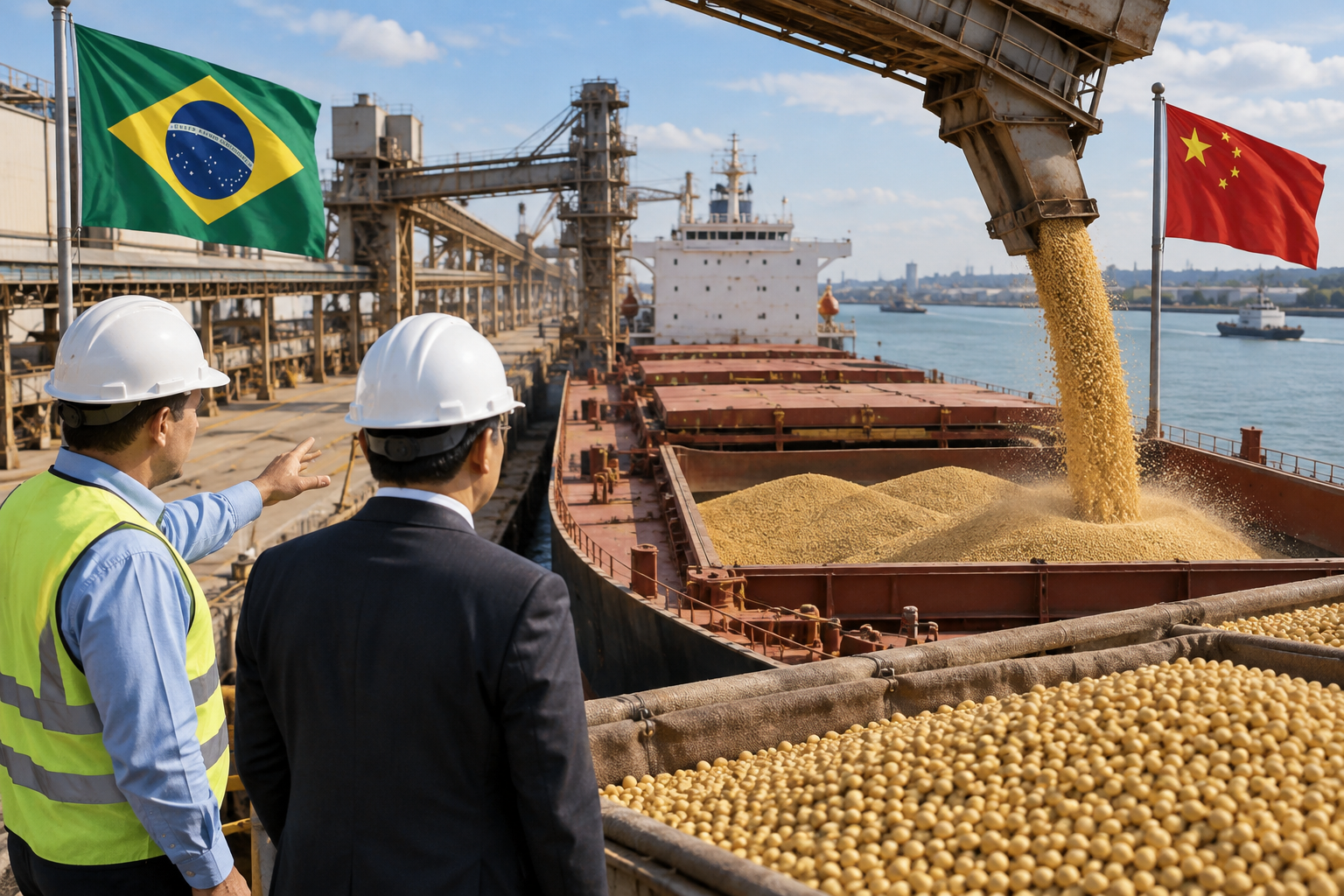
Chinese importers evaluating soybean exporters in Brazil should begin with crushing suitability, not the lowest headline price. A cargo’s commercial value depends on recoverable oil, meal characteristics, usable weight and delivery reliability—alongside the contract rules that determine what happens when quality differs from the offer.
This guide explains how to compare Brazilian soybean suppliers, build a bulk-cargo specification and turn competing quotations into a defensible purchasing decision. Import eligibility and documentation must always be checked against current official requirements before commitment.
Define the crushing requirement before requesting prices
A request for quotation (RFQ) should describe the production requirement the cargo must satisfy. “Brazilian soybeans, bulk” is not enough to produce comparable offers.
Start with your plant’s target meal specification, expected oil recovery and operating constraints. Higher protein or oil content may justify a premium, but only when the analytical basis is comparable and the composition improves your actual processing economics.
Buyer requirement checklist
- Intended use: crushing for meal and oil, including downstream quality requirements.
- Cargo quantity: target tonnage, contractual tolerance and who controls that tolerance.
- Destination: Chinese discharge port, terminal restrictions and inland delivery needs.
- Timing: loading window and required arrival range, allowing for voyage uncertainty.
- Product: origin, crop year and any required identity or traceability information.
- Commercial basis: requested currency, payment structure and FOB or CFR quotation.
- Operational limits: discharge capacity, storage availability and acceptable arrival spacing.
Distinguish the shipment window from the arrival requirement. A seller’s loading commitment does not automatically guarantee discharge within your production schedule.
Assess soybean exporters in Brazil by role and execution capacity
A supplier’s role affects how it controls quality, assembles cargo and handles a shortfall. Neither direct production nor trading status alone establishes reliability. The business models below can overlap; assess the arrangements behind the specific offer.
Producer cooperative
A cooperative may aggregate member production and coordinate storage or marketing. Ask which entity signs the export contract, how lots are segregated and who is responsible for delivering the agreed cargo to port.
Trading company
A trader may source across several producing regions or warehouses, potentially offering flexibility. Establish whether supply is owned, contracted or still being sourced, and whether substitutions require buyer approval while preserving the agreed Brazilian origin.
Exporter with contracted supply
An exporter may depend on third-party origination and terminal arrangements. Request evidence appropriate to the transaction, such as supply commitments, loading arrangements and recent inspection records with commercially sensitive information redacted.
For every shortlisted exporter, verify the contracting entity, business registration, authorized signatories and bank beneficiary through independent channels. Investigate unexplained changes in payment instructions before releasing funds.
Ask who bears the cost if the nominated supply fails inspection or misses the loading window. Contractual responsibility matters more than a broad claim of export experience.
Write specifications that reflect crushing value
When sourcing bulk soybeans from Brazil, specify both the quality limit and how it will be measured. A percentage without a reporting basis or test method can be misleading. Distinguish binding guarantees from indicative values; protein and oil guarantees must be expressly negotiated rather than assumed.
| Parameter | What the RFQ should define | Why it matters | |---|---|---| | Protein | Requested minimum, whether contractually guaranteed, reporting basis and analytical method | Influences meal formulation and potential meal value | | Oil content | Requested minimum, whether contractually guaranteed, reporting basis and analytical method | Supports estimates of recoverable oil and crush margin | | Moisture | Maximum, measurement method and adjustment rules | Affects payable dry matter, storage and handling | | Foreign material | Maximum and classification method | Can reduce usable input and add cleaning or disposal costs | | Damaged beans | Maximum total damage, relevant subcategories and grading method | May affect processing performance and product quality |
Keep analytical bases consistent
Protein and oil reported on a dry-matter basis are not directly comparable with values reported as received. Require the original basis and an agreed conversion method where normalization is needed.
For protein, specify the analytical method, including the nitrogen-to-protein conversion factor where applicable. If near-infrared analysis is used, agree the calibration requirements and reference method for disputes. For oil, distinguish a laboratory composition result from the recovery your own plant can achieve.
Defect definitions also need precision. Specify how heat-damaged, mold-affected, broken or otherwise defective beans are classified under the chosen grading system; broken beans may be treated separately from damage. Avoid overlapping categories that could create disputed deductions.
Require the sampling date, lot identification and method behind each certificate of analysis. A historical certificate can indicate past performance; it does not guarantee the nominated cargo.
Verify Chinese import requirements through official sources
Before agreeing to import soybeans from Brazil to China, establish the requirements applicable to the product, intended use, origin, relevant establishments and shipment at that time. This guide is not a confirmation that a particular supplier or cargo is eligible.
Use the General Administration of Customs of China for Chinese customs and plant-quarantine information, including applicable access conditions and registration or eligibility records. Consult China’s Ministry of Agriculture and Rural Affairs for agricultural biosafety requirements where relevant.
On the Brazilian side, consult the Ministry of Agriculture and Livestock for official export and phytosanitary information. Have your customs broker and compliance team confirm which current measures govern the proposed cargo.
Pre-contract compliance checklist
- Confirm that the proposed product and origin are eligible for the intended import.
- Verify any required exporter, storage or other establishment eligibility using official records.
- Identify applicable importer permissions and plant-quarantine approvals, including when they must be obtained.
- Confirm any relevant genetically modified organism approvals and documentation.
- Agree the required phytosanitary certificate, declarations and traceability details.
- Allocate responsibility for obtaining documents and correcting discrepancies before shipment.
Do not assume that a seller advertising soybean exports to China is eligible for your transaction. Historical shipments and uploaded certificates are supporting evidence, not substitutes for current official checks.
Compare FOB and CFR on the same commercial basis
An FOB soybean price becomes useful only when the named loading port, shipment period, quantity, quality and payment conditions are clear.
Under FOB, the seller delivers the goods on board at the named shipment port; the buyer arranges the main ocean carriage. Under CFR, the seller pays freight to the named destination port, but cargo risk also transfers when the goods are on board at origin—not upon arrival. CFR does not require the seller to provide cargo insurance.
State the applicable Incoterms edition and named port precisely. Address payment, ownership transfer and quality remedies separately in the contract. Risk transfer does not remove the seller’s responsibility for contractual nonconformity that existed before that transfer.
Build a normalized cost comparison
Compare offers using:
- The same quantity, quality guarantees and analytical basis.
- Comparable origin ports, loading windows and destination assumptions.
- Ocean freight where not already included in the quoted price.
- Insurance, financing, inspection and applicable import costs.
- Handling, discharge, storage and inland transport charges not already covered.
- Expected cleaning losses and plant-specific oil and meal recovery assumptions.
Avoid double-counting freight in a CFR offer. Check whether discharge-related charges sit within the freight arrangement or remain payable separately. Treat recoverable taxes consistently and account for their financing impact where relevant.
Then compare expected processing contribution: estimated product revenue minus normalized delivered cargo and processing costs. Test the calculation at guaranteed quality levels as well as expected composition. Where composition is only indicative, model downside scenarios rather than treating it as assured.
Review loading rates, laytime, demurrage, vessel nomination and terminal limitations. Unclear logistics obligations can erase an apparent price advantage.
Make sampling and acceptance rules enforceable
Quality guarantees need an evidence process. Before signing, agree how representative samples will be collected and which results will control payment or claims.
Specify inspection responsibilities
Name the inspection provider or selection procedure, allocate fees and state whether inspection occurs at loading, discharge or both. Define the sampling standard, sample preparation, sealed retention samples, custody records and retention period. Separately agree the quantity-determination method and the weight records that control invoicing or shortage claims.
The contract should identify the controlling laboratory and a referee-testing process. Clarify whether loading results are final for specified parameters and how any destination claims will be evaluated. Do not leave the relationship between origin and destination tests implicit. Commercial inspection terms do not override regulatory inspection or import decisions.
Separate adjustments from rejection
Create a quality schedule with three clear outcomes:
- Within guarantee: accepted at the contract price, subject to any expressly agreed premiums.
- Outside guarantee but within an agreed acceptance band: accepted with the specified adjustment, provided the cargo remains legally admissible.
- Beyond a rejection threshold: triggers the expressly agreed remedy and notice procedure.
Define adjustment units, calculation basis, rounding and treatment of multiple failures. Explain whether deductions are cumulative and prevent unintended double deductions for overlapping defects.
Address nonconformities that cannot be resolved through a commercial discount, including regulatory failures. Specify notice deadlines, evidence, mitigation duties and responsibility for storage, diversion or other lawful, agreed remedies. Have qualified counsel review the governing law and dispute-resolution provisions.
Send an RFQ suppliers can quote against
Use one RFQ format across shortlisted suppliers. Request a completed response and a separate list of deviations rather than accepting unstructured offers.
Bulk soybean RFQ checklist
- Buyer entity, intended crushing use and Chinese discharge port.
- Quantity, tolerance, loading window and required arrival range.
- Brazilian origin details, crop year and available cargo lots.
- Protein, oil, moisture, foreign-material and damage specifications, distinguishing guarantees from indicative values.
- Analytical basis, methods and recent representative quality evidence.
- FOB loading port and/or CFR destination quotation, with validity.
- Seller role, contracting entity and evidence of cargo availability.
- Loading terminal, expected loading terms and vessel restrictions.
- Inspection, sampling, weight determination, adjustment and rejection proposals.
- Required compliance documents, payment terms and contractual exceptions.
Shortlist on agreed quality commitments, verified compliance and execution capability before negotiating the final price. Incorporate the accepted specification and agreed deviations into the contract, with a clear order of precedence if documents conflict.
Frequently asked questions
What should Chinese crushers prioritize when selecting Brazilian soybean suppliers?
Prioritize compliant supply, clear quality commitments, moisture and defect limits, and dependable shipment execution. Assess protein and oil content against plant-specific recovery economics, distinguishing contractual guarantees from indicative values rather than comparing headline prices alone.
How should buyers compare FOB and CFR soybean offers?
Normalize quantity, quality, loading period and port assumptions first. Add costs not included in each offer without double-counting freight. Under CFR, the seller pays freight to destination, but risk transfers on board at origin.
Does a supplier’s certificate of analysis guarantee cargo quality?
Not by itself. A certificate reports results for the tested sample or lot under stated methods. Its contractual effect depends on the agreement; cargo acceptance needs representative sampling, controlling test results, inspection responsibilities and remedies for deviations.
Where should buyers verify Chinese import eligibility?
Check current requirements and applicable eligibility records through Chinese customs and other relevant official authorities. Confirm Brazilian export documentation through the responsible Brazilian authority, with support from your broker and compliance team.
Turn your specification into a sourcing conversation
A strong sourcing decision connects composition, delivered cost and enforceable acceptance rules. Build that framework before asking suppliers to compete on price.
Visit IMEX Center to discuss soybean sourcing or your Brazilian soybean offering. Bring a clear specification, cargo window and shipment basis so the conversation starts with commercial fit—not an incomparable headline quote.
Source or sell globally with IMEX Center
Browse verified suppliers →