Global Economy
Transshipment Delays: How Distant Port Disruptions Reach Your Import Supply Chain
15 Oct 2026 · 10:02 CET
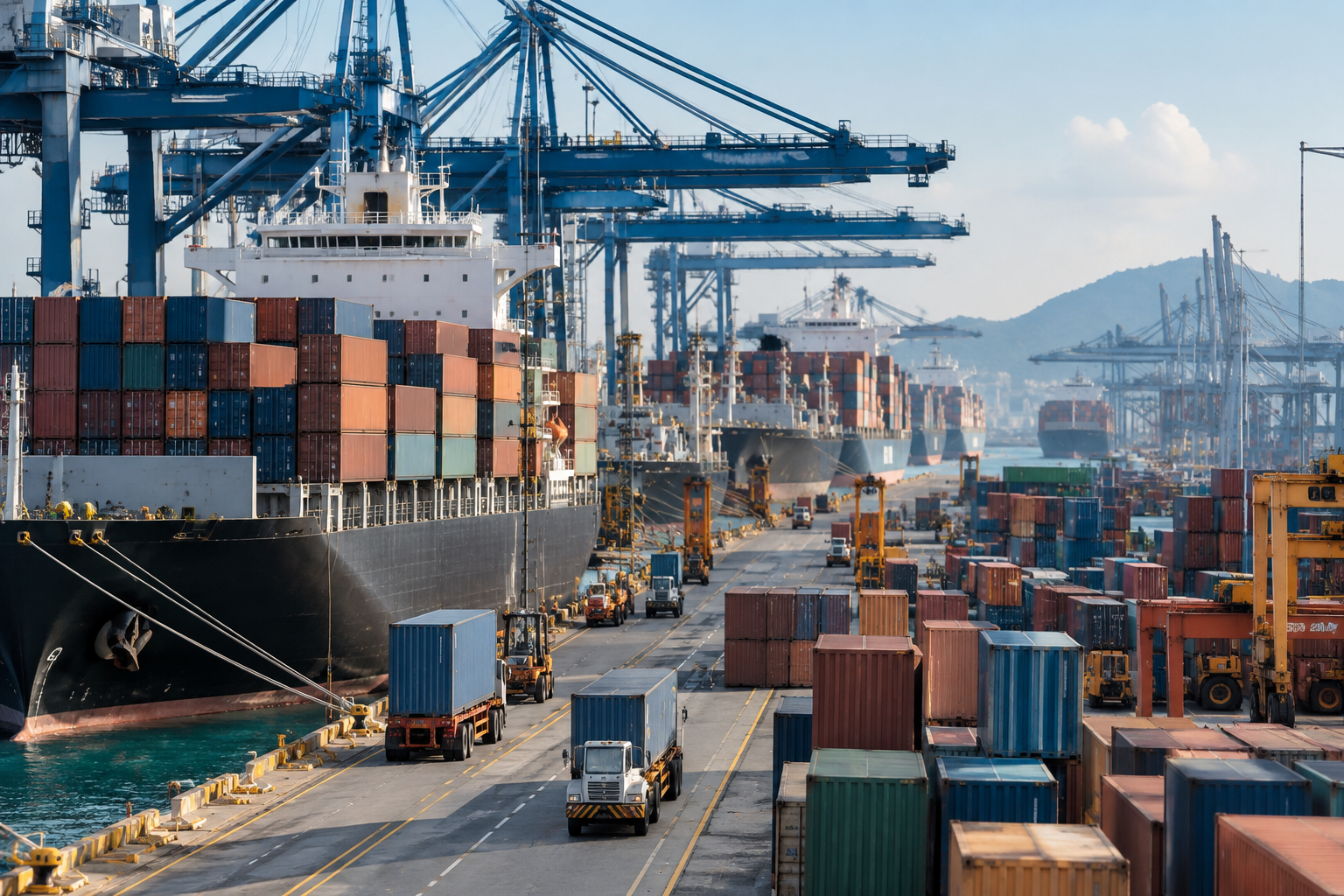

Your origin and destination ports may be operating normally, yet transshipment delays can still disrupt an import order. The exposure sits between those endpoints: a shared hub, a connecting vessel, or the equipment network supporting the next booking. For importers, the relevant question is not simply whether a port is congested, but whether the complete routing can deliver stock when the business needs it.
This is a structural feature of container shipping networks, not a claim about current conditions. Understanding it helps procurement and logistics teams compare services on connection reliability and total inventory cost rather than quoted freight alone.
Why healthy endpoints do not guarantee a reliable shipment
Many container services operate through hub-and-spoke networks. A feeder vessel carries cargo between a regional port and a larger hub, where containers transfer to another vessel. Some routings involve more than one transfer before arrival at the destination.
A disruption at an intermediate hub can therefore affect cargo whose origin and destination remain unaffected. The shipment depends on a chain of coordinated events, not just two functioning ports.
Different carrier brands do not necessarily create independent alternatives. Shortlisted services may use the same transshipment terminal, connecting feeder, or vessel service through commercial arrangements. That makes the physical itinerary more important than the name on the quotation.
Before comparing prices, logistics should obtain the planned vessel legs, transfer ports and terminal details where available. Treat an unspecified intermediate routing as an unresolved risk, not an administrative detail.
How transshipment delays spread through shipping networks
Diverted cargo can strain shared hub capacity
When carriers alter services in response to a route disruption, some cargo may move through alternative hubs. Those terminals may need to accommodate additional vessel calls, handling moves or temporary storage alongside their existing workload.
Whether this causes congestion depends on available capacity, operating conditions and the timing of arrivals. Diversion does not automatically create delays, but it can introduce pressure far from the original disruption.
The impact can therefore extend across the network: a problem outside an importer's usual trade lane can still affect a hub that its cargo uses.
Missed connections can extend container dwell
A connecting vessel's departure time is not the only deadline that matters. The arriving container must be discharged, processed and positioned for loading within the terminal's operating requirements.
If the inbound vessel arrives late, or handling takes longer than planned, the container may miss its connection. Recovery then depends on the next suitable sailing, available space and operating decisions—not simply the next departure shown on a schedule.
The resulting delay can be disproportionate: a relatively short inbound delay can produce a much longer wait when onward services are infrequent or fully allocated.
Equipment imbalances can affect later bookings
Disruption can also slow the return and repositioning of empty containers. Equipment may remain tied up in transit, at terminals or inland instead of becoming available where exporters need it.
A subsequent booking can consequently face equipment constraints even if its planned route avoids the original problem. Exposure may vary by container type and location.
For repeat purchasing programmes, logistics should therefore check both the current shipment's connections and equipment availability for the next origin pickup.
Scheduled transit is not the same as connection reliability
A quoted transit time is useful, but its scope matters. Confirm its start and end points, whether it includes expected transshipment dwell, and whether origin preparation or destination delivery falls outside the quote.
Then separate three milestones:
- Inbound vessel arrival: when the vessel is expected to reach the hub; arrival does not itself confirm discharge.
- Terminal readiness: when the container has been handled and is available for onward loading, subject to applicable procedures.
- Onward departure: when the intended connecting vessel sails with the container actually loaded.
These milestones distinguish a vessel being on schedule from a shipment making its connection. Tracking that shows arrival at the hub is not proof of onward loading.
Questions to resolve before booking
Ask the forwarder or carrier:
- What are the planned transfer ports and connecting services?
- Is the connection consistent with the required handling window?
- What happens if the intended connection is missed?
- How frequently does a suitable onward service operate?
- What information confirms loading, rather than only a planned departure?
- Can the routing change, and how will the shipper be notified?
The logistics manager should record the answers against the specific quotation before procurement approves a time-sensitive booking. Where details remain provisional, record the uncertainty and the deadline for reconfirmation. A generic route description is insufficient.
Direct shipping vs transshipment: compare total exposure
In this comparison, a direct service means the container stays on the same vessel between the booked origin and destination ports. It does not necessarily mean nonstop transport: the vessel may call at other ports. Confirm this interpretation with the carrier or forwarder rather than relying on the service label alone.
Direct shipping removes an intermediate vessel-transfer dependency, but it is not automatically faster, cheaper or more reliable. Its departure frequency, origin cutoff, port rotation and available capacity still matter.
Transshipment may offer broader port coverage, a more convenient origin departure or a lower freight quote. It can be appropriate when the connection is workable and the business can absorb delivery variability.
Evaluate each route against the same delivery requirement
Compare options using:
- Quoted freight and clearly identified additional charges.
- Cargo-ready date, booking cutoffs and departure frequency.
- Expected transit, transfer dwell and connection uncertainty.
- Recovery options if a sailing or connection is missed.
- Inventory carrying cost during transport and any additional buffer holding.
- Stockout exposure, production interruption and potential expediting costs.
Check which costs the importer would bear under the agreed sale and transport terms. A later direct departure can sometimes arrive before an earlier transshipment service, depending on the route and connection. Conversely, an earlier transfer service may better meet the delivery requirement. A low freight quote alone does not resolve that comparison.
Use an inventory-cost model without false precision
For a defined increase in average inventory holding time, a practical starting point is:
Incremental carrying cost = inventory value × annual carrying-cost rate × additional days ÷ 365.
Finance should supply the carrying-cost assumptions and confirm which costs apply during transit versus storage. Apply the calculation to inventory value and holding time relevant to the routing decision, taking account of payment terms and cost responsibility. Avoid double-counting costs already included elsewhere.
Assess stockout consequences separately. Procurement and operations should identify what a late arrival would actually interrupt and whether substitute stock is available. Additional charges such as storage or rehandling should also be assessed separately where applicable, rather than assumed to be covered by the carrying-cost estimate.
Where reliable delay probabilities are unavailable, compare normal, missed-connection and extended-disruption scenarios. Do not invent percentages to make the model appear precise.
Map hidden concentration risk across shortlisted services
Carrier diversification and routing diversification are different decisions. Two quotations may expose the importer to the same underlying hub disruption.
Before awarding bookings, logistics should build a simple comparison sheet containing:
- Carrier and quoted service.
- Origin, destination and every planned transshipment port.
- Terminals and connecting services where confirmed.
- Number of transfers and onward service frequency.
- Credible alternatives if a connection fails.
- Unconfirmed details requiring clarification.
Flag shared hubs across the shortlist. Where a missed delivery would have serious consequences, consider whether splitting orders across genuinely different routings provides useful protection. Different hubs can still share other exposures, such as the same constrained shipping corridor.
Diversification also creates costs: smaller shipments, additional handling and coordination can outweigh its benefits. Procurement should approve it against the business impact, not pursue it as an automatic rule.
Turn exposure into purchasing decisions before order release
Routing risk becomes manageable when ownership and decision deadlines are explicit. Agree the response before releasing time-sensitive purchase orders.
A practical pre-order checklist
- Procurement: confirm the required delivery date, acceptable substitutes and business consequences of lateness before committing to the supplier.
- Logistics: validate the proposed route and identify a feasible alternative before booking approval. Record where alternatives share the same hub exposure.
- Inventory planning: review buffer needs using demand variability and relevant lead-time history before replenishment quantities are finalised.
- Finance: approve carrying-cost assumptions and any premium-routing threshold during route selection.
- Supplier: confirm cargo readiness, packing and documentation deadlines before the shipment is booked.
Set escalation triggers around decisions that remain actionable. Examples include a changed transshipment port, a revised connection that misses the required delivery window, or failure to confirm equipment by the agreed pickup decision deadline.
For each trigger, name the decision owner and the latest time to act. Logistics should request a recovery or rerouting proposal as soon as a connection change threatens the delivery requirement; procurement should decide before the alternative's booking cutoff. Confirm feasibility and charges before authorising a change, especially once cargo is in transit.
Buffers should reflect the relevant replenishment exposure. Blanket stock increases across all products can tie up cash without protecting the items most vulnerable to container shipping delays.
Verify conditions before changing the route
Structural risk analysis does not establish today's conditions at a specific hub. Before acting, check dated port-authority notices, terminal advisories and current carrier schedules.
Read each notice for its affected terminal, service, cargo type and effective period. An announcement about one facility may not apply to every shipment using the port. Published schedules also show plans, not guaranteed connections.
Ask the forwarder to confirm the specific booking's routing, equipment availability and connection assumptions. If sources conflict, request clarification from the responsible carrier or terminal contact rather than relying on an undated congestion summary.
Logistics should complete this check before booking, revisit it when the itinerary changes, and monitor the transfer milestones during transit. Keep the source and check time in the shipment record so decisions remain traceable.
Frequently asked questions
What causes transshipment delays?
Common mechanisms include late inbound arrivals, constrained terminal handling, missed loading windows and limited onward capacity. The resulting delay depends on how quickly the container can secure a workable replacement connection.
Can a distant port disruption affect an otherwise unaffected trade lane?
Yes. Shared hubs, diverted cargo and container repositioning can transmit disruption across routes. Exposure depends on the shipment's physical itinerary and equipment needs, not only its origin and destination.
Is direct shipping always better than transshipment?
No. Direct shipping removes a vessel-transfer dependency, but departure timing, service frequency, transit and inventory costs still matter. Compare both options against the required delivery date and realistic disruption scenarios.
What should importers confirm before booking?
Confirm transfer ports, connecting services, handling-window assumptions, equipment availability and recovery options. Procurement and logistics should also agree escalation triggers and who can approve an alternative route before its booking cutoff.
Build routing questions into your next sourcing decision
Reliable importing starts before freight is booked. Make cargo readiness, delivery requirements and routing assumptions part of supplier discussions—not a late-stage logistics handoff.
Ready to source or list? Visit IMEX Center to source products or list your offering. Bring a clear delivery brief and connection-risk checklist to your next trade discussion.
Source or sell globally with IMEX Center
Browse verified suppliers →