Import & Export
Tyre Manufacturers in China: Passenger-Car Tyre Sourcing for UAE Distributors
29 Oct 2026 · 06:01 CET
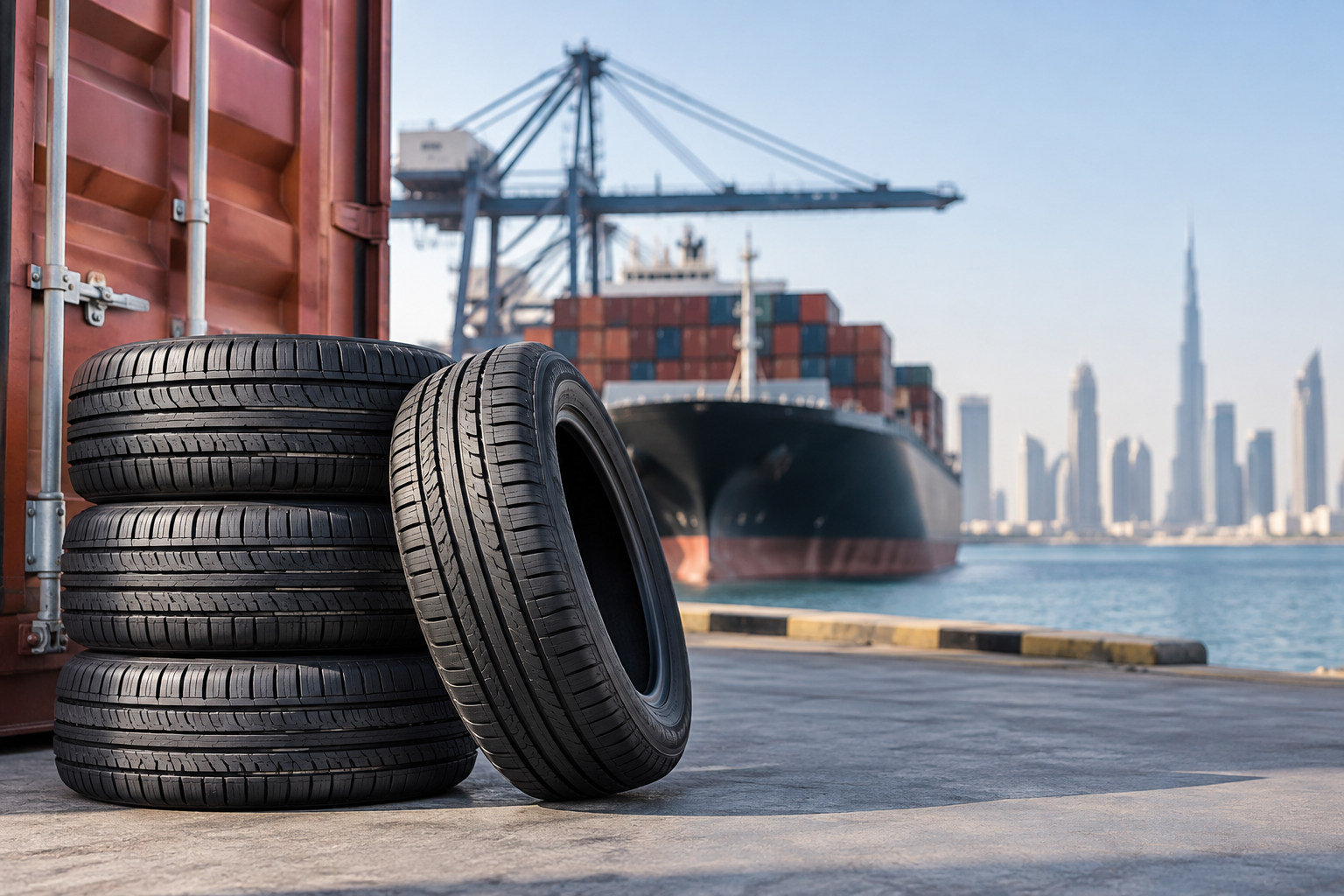
For UAE distributors evaluating tyre manufacturers in China, the first purchasing decision should be the saleable assortment—not the factory name. A competitively priced container can still tie up working capital if its sizes, load indices, speed ratings or patterns do not match customer demand, or if individual products lack the evidence needed for market entry.
Start with a controlled SKU list, then qualify suppliers against it. Connect each proposed tyre to a target fitment, order quantity, production-date requirement and compliance file. This makes quotations comparable and gives procurement, compliance and sales a shared basis for approving the first shipment.
Define the UAE sales assortment before contacting factories
The distributor’s category manager should own the initial SKU list before procurement issues enquiries. Build it from actual customer requests, workshop feedback, fleet requirements and sales history where available—not a supplier’s promotional catalogue.
Separate your channels. Independent tyre shops, vehicle workshops, fleet accounts and online retail customers may require different price tiers, replenishment speeds and warranty support.
Create a fitment-led SKU master
Record the following for every proposed SKU:
- Target vehicle fitments, checked against authoritative vehicle or fitment information.
- Tyre size, construction, load index and speed rating.
- Standard-load or extra-load specification, where applicable.
- Required run-flat capability or other fitment-specific characteristics.
- Intended pattern, performance positioning and sales channel.
- Opening quantity, expected replenishment need and acceptable alternatives.
- Required markings and the status of supporting compliance evidence.
Size alone does not establish suitability. Two tyres with the same nominal dimensions can differ in load capacity, speed capability, construction and application. Avoid unverified fitment claims, especially when changing an original specification.
Classify the assortment into core, supporting and trial SKUs. Prioritise demonstrated demand; do not let factory minimums turn uncertain sizes into the largest stock positions.
Evaluate tyre manufacturers in China against the complete assortment
A catalogue showing hundreds of sizes does not prove that your required combinations are currently available. Ask manufacturers for a size-by-pattern availability matrix mapped to your SKU master.
The matrix should identify each exact specification, production site, brand, minimum order quantity, production lead time and available conformity evidence. Distinguish regular production from proposed development or special-order availability.
Verify the seller, factory and brand rights
Suppliers may be manufacturers, export companies, authorised distributors or intermediaries. None of those roles alone determines reliability, but each requires a clear responsibility chain.
Before commercial commitment, procurement should verify:
- The seller’s legal identity, registration and authorised signatory.
- The relationship between the contracting seller and manufacturing site.
- Whether the brand is factory-owned or licensed.
- Authority to supply the brand into the intended market.
- The proposed beneficiary bank details and any differences from the contracting entity.
- Responsibility for warranty claims, defects and recalls.
Mark unresolved identities or authority pending verification and resolve them before commitment. Confirm bank details through an independently verified contact channel before payment. A factory audit can support capability assessment, but it does not replace product-specific conformity evidence or inspection of the shipment.
If one factory cannot cover the assortment, compare a controlled multi-supplier purchase with a narrower launch. Do not accept unsuitable substitutions simply to keep the order under one seller.
Clear UAE market eligibility by exact product
The importer’s compliance lead should confirm the current requirements before any SKU receives final purchasing approval. Consult official UAE sources, including the Ministry of Industry and Advanced Technology where relevant, and the customs authority responsible for the intended entry point.
Confirm the applicable conformity route, registration requirements, testing, marking, documentation and any production-age or shelf-life rules. Identify whether approval or evidence applies to an individual product, a defined product family, a brand or another scope.
An overseas approval, test report or quality-system certificate is not automatic UAE market acceptance. Its relevance depends on the current UAE requirements and its exact scope.
Maintain a SKU-level compliance register
For each SKU, link:
- Manufacturer and manufacturing site.
- Brand, pattern, size, load index and speed rating.
- Applicable standards and required test reports.
- Relevant certificate or registration identifiers, scope and validity.
- Required sidewall markings, labels and traceability information.
- Outstanding questions, responsible person and clearance deadline.
Check that document descriptions match the proposed goods and verify authenticity with the issuing body or official register where available. A report for a different size or factory is not sufficient merely because the brand name matches; any permitted family coverage needs confirmation.
This register should remain a purchasing gate, not a file assembled after the container departs.
Write a tyre-specific RFQ that prevents substitutions
A useful RFQ requests a quotation against your specifications, rather than inviting the seller to choose the assortment. Include a document reference, issue date, response deadline and quote-validity requirement. Identify counterparties accurately, with unverified details clearly marked. Verify both parties’ legal identity and contracting authority before any binding commitment.
Technical and documentary requirements
Ask suppliers to quote line by line and disclose deviations explicitly:
- New pneumatic passenger-car tyres, with specified construction and dimensions.
- Exact brand, pattern, load index, speed rating and other required characteristics.
- Manufacturing site and country of origin.
- Performance requirements and agreed test standards, methods and acceptance criteria.
- Maximum production age at an agreed checkpoint, supported by date-code evidence.
- Required markings, labels, traceability and packaging or protective arrangements.
- Quantity in pieces and quantity tolerance for each SKU.
- Prohibition of substitutions without written buyer approval.
- Required conformity records, test reports and shipment documents, including the commercial invoice, packing list, certificate of origin and applicable transport and insurance records.
Treat production-date limits as both a compliance question and a commercial specification. Do not invent a universal permissible age. Agree the checkpoint—such as inspection or loading—and account for transit time, any requirements applying at import or sale, and expected stockholding.
Commercial requirements
Request currency, unit and total prices, minimum quantities by size and pattern, production capacity, loading and destination ports, shipment windows, partial-shipment conditions and replenishment lead times. Specify the proposed payment terms, warranty process and claims procedure.
Require a named port or place, as appropriate, and an Incoterms 2020 rule. FOB, CFR and CIF apply to sea or inland-waterway shipments; under these rules, risk transfers when goods are on board at loading. CFR and CIF include seller-paid freight to the named destination port, and CIF also requires insurance. Agree the required insurance scope rather than assuming CIF covers every loss. For container-terminal handover, consider whether FCA better matches the actual delivery arrangement.
Incoterms do not determine payment or ownership. If proposing an irrevocable LC at sight, agree bank acceptance and documentary conditions: payment depends on complying documents, not vessel arrival or proof of product quality.
Confirm the passenger-car tyre HS code before costing
For new pneumatic rubber tyres of a kind used on motor cars, HS 4011.10 is the starting classification reference. It is not a blanket code for all tyres.
Before the landed-cost comparison is approved, the importer’s customs broker should verify the applicable UAE tariff line, product description, current duties, taxes, fees and import conditions. Do not extend this classification automatically to truck, used or retreaded tyres.
Provide the broker with the technical description, intended application, construction and product condition. Keep the classification decision linked to the SKU master and use consistent descriptions across the invoice, packing list and import documentation.
For UAE importers sourcing from China, early classification review reduces the risk of approving an order on a misleading landed-cost estimate.
Build the container around sell-through
Wholesale purchasing should improve stock availability, not simply fill container space. Reconcile factory minimums with the quantity each channel can realistically absorb.
The category manager and logistics lead should approve the proposed loading plan before any binding order is placed. Obtain a SKU-specific capacity estimate and loading method; do not assume a generic tyre count applies to every size mix.
Check:
- Whether minimum quantities apply by size, pattern or total order.
- Which core SKUs would be displaced by slow-moving minimums.
- Whether consolidation adds handling, cost or delay.
- How loading and unloading will avoid deformation or damage.
- Whether the production schedule keeps all SKUs within agreed date limits.
- Whether replenishment can maintain the same specification and pattern.
Compare total landed assortment cost, including freight, insurance where applicable, inspection, conformity work, customs charges, clearance, inland transport, storage and financing. Avoid double-counting costs already included in the quoted Incoterm price. Distinguish cash-flow items from unrecoverable costs with finance input.
Allocate costs consistently across SKUs. A low average tyre price can disguise poor margins on high-demand sizes and excessive capital tied up in trial products.
Approve the first order through named decision gates
Use explicit release conditions so unresolved issues do not disappear between departments. Complete the first two gates before signing a binding supply agreement, releasing a binding purchase order or paying a deposit.
Gate 1: Commercial reconciliation
Owner: procurement. Timing: before commercial commitment. Reconcile quotations against identical specifications, quantities, payment terms and named Incoterms ports or places. Close counterparty-verification gaps and document every accepted commercial deviation.
Gate 2: Product and assortment clearance
Owners: compliance lead and category manager. Timing: before commercial commitment. Compliance approves each SKU’s market-eligibility evidence and identifies shipment-specific documents to be checked later. The category manager approves fitments, quantities and permitted alternatives. Remove uncleared products from the executable order; commercial approval cannot waive regulatory requirements.
Gate 3: Pre-shipment verification
Owner: the importer’s designated quality lead, with checks performed by an independent inspector agreed by buyer and seller. Timing: before shipment release. Use an agreed sampling plan and acceptance criteria to check SKU identity, production dates, markings, quantities, condition and consistency with the packing list.
Visual inspection does not establish every performance characteristic. Where laboratory testing is required, define the laboratory, method, sampling responsibility and reporting deadline separately. The quality lead should review results and close nonconformities before recommending release.
Gate 4: Final release
Owner: the importer’s designated order approver. Timing: before authorising dispatch. Review inspection findings, documents due at that stage and corrective actions. Procurement should resolve discrepancies with the seller and obtain reinspection where necessary—not authorise shipment against an informal promise to fix missing pre-shipment evidence later.
For documents issued only after loading or departure, agree the issuer, content and delivery deadline in advance. Procurement should track receipt against contractual, customs and payment deadlines.
Frequently asked questions
How should UAE distributors shortlist Chinese tyre manufacturers?
Start with a fitment-led SKU master and request a size-by-pattern availability matrix. Compare exact specification coverage, legal identity, brand authority, compliance evidence, minimum quantities and replenishment capability before comparing prices.
Are overseas tyre approvals sufficient for the UAE?
Not automatically. The importer’s compliance lead must confirm current UAE requirements and whether the evidence covers the exact product or an accepted product-family scope. Verify this before approving the SKU for purchase.
What is the passenger-car tyre HS code?
HS 4011.10 is the starting reference for new pneumatic rubber tyres of a kind used on motor cars. A customs broker should confirm the applicable UAE tariff line and current charges. Other tyre categories require separate classification review.
How should production-date requirements be specified?
Agree a maximum production age at a defined checkpoint, together with traceable date-code evidence and a rejection or correction process. Check current UAE requirements, including any applicable at import or sale, and account for transit, clearance and expected stockholding time.
Turn the assortment into a sourcing brief
The strongest first order is a replenishable range with verified fitments, documented eligibility and a credible landed margin—not simply the cheapest container. Before issuing the RFQ, procurement should consolidate the approved SKU matrix, compliance requirements and commercial conditions into one sourcing brief. Use that brief when approaching suppliers or discussing your sourcing requirements with IMEX Center.
Source or sell globally with IMEX Center
Browse verified suppliers →