Import & Export
Sourcing from Wheat Exporters in Australia: A Guide for Indonesian Flour Mills
07 Oct 2026 · 12:03 CET
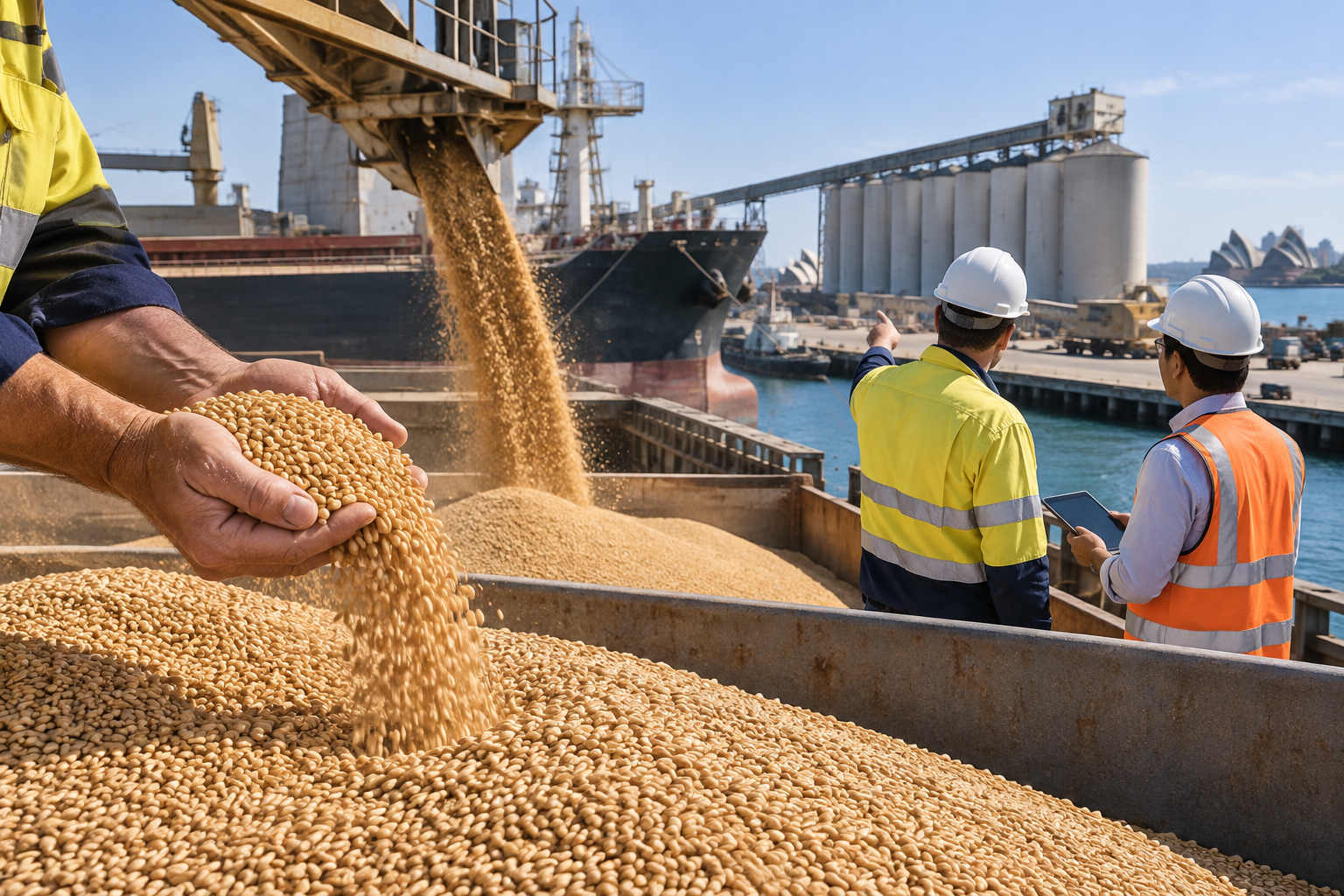
Indonesian flour mills evaluating wheat exporters in Australia need more than a competitive price and a familiar wheat class. A useful offer must connect grain quality to flour performance, identify how each specification will be measured, and define what happens if the delivered shipment falls outside the agreed tolerances.
The strongest procurement process starts inside the mill. Quality, production, procurement and logistics teams should agree on the intended flour applications before exporters quote. This creates a common basis for comparing Australian wheat suppliers and reduces the risk of buying attractive-looking grain that requires costly blending or fails customer production trials.
Start with flour performance, not wheat class
A wheat class can help narrow the search, but it is not a complete purchase specification. Protein quantity alone does not establish dough strength, extensibility, flour colour or finished-product suitability.
Bread, noodles, biscuits and general-purpose flour can require different performance profiles. Even within one application, customer processes and formulations may change the preferred wheat blend.
Define the production target
Before issuing an enquiry, the mill quality manager and production team should document:
- Intended flour products and their priority customers.
- Required flour protein, ash, colour and functional performance.
- Relevant dough or end-product tests and acceptance criteria.
- Existing wheat inventory and planned blending proportions.
- Milling constraints, including cleaning capacity and extraction objectives.
- The consequences of substitution if the preferred wheat is unavailable.
Treat extraction and finished-product performance as trial outcomes, not guarantees inferred from a grain description. A wheat that performs well alone may behave differently in the mill's planned blend.
Owner and timing: The quality manager should approve the end-use brief before procurement requests firm quotations.
Turn Australian milling wheat specifications into a measurable sheet
The specification sheet should distinguish mandatory acceptance limits from preferred targets. Every contractual quality parameter needs a unit, reporting basis, agreed method and clear acceptance rule.
Align protein and moisture reporting
Protein results cannot be compared reliably when one offer uses a dry-matter basis and another uses a stated moisture basis. Ask every supplier to declare the basis explicitly and provide results on the same agreed basis.
Also specify the protein test method and, where relevant, the nitrogen-to-protein conversion factor. If near-infrared testing is used, agree on the reference or dispute method rather than assuming different instruments will produce interchangeable results.
Moisture needs its own contractual limit and method. Do not allow the protein reporting basis to obscure the actual grain moisture offered.
Define the remaining quality parameters
A practical specification checklist includes:
- Test weight: State the minimum, unit and agreed measurement method; it does not replace a milling trial.
- Falling number: Specify the minimum and method. This can help assess alpha-amylase activity but is not a complete flour-performance test.
- Screenings: Define the maximum, sieve configuration and procedure so suppliers measure the same fraction.
- Foreign material and damaged grain: Define categories and limits rather than relying on an undefined “clean wheat” description.
- Food safety and phytosanitary requirements: Identify applicable contaminant, residue and pest requirements, with testing or certification appropriate to the product and destination.
- Functional testing: Request flour or dough results where these materially affect the intended application, and specify the milling, sample preparation and test methods needed for meaningful comparison.
Avoid inserting generic numerical thresholds simply because they appear in another buyer's tender. Quality should set limits from production requirements, account for applicable regulatory limits and confirm that the requested combination is commercially obtainable.
Shortlist wheat exporters in Australia by execution capability
A credible shortlist should evaluate who controls the grain, who signs the contract and who can execute the shipment. A trading company may be suitable without owning storage or a terminal, provided its arrangements are clear and credible.
Ask Australian wheat suppliers for their legal business name, registration details, contracting entity, business address and authorised contact. Independently check identity and verify payment instructions through a trusted communication channel, especially after any bank-detail change.
Then investigate supply and logistics:
- What wheat class, origin information and crop-year information can be offered?
- Is the proposed supply identified, or will it be assembled after contracting?
- How will the exporter manage blending and lot consistency?
- Which storage, packing or loading facilities are proposed?
- What evidence supports access to those facilities and the shipment window?
- Can trade references be contacted with permission?
Bulk wheat exporters should explain loading arrangements and how terminal access will be secured. For containers, check packing arrangements, equipment suitability, cleanliness controls and feasible shipping services.
Owner and timing: Procurement should complete identity and commercial checks before contracting; logistics should validate the proposed route before accepting the shipment schedule.
Issue one RFQ that makes quotations comparable
A request for quotation (RFQ) should remove ambiguity before prices arrive. Sending the same specification and commercial template to each exporter is more effective than trying to reconcile inconsistent offers afterwards.
Include these RFQ fields
- Buyer identity, destination country and intended milling applications.
- Contract quantity, quantity tolerance and responsibility for exercising that tolerance.
- Bulk or container shipment, including parcel size or container loading assumptions.
- Destination port and proposed loading port, or a request for the exporter to specify it.
- Shipment window and any operationally important arrival requirements.
- Incoterm, named place or port, and the applicable Incoterms edition.
- Quality sheet, testing methods and sampling requirements.
- Price currency, quotation unit, validity and payment terms.
- Required documents and proposed inspection arrangements.
- Requested sample information and deadlines for technical approval.
- Any permitted alternatives, clearly separated from the compliant offer.
Choose a trade term suited to the actual transport arrangement. Incoterms allocate defined delivery obligations, costs and risks; they do not replace clauses covering quality, payment, title or dispute resolution.
Procurement should compare offers on a common delivered-cost basis. Separate grain value, freight, insurance where applicable, inspection, financing, destination handling, inland transport and applicable duties or taxes. Identify potential delay charges and avoid double-counting costs already included in the quoted trade term. Ask suppliers to state exclusions rather than treating an unexplained low price as the best value.
Qualify samples before committing to the purchase
Samples help only when their relationship to the offered grain is understood. Ask whether a sample represents an identified lot, a planned blend or merely an indicative supply profile.
Record its source, sampling date, sampling procedure, seal identification and available chain-of-custody information. A laboratory report should identify the sample tested and methods used. An impressive result from an unrelated sample does not qualify the eventual shipment.
Run a mill-focused approval process
The quality team should:
- Check the supplier's certificate against the RFQ specification.
- Test the sample using the agreed methods or investigate method differences.
- Conduct laboratory milling and relevant flour-performance tests.
- Assess the intended blend, not just the new wheat in isolation.
- Record approval, rejection or conditions requiring further evidence.
Indicative samples can support supplier screening, but they should not be represented as proof of shipment conformity. If the final lot is not yet assembled, the contract needs a defined mechanism for verifying it later.
Owner and timing: Quality should issue written technical approval before procurement commits, or procurement should negotiate an explicit approval condition, with legal review of its enforceability and remedies.
Confirm readiness to import wheat from Australia to Indonesia
Import readiness is a separate workstream from supplier qualification. Neither a seller's previous shipment nor an old document checklist establishes that a new consignment meets current requirements.
Before making binding shipment commitments, the Indonesian buyer and its customs broker should confirm the applicable import permissions, importer eligibility, commodity classification, quarantine procedures, food-safety obligations and destination clearance arrangements with the relevant authorities. Verify approval lead times against the proposed shipment window.
The exporter should separately verify Australian export obligations and destination-specific certification requirements through official channels. Depending on the transaction and applicable requirements, the document set may include commercial invoices, transport documents, weight and quality certificates, phytosanitary certification and other required declarations. Treat this as a verification list, not a universal mandatory set.
Check that product descriptions, quantities, consignee details and identifying references remain consistent across documents. Resolve required wording and certification responsibilities before loading, when corrections are usually easier to manage.
Owner and timing: The buyer's import lead and broker should verify import feasibility before contract execution and approve the clearance checklist before booking. The exporter should confirm it can supply the agreed documents before contract execution; both parties should recheck applicable requirements before loading.
Agree shipment acceptance and claims evidence before signing
The contract must explain how conformity will be established, not simply list target specifications. Independent inspection is useful only when its scope, methods and authority are defined.
Agree in writing:
- Where and when sampling, weighing and inspection occur.
- Who appoints the inspector and pays the charges.
- How representative composite samples are collected, sealed and retained.
- Which laboratory and methods govern each parameter.
- Whether load-port or discharge results govern contractual acceptance, and how conflicts are resolved.
- How tolerances, price adjustments, rejection rights or other remedies operate.
- What evidence and notification deadlines apply to claims.
- The governing law and dispute-resolution mechanism.
Contractual acceptance provisions do not override mandatory food-safety, quarantine or import requirements. Align the provisions with transport risk and insurance arrangements, and check relevant coverage exclusions. A quality discrepancy and transit damage may require different evidence and remedies.
Owner and timing: Procurement, quality and legal reviewers should close these points before signing. Logistics should then carry the agreed instructions into inspection bookings and shipment coordination.
Frequently asked questions
Is Australian wheat class enough to select milling wheat suppliers?
No. Use class as an initial filter, then assess measured quality, functional performance and suitability for the planned blend. The contractual specification and sampling rules should determine contractual acceptance, alongside compliance with applicable regulatory requirements.
How should buyers compare protein results from different exporters?
Require the same reporting basis and agreed test method. Clarify whether protein is reported on a dry-matter or stated moisture basis, and resolve method differences before comparing offers.
Should an Indonesian mill buy bulk or containerised wheat?
Base the decision on volume, receiving infrastructure, storage, shipping availability and total delivered cost. Ask suppliers to quote realistic loading arrangements rather than assuming either mode is always cheaper or more flexible.
Who verifies Indonesian import requirements?
The buyer should lead verification with its customs broker and relevant authorities. The exporter should confirm Australian export requirements and its ability to provide destination-required documentation before shipment commitments are made.
Source or list with a specification-led approach
A stronger purchase starts with a complete RFQ, verified counterparties and a quality decision tied to flour production. Finalise those inputs before negotiating the headline price.
Ready to develop your supplier shortlist? Visit IMEX Center to explore sourcing or listing opportunities for Australian milling wheat. Buyers should prepare their specifications, volume and shipment requirements; exporters should clearly state available quality evidence and loading capabilities.
Source or sell globally with IMEX Center
Browse verified suppliers →